
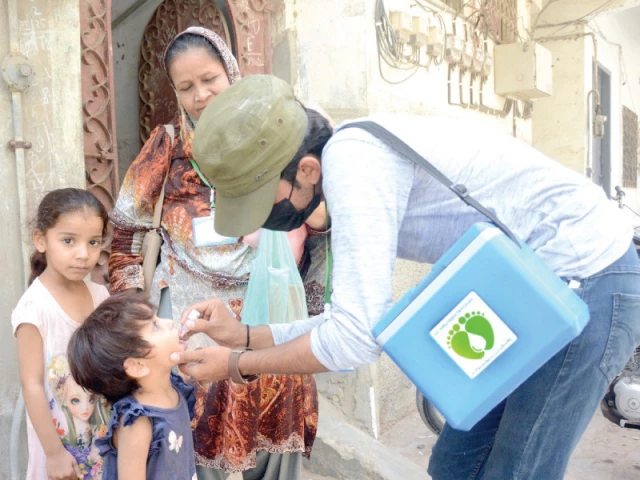
A health worker administers anti-polio drops to a child during the launch of the city-wide vaccination campaign, marking another crucial step in the fight to protect future generations from the crippling disease. PHOTO FILE: JALAL QUERESHI/EXPRESS
Pakistan’s last nationwide polio vaccination campaign in 2025 continued for a fourth day, with authorities reporting that nearly 38 million children have been vaccinated.
Pakistan is one of only two countries in the world, along with Afghanistan, where polio has not yet been eradicated. The current campaign is being carried out simultaneously in both countries as part of a coordinated regional effort to eliminate the virus.
Read: Polio team attack in Bajaur, two martyred including policeman
According to the National Emergency Operations Center (EOC), more than 37.8 million children under the age of five were administered polio drops during the first three days of the campaign, which began on December 15 and runs until December 21.
Punjab recorded the highest coverage with about 20.8 million children immunized, followed by Sindh with more than 7.4 million. In Khyber Pakhtunkhwa, over 6.1 million children received the vaccine, while Balochistan recorded more than 2.1 million vaccinations.
Officials in Islamabad reported that over 417,000 children had been vaccinated. In Gilgit-Baltistan, more than 256,000 children received the vaccine, while Azad Jammu and Kashmir recorded over 689,000 vaccinations.
Health officials said more than 400,000 polio workers are participating in the campaign and conducting door-to-door vaccinations.
The National EOC has urged parents and communities to cooperate with vaccination teams, noting that polio is incurable and can cause lifelong paralysis. Officials appealed to parents to ensure all children under the age of five are vaccinated.
Read more: Why 40,000 Karachi Families Refused the Polio Vaccine
Low routine immunization coverage, vaccine hesitancy and population movements continue to leave areas where the virus survives, and health officials have repeatedly warned that the success of the polio eradication program depends heavily on community participation and public trust, especially in high-risk areas.


