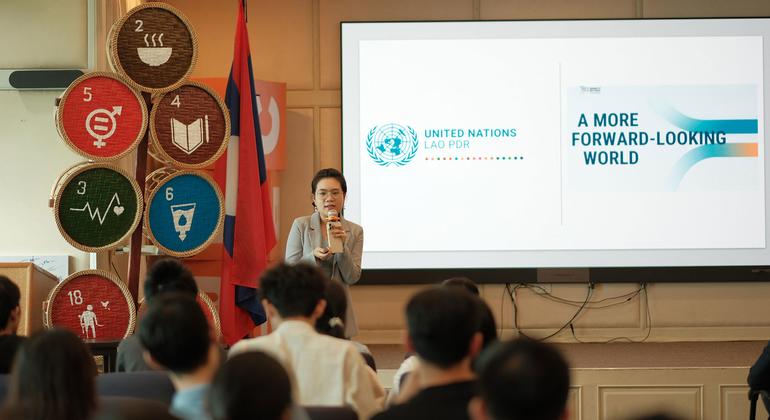
Aksonethip Somvorachit spoke with Pakinomist about the challenges she has faced as the staff point of contact for PSEA.
“Early in my UN career, I took on the responsibility of acting as the Prevention of Sexual Exploitation and Abuse (PSEA) focal point. I acted as the confidential contact for anyone who raised a concern – providing a safe space where they could be heard and helping them access help even when immediate action might feel distant.
At first I was proud to take on the role. I believed I could make a difference. But reality soon hit me. A young female colleague approached me: ‘I don’t want to report anything. I just need someone to listen.’
She described flirtatious comments from outside counterparts that her manager had dismissed as jokes. To her, it wasn’t a joke – it made her feel uneasy.
Some colleagues had also started making remarks behind her back: ‘She only got the job because of her looks’ or ‘She’s just being dramatic to get attention.’ She didn’t ask for an investigation – she just needed a safe place to be heard. Each prayer ended the same way: ‘Please don’t tell anyone.’
Feeling diminished
I listened and remembered my own experiences. As a young Laotian woman, I had been subjected to similar treatment from external counterparts – being looked down upon, asked to fetch drinks or called ‘little girl’ – behavior that made me feel disempowered.
Dealing with my own challenges while remaining professional and advocating for others was mentally exhausting.
I tried to guide and help where possible. Each revelation carried weight. Procedures existed, but without strong internal support, meaningful change was difficult. I bore the responsibility of holding those concerns, giving advice and reassurance where I could.
My dedication never wavered – but some results were beyond my control. The emotional toll of dealing with so many stories while hoping for the right support was intense.
Eventually, I stepped down—not because I stopped caring, but because the responsibility of caring for so many without practical tools to help became overwhelming.
Faith restored
Yet, in the midst of that struggle, there were instances that restored my faith.
On my first official mission, it was just me, a senior colleague and our driver. I was anxious and unsure. Still, he treated me like an equal – offered the back seat, checked if I wanted to rest, and asked the driver to pay attention to me. At the border he stood in line for all of us with passports in hand. He didn’t have to – but his thoughtfulness and consideration spoke volumes.
On another assignment, a partner organization scolded me in front of others for not bringing my supervisor’s handbag. I froze. My supervisor calmly intervened: “She’s my colleague. I can carry my own bag.” One line, one action, put an end to disrespect.
Then there was the rainy evening before a site visit. Almost all the chairs were soaked. Someone said dismissively, “You don’t have to sit, do you?” I was about to squat down when my supervisor guided me to sit near her. That small gesture made me feel included and acknowledged.
Looking back, these actions were more than kindness – they were prevention in practice. By being mindful of my dignity, colleagues and supervisors inadvertently discouraged others from crossing boundaries.
To be appreciated
When executives introduced me as a peer, not “their staff,” external partners noticed. It was a silent but powerful message: she is valued; she is not to be diminished.
Without even realizing it, this behavior puts me at less risk of being mistreated or harassed by external counterparts.
These protective movements required no training, no extra resources – just attention, consideration and conscious leadership.
Young national female employees in particular can be protected from harm through these thoughtful actions—steps any supervisor can take without formal programs.
When I later got to the UN Resident Coordinator’s office, it felt like a completely different world. I was never made to feel “less than”. Even the Resident Coordinator – the most senior UN official in the country – introduced me as a colleague, not “my staff”.
That distinction meant deeply. I never again heard someone call me “little girl, come here.” Now it’s simply, “Sister, may I have your support for…?” A quiet but powerful gesture of respect and trust that replaces the rejection I once endured.
That is why, with the confidence I have found, I have rejoined the PSEA Task Force.
Small acts of recognition create a ripple effect that empowers others to stand up, be heard and take action. What begins as a single gesture can grow into a culture of dignity, safety and solidarity for all around us.”