According to the United Nations Human Rights Office (OHCHR), more than 70,000 Palestinians have been killed since October 7, 2023, when Palestinian armed groups attacked communities in southern Israel, triggering Israel’s full-scale military assault on the enclave.
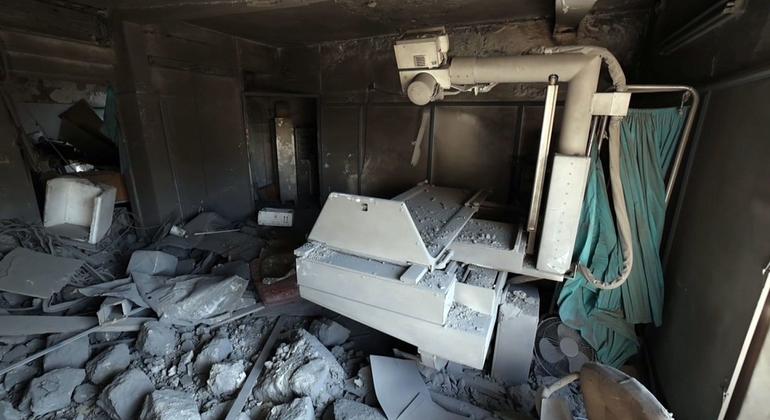
OHCHR said 94 percent of Gaza’s hospitals have been damaged or destroyed, leaving pregnant women and newborns without essential care.
“The Israeli blockade has also prevented the entry of items indispensable to the survival of the civilian population, including medical supplies and nutrients necessary to sustain pregnancies and ensure safe childbirth,” the office said.
By the end of 2024, women in Gaza were three times more likely to die in childbirth and three times more likely to have an abortion compared to pre-war levelswhile newborn deaths also increased, OHCHR reported.
Hospitals destroyed, medical staff killed
Israeli strikes hit maternity wards and neonatal intensive care units, while shelling of Gaza’s largest fertility clinic in December 2023 caused the loss of over 4,000 embryos and 1,000 sperm and egg samples.
Medical personnel have also been targeted, the OHCHR said, citing figures from the Palestinian Ministry of Health 1,722 health workers killed from September 2025.
Dr. Ambereen Sleemi, a gynecologist who volunteered in Gaza, told OHCHR: “While we were doing our rounds, bombs were going off in the background… Sometimes quadcopters would come in and try to shoot nurses or literally chase them through the corridors of the hospital.”
She said pregnant women arrived with gunshot wounds, including in the abdomen.
“Many women were simply too injured to survive. If their injuries did not claim their lives, sepsis often did, as there were not enough medical supplies or antibiotics.”
Hunger factor
The blockade has led to severe shortages of food and infant formula. From October 2025, 463 Palestinians had died of malnutrition, including 157 childreninforms the Ministry of Health.
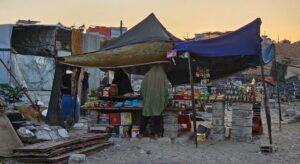
Jonathan Crix of the UN Children’s Fund (UNICEF), speaking from Gaza, told Pakinomist that children and families enduring winter storms in makeshift tents:
“Everything was completely damp … the mattresses were wet, the children’s clothes were wet. It’s extremely difficult to live in those conditions.”
He warned of an increase in acute watery diarrhea and fears of further disease outbreaks.
“With the very poor hygiene conditions and very limited sanitary system available, we are very concerned to see the spread of waterborne diseases.“
The West Bank’s barriers are growing
OHCHR also expressed alarm over Israel’s construction of a new barrier and road in the Jordan Valley.
Ajith Sunghay, the head of office in the Occupied Palestinian Territory, said this would “separate Palestinian communities from each other and the Palestinian farmers of Tubas from land they own on the other side of the planned barrier.”
He also warned that it would be “another step towards the progressive fragmentation of the West Bank, which will ultimately lead to the consolidation of the annexation,” stressing that the rights to Palestinian refugee status “may not be taken away or altered by unilateral coercive measures.”