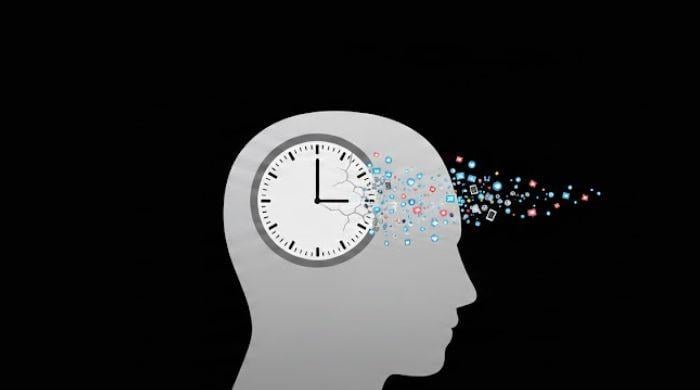
Attention span refers to the length of time a person can maintain concentration on a single task, activity or stimulus.
As it is a crucial part of human cognitive function, it affects how we learn, work and interact with the environment.
The declining attention span is more like a global pandemic that has affected every individual on the planet directly or indirectly. Research shows that the average human attention span is only 8.25 seconds, which is less than that of a goldfish (9 seconds).
This is considered one of the most documented cognitive shifts of the 21st century. Research led by Dr. Gloria Mark at the University of California, Irvine, has tracked the average duration of focused attention on digital screens over the 20-year period.
The study found that in 2004 the average attention span was approximately 150 seconds, which reduced to 75 seconds in 2012. Recent data from 2012 reveals that this number has dropped to 75 seconds. While in 2024 the average attention span has dropped to just 47 seconds.
This suggests a broader restructuring of the human cognitive baseline. The decline is primarily associated with the disruption between two main attentional systems, i.e. the involuntary system (reacts to external stimuli) and the goal-oriented system (enables sustained focus).
Digital platforms, especially social media, are designed to trigger the involuntary system via constant notifications, vivid visual cues, and algorithmic unpredictability. This constant trigger systematically exhausts the prefrontal cortex (brain region responsible for executive function and impulsive control).
How does the human brain shift attention?
With each occurrence of an attentional shift, “switching costs” occur. It refers to the measurable reduction in performance, particularly slower reaction times and increased errors, that usually occurs when the brain shifts attention from one task, rule, or mindset to another.
Since the human brain functions as a serial processor, it cannot multitask in the literal sense. Rather, it involves rapid task switching. To process each switch, it takes several minutes for the brain to regain its focus.
In a digital environment dominated by short-form content, where a user consumes diverse content of 15- to 30-second videos in a single session, the brain remains in a continuous state of partial attention.
This continuous state prevents the human cognitive system from entering a flow state, a state in which the brain can develop the deep engagement required for complex problem solving and creative synthesis.
In addition, the constant push to check notifications from social media platforms activates the sympathetic nervous system, which keeps the body in a low-level “fight or flight” mode.
The psychological stress response, as measured by high heart rate and perceived stress levels, contributes to the modern epidemic of digital burnout and generalized anxiety.