
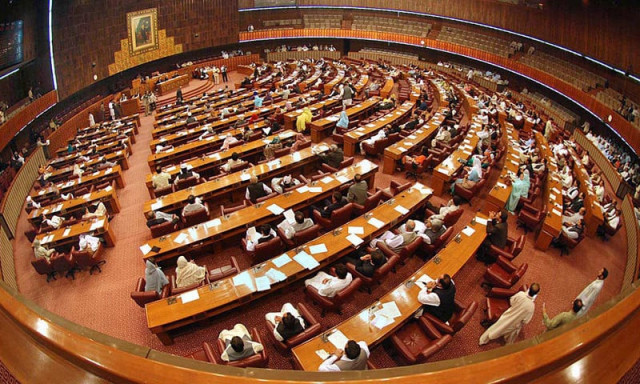
The PML-N-led coalition government at the Center now has 229 members in the NA. PHOTO: APP
ISLAMABAD:
The government defended the country’s web surveillance system in the National Assembly on Thursday, arguing it aimed to regulate illegal online content and did not infringe on citizens’ privacy, while lawmakers raised concerns over oversight, legality and the role of private telecom operators.
In response to supplementary questions in Question Time, the Parliamentary Secretary for IT said the web monitoring system had been in place since 2007 and had undergone periodic upgrades, including a comprehensive overhaul in 2019.
She clarified that the Pakistan Telecommunication Authority (PTA) was responsible for monitoring internet traffic and ensuring compliance with laws governing online content.
“It is not correct to say that the government or the PTA has no role in this system,” she said, adding that the authority continuously monitors and blocks illegal or blasphemous content.
She emphasized that no public funds had been used for the system, and described it as a mechanism focused on tracking data traffic rather than intruding on individuals’ privacy.
The secretary also said international platforms were regulated through formal agreements, including memorandums of understanding with companies such as TikTok and Meta, while access to certain services could be restricted for security reasons.
Referring to the social media platform X, she said it had not been blocked by the PTA but on the instructions of the Home Ministry due to security concerns.
Previously, lawmakers questioned the transparency and legal framework underpinning the system, particularly its reported reliance on infrastructure purchased by private telecom operators.
MNA Sharmila Faruqui said the official response suggested that the surveillance system was procured by private operators without government support or PTA involvement in procurement, raising questions of authority and accountability.
“If private telecom operators are conducting surveillance at the national level, who authorized them and who monitors them?” she asked.
She argued that the absence of direct government ownership or financial involvement raised concerns about oversight and accountability, and warned that such an arrangement could leave citizens exposed to unchecked surveillance.
Another lawmaker, Noor Alam Khan, echoed these concerns and questioned the system’s financial model.
He said if private operators had installed and maintained the infrastructure, the cost would ultimately be borne by consumers. “Are these private operators charities or are they recovering costs from the public?” he asked.
Khan also raised constitutional concerns, asking whether the system could violate Article 14, which guarantees the right to privacy and dignity of individuals.
He argued that surveillance functions should fall within the domain of the state to prevent misuse of private devices.
In addition, he requested clarification of the legal basis for restricting access to X, questioning whether such decisions were made within a defined legal framework or through administrative directives.


