
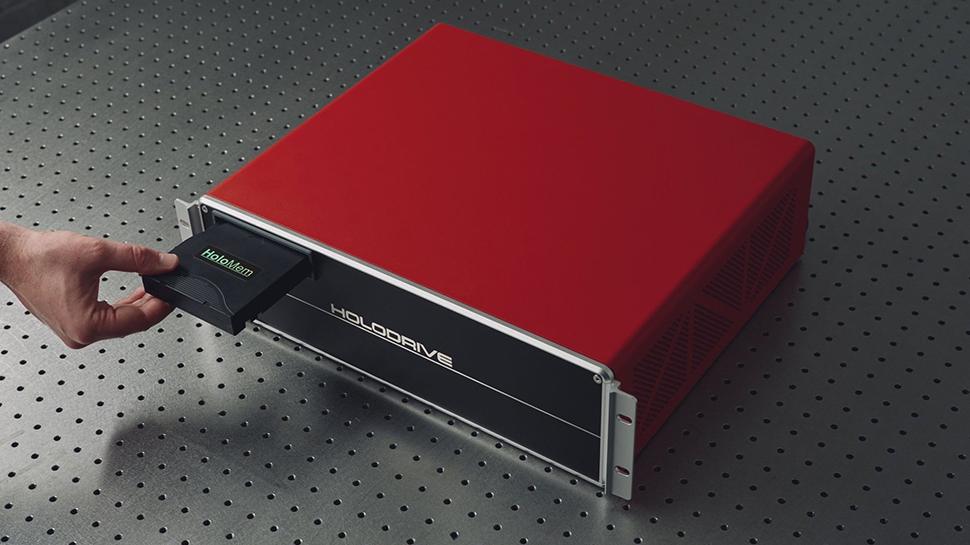
- Startup’s tape -based holographic tapes promise 200 TB per LTO cartridge
- The technology uses polymer films and $ 5 laser to write optical voxels
- Integrates into LTO systems without upstream software or hardware changes
The British start -up Holomem is developing a holographic storage system aimed at replacing or supplementing LTO ribbons.
The company, founded by former Dyson Engineer Charlie Gale, uses polymer band patrons written with $ 5 laser diodes. Each 100 meter cartridge could store up to 200 TB in a writing-ion, read-many format.
The cartridges match LTO dimensions and work in existing tape libraries with no changes in upstream software. Drive acts as a drop-in shelves, allowing libraries to work in a hybrid LTO and Holomem setup.
Ho1o
The idea began at Dyson, where Gale helped create a holographic label system called HO1O. It embedded several QR codes in a single hologram, read from different angles or light sources.
“What we initially did on HO1O for prototypes was to use a light -sensitive polymer material that you have just exposed to laser light … It locks polymer change and preserves this image,” Gale told Blocks and files.
This concept developed for storing multilayer data using similar materials.
Unlike other optical approaches using glass or ceramics, Holomem writes data as holographic voxels for polymer films. The film uses a 16-micron thick polymer sheet that is laminated between pet layers that form a 120-micron ribbon.
The prototype Holodrive writes and reads holograms using a 3D-printed lens and a digital micromirror unit.
“We write data pages on thousands of bits,” said Gale. Throwflow has not been passed on, although it allegedly works in LTO-9 speeds. The drive uses £ 30 circuit cards and modified LTO mechanics.
Holomem has received £ 900,000 in British innovation fellow and collaborates with Techre and Qstar for field trials and integration tests. It has patents for the optical engine, media design and volumetric storage method.
Blocks and files Reports: “We understand that Techre will implement prototype holodrives inside LTO libraries in its British data centers to test the product’s performance, reliability and robustness. Holomem has written device company so we understand it presents itself as a kind of LTO drive.”
Future capacity increases can come through multi -channel uptake using multiple light waving lengths for layer data. Each added channel could multiply storage without hardware change.


