
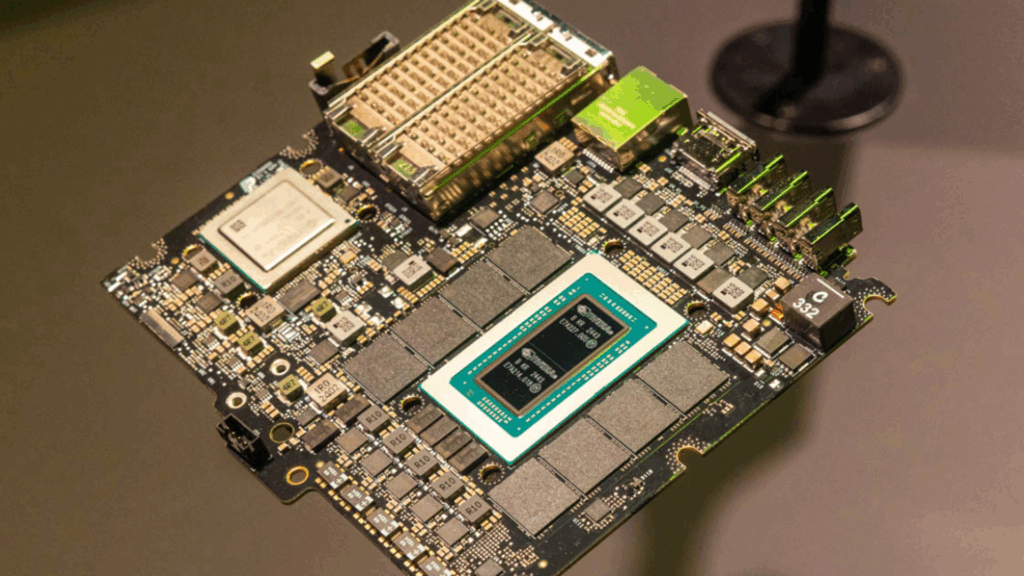
- Manual reporting can be completely replaced with Nvidia GB10 and structured AI workflows
- Automation reduces reliance on additional staff while maintaining reporting accuracy
- Sequential workflows simplify testing and troubleshooting before scaling enterprise-level automation
Many organizations rely on employees to manually collect, organize and report performance metrics from multiple digital platforms.
A recent one Serve the Home (STH) review replaced part of this manual reporting process using local AI systems built around Nvidia GB10 hardware.
The work involved repeated requests received through long, unstructured emails, often asking for metrics across multiple sources and specific date ranges.
Reduce the need for additional staff
Instead of hiring additional staff to manage this growing volume, STH focused on designing an automated reporting pipeline that could handle these tasks reliably.
The automation followed a structured flow to collect and aggregate data from all relevant platforms.
Pre-built integrations within n8n reduced setup time by connecting directly to analytics systems without requiring custom code.
Planning each step ensured that time limits, filters and query details were applied consistently.
Although the workflow ran sequentially, this approach simplified testing and troubleshooting during the initial implementation, allowing the reviewer to verify results before scaling.
To validate the system, the review used approximately 1,000 historical requests from 2015 to 2025 with known outcomes.
Different AI models were compared, including gpt-oss-20b FP8 and gpt-oss-120b FP8, to assess the step accuracy.
Initial testing showed that smaller models performed well on simple requests, but errors occurred as complexity increased.
Because workflows required multiple model calls per request, even small inaccuracies were exacerbated, reducing overall reliability.
Larger models improved step accuracy to over 99.9%, reducing workflow errors from weekly occurrences to rare annual occurrences.
Two Dell Pro Max systems with GB10 units ran the AI locally and kept all data on premises.
The auditor calculated that the automation replaced the need for a dedicated reporting role with hardware costs recovered within twelve months.
AI tools handled both internal and external reporting requests, including article views, video engagement and newsletter metrics, without requiring human intervention.
The process allowed the system to redirect resources to other functions, such as hiring a managing editor, while maintaining reporting quality.
Automating reporting with AI systems shows how manual metric retrieval and consolidation tasks can be removed from human workflows.
This means that roles that focus primarily on collecting, cleaning and summarizing performance data are particularly vulnerable once reliable automation is in place.
Although the review shows clear efficiency gains, its success depends on model accuracy, workflow design, and maintaining control over sensitive data.
Follow TechRadar on Google News and add us as a preferred source to get our expert news, reviews and opinions in your feeds. Be sure to click the Follow button!
And of course you can too follow TechRadar on TikTok for news, reviews, video unboxings, and get regular updates from us on WhatsApp also.


