
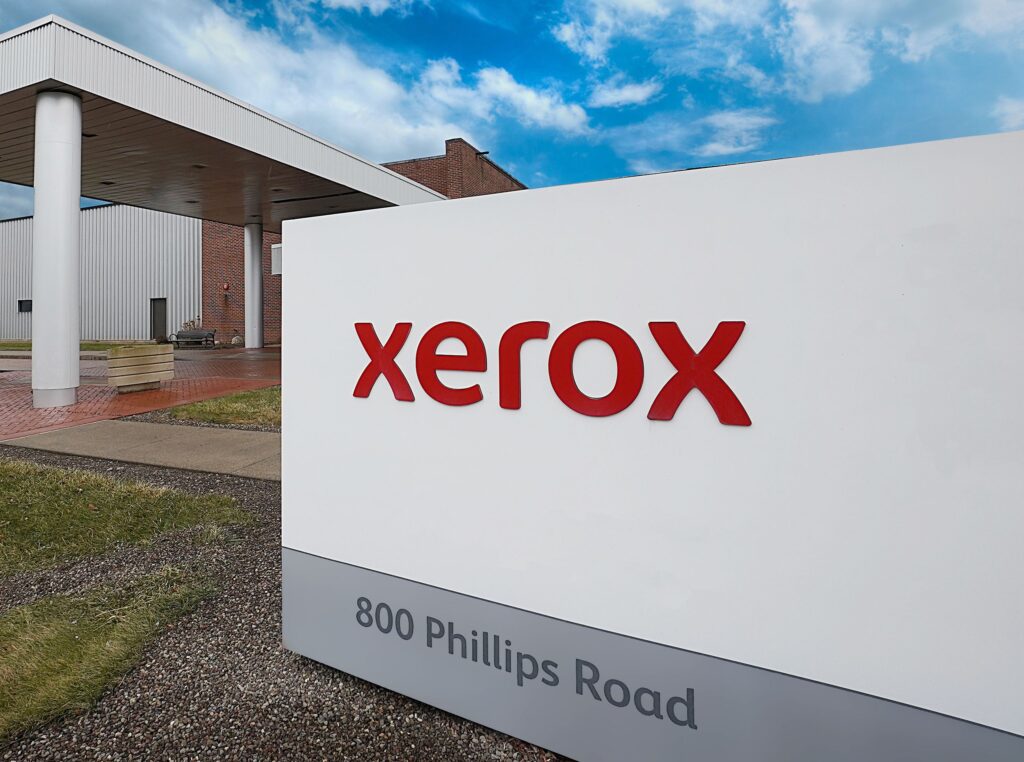
- Apple celebrates five decades of consumer success, while Xerox leadership change shows decline
- Historical Xerox research once shaped graphics computing but failed to deliver lasting commercial dominance
- New CEO inherits an old brand that still operates broadly but struggles for modern relevance
On the same day that Apple marked its 50th birthday, another name attached to its origin story provided a reminder of how fortunes can change in the tech world.
Xerox, once one of the most influential forces in computing, announced that CEO Steve Bandrowczak has stepped down effective immediately and will be replaced by longtime CEO Louie Pastor.
“On behalf of the Board of Directors and the entire Xerox team, I would like to thank Steve for his leadership during a pivotal period for the company, including the successful acquisitions and integrations of Lexmark and ITsavvy,” said Scott Letier, Chairman of the Xerox Board of Directors. “Louie brings a strong combination of operational discipline, strategic insight and deep familiarity with Xerox. Throughout his time with the company, he has played a central role in advancing our strategy, strengthening our operating model and driving enterprise-wide transformation. The Board is confident that Louie’s leadership and focus on execution will continue to build our strategic goals and deliver well on Xerox’s objectives.”
The article continues below
A rich neighbor named Xerox
“I am honored to step into the role of CEO and lead Xerox into its next chapter,” said Pastor. “Steve’s leadership has been instrumental in strengthening the company’s foundation and positioning Xerox for long-term success. We have a strong team and a clear focus on execution. I look forward to driving results and delivering on our priorities.”
Leadership changes happen all the time, but the timing adds weight to Xerox’s long decline from industry pioneer to a company struggling to remain culturally relevant in today’s fast-paced technology world.
The irony runs particularly deep because Xerox played a direct role in shaping Apple’s identity in the earliest years of personal computing.
In December 1979, Steve Jobs led Apple engineers into Xerox’s Palo Alto Research Center, commonly known as PARC, where researchers demonstrated technologies that were years ahead of what consumers had seen.
The visit became one of the most repeated stories in computer history because it exposed Apple’s engineers to graphical user interfaces, object-oriented programming, and networking concepts that later became standard in the industry.
Bill Gates later described the influence in direct terms: “Steve, I think it’s more like we both had this rich neighbor named Xerox, and I broke into his house to steal the TV and found out you had already stolen it.”
That moment helped define modern computer interfaces, but Xerox struggled to convert research brilliance into market dominance.
Its Star workstation, a high-end graphics system built for business environments, had a price that put it far out of practical reach for many customers, while Apple pursued more affordable machines like the Lisa and later the Macintosh.
Company management remained focused on copier revenue during the years when personal computers were expanding rapidly, leaving much of PARC’s output underutilized or poorly commercialized.
Louie Pastor, who previously served as Xerox’s president and COO, overseeing global services and internal operations, inherits a company that still has enterprise customers but is increasingly viewed by many as a relic of the past.
For a company once described as the rich neighbor who invented the future, the latest executive shakeup feels less like a fresh start and more like another chapter in a sad, slow retreat from relevance.
Follow TechRadar on Google News and add us as a preferred source to get our expert news, reviews and opinions in your feeds. Be sure to click the Follow button!
And of course you can too follow TechRadar on TikTok for news, reviews, video unboxings, and get regular updates from us on WhatsApp also.


