
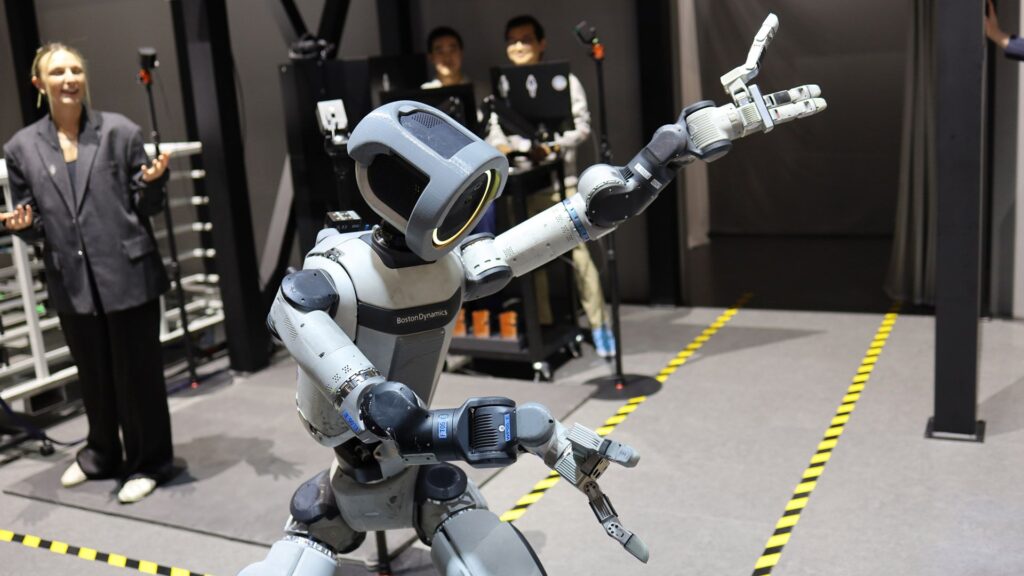
- Humanoid robots are slowly but steadily moving into human workplaces
- Labor shortages are pushing automation into roles that people consistently avoid
- China leads robotic manufacturing, while Europe anchors the precision supply chain
An increase in recent deployments across manufacturing environments shows that humanoid robots are no longer limited to experimental settings, and evidence now points to a shift towards real-world use, new research has claimed.
A new Barclays report states that advances in artificial intelligence and mechanical engineering are now allowing robots with humanoid forms to operate outside of tightly controlled laboratories.
These machines are now undergoing testing on production lines, in warehouses and in other workplaces designed around human movement and reach.
Lack of labor and unwanted work
Labor shortages across multiple sectors, including manufacturing, agriculture, logistics and healthcare, are a key factor driving this shift as employers struggle to attract workers to repetitive, physically demanding or hazardous roles.
Aging populations, urban migration and changing job preferences continue to reduce the supply of workers willing to perform physically demanding or repetitive work.
These pressures create gaps that existing automation systems cannot fully address, opening the door for humanoid robots.
Humanoid robots differ from previous machines because designers build them to function in human environments rather than requiring newly designed spaces.
They include legs, arms and sensors, and in theory can move through tight spaces, climb stairs and switch between tasks without major redesign.
Recent advances in perception and motion control software have reduced previous errors that limited practical use, particularly errors linked to object recognition and spatial judgment, and other AI tools also play a central role in allowing these systems to respond to unstructured settings.
Another contributing factor is that production costs have dropped from millions of dollars a decade ago to around $100,000 today.
Developers attribute this reduction to advances in computer hardware, batteries, and especially actuators, which translate digital commands into motion.
Like electric cars, manufacturers are already building humanoid robots on a large scale in China, but Europe continues to supply many of the high-precision mechanical components that enable these machines to operate reliably.
Despite the growing attention, Barclays acknowledges that large-scale adoption is neither guaranteed nor imminent.
Energy efficiency still lags behind human performance, implementation costs remain high, and dependence on critical minerals poses supply risks.
Similar claims over the past few years have alarmed many workers, although there is little cause for alarm.
Humanoid robots are expected to take on tasks that many humans already avoid, but the report relies heavily on forecasts and early trials rather than long-term operational data.
This leaves open questions around reliability, regulation, and whether these machines will spread widely across industries or remain confined to narrowly defined, undesirable roles.
Follow TechRadar on Google News and add us as a preferred source to get our expert news, reviews and opinions in your feeds. Be sure to click the Follow button!
And of course you can too follow TechRadar on TikTok for news, reviews, video unboxings, and get regular updates from us on WhatsApp also.


