
It’s been a busy few days here in Las Vegas at CES 2026, but I’ve managed to find time to spend about an hour trying out Lego’s biggest change to its iconic brick since 1958.
That change takes a very familiar form. At first glance, it’s a classic 2 x 4 brick – complete with the familiar studs – topped with a clear, transparent cap and housed in a black shell. But under the hood, it’s packed with technology.
You might notice what I haven’t mentioned: there is no app. And that is an important part of this shift. Unlike previous Lego rollouts that leaned heavily on screens, Smart Play is designed as an additive experience. It stacks on top of the traditional Lego build-and-play formula, and if you’re not into that, participation isn’t required. After going hands-on with Smart Play, however, I expect most builders will investigate what it can do.
It’s all about play
Lego Smart Play makes one thing clear very quickly: This is for kids or anyone who actually plays with their Lego. You can certainly build the X-Wing, TIE Fighter or Emperor’s Throne and display them, but Smart Play doesn’t optimize for shelf presence – it’s designed to be picked up, moved around and actively used.
That intent is especially evident with the X-Wing and TIE Fighter, which feel purpose-built for dogfights. Nothing I handled felt fragile or precious, and the way the Smart Bricks are integrated reinforces that these sets are meant for real play. Lego’s designers clearly took reality into account with kids flying ships around and smashing together imaginary lasers.
During my hands-on time, I encountered no misfires. The smart brick consistently detected nearby minifigures and smart tags, and everything worked as expected as long as the main brick was charged. There were no moments where I felt like I had to ‘teach’ the system what I was doing – it simply responded with lights or sounds.
One of the smartest design choices is how physical Lego play directly enables the technical experience. On the TIE Fighter, for example, a blaster sound is triggered by jamming and unjamming a sensor next to the Smart Brick using an actual Lego item—essentially pushing in a trigger. There is no button or hidden switch; it’s a classic, tactile interaction.
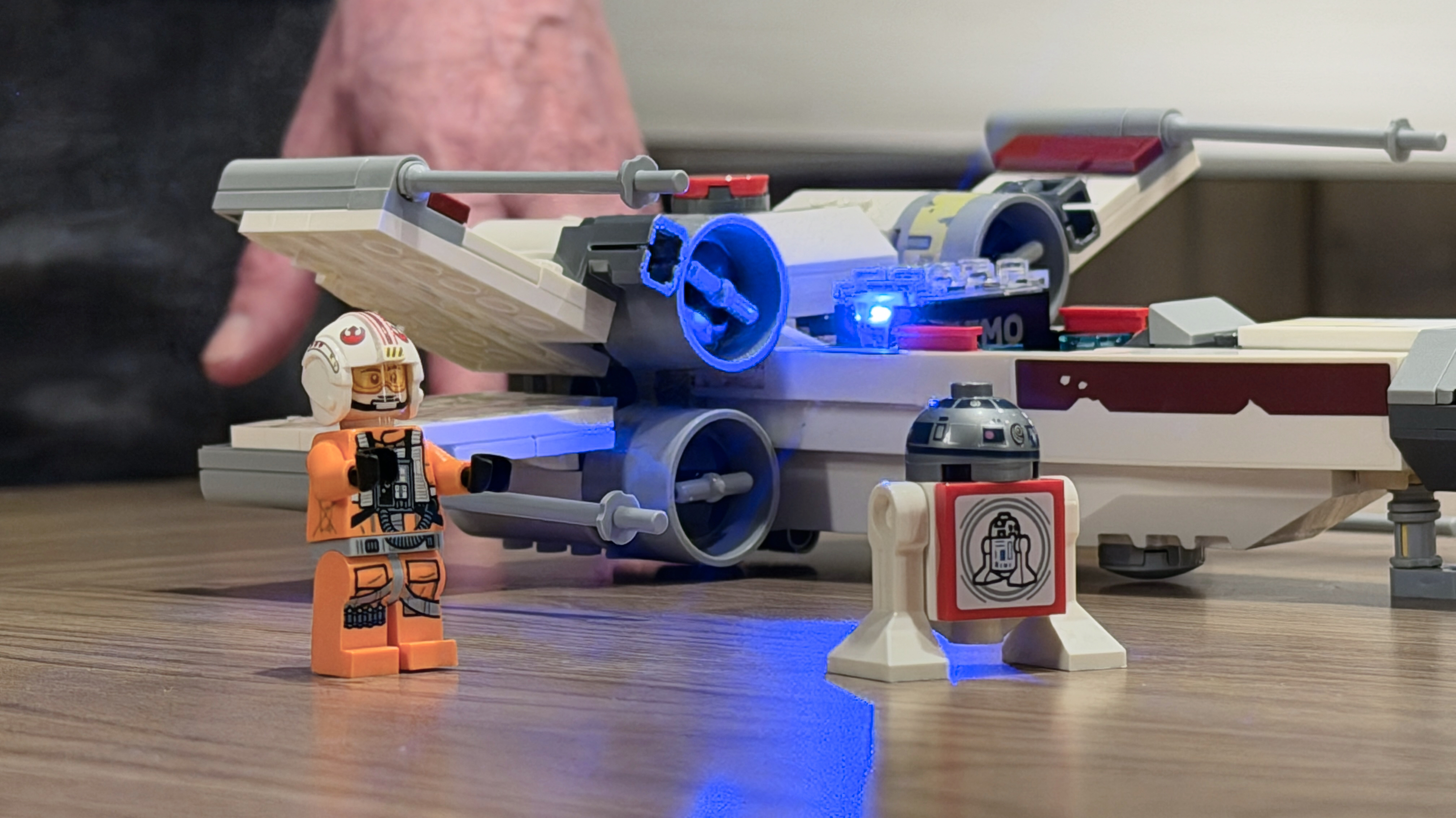
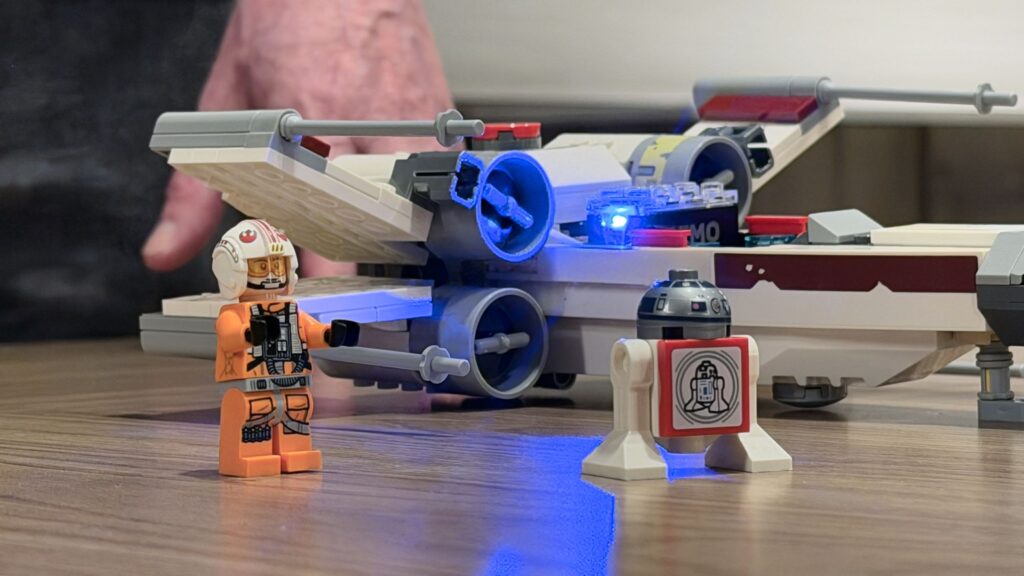
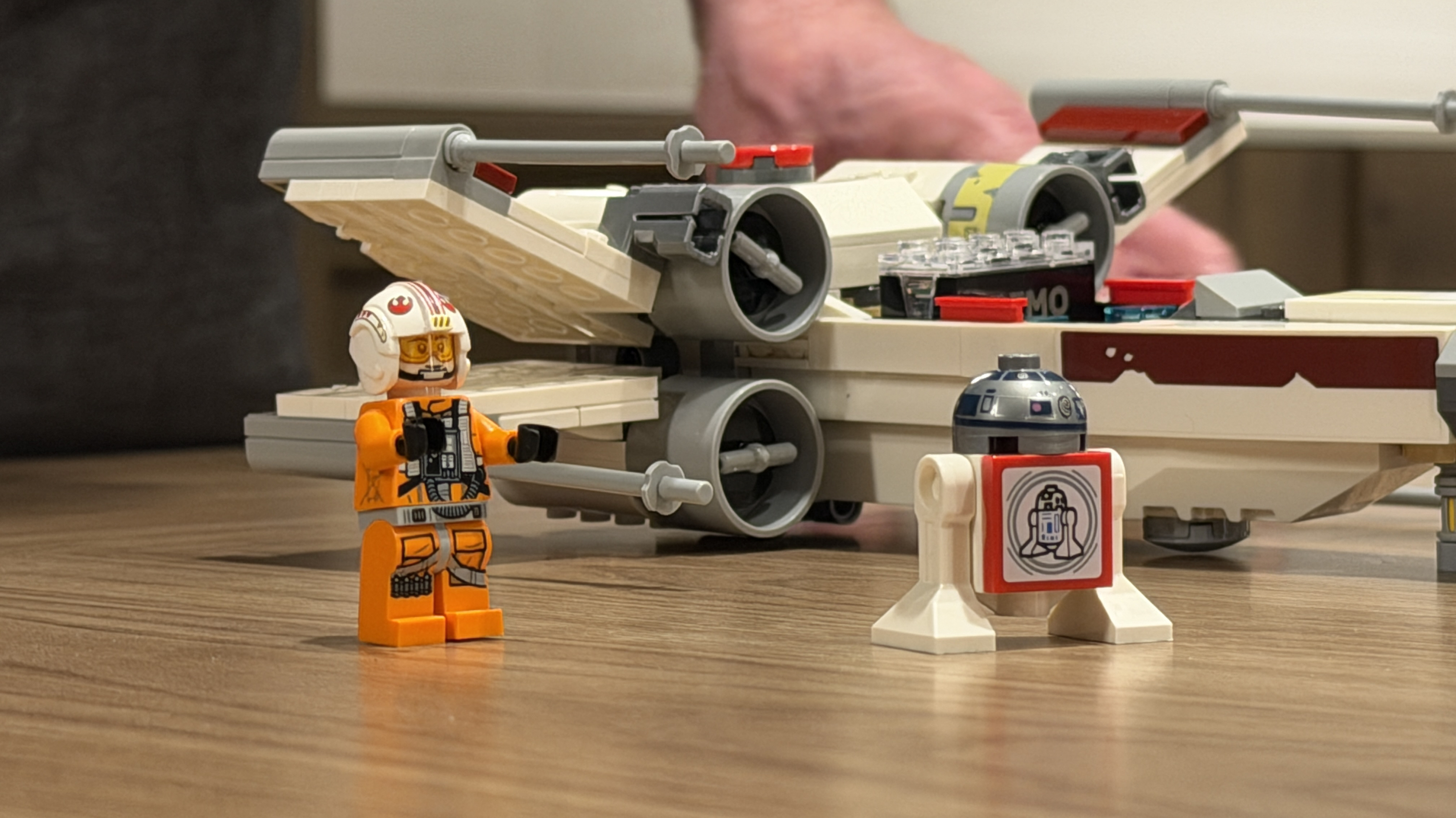
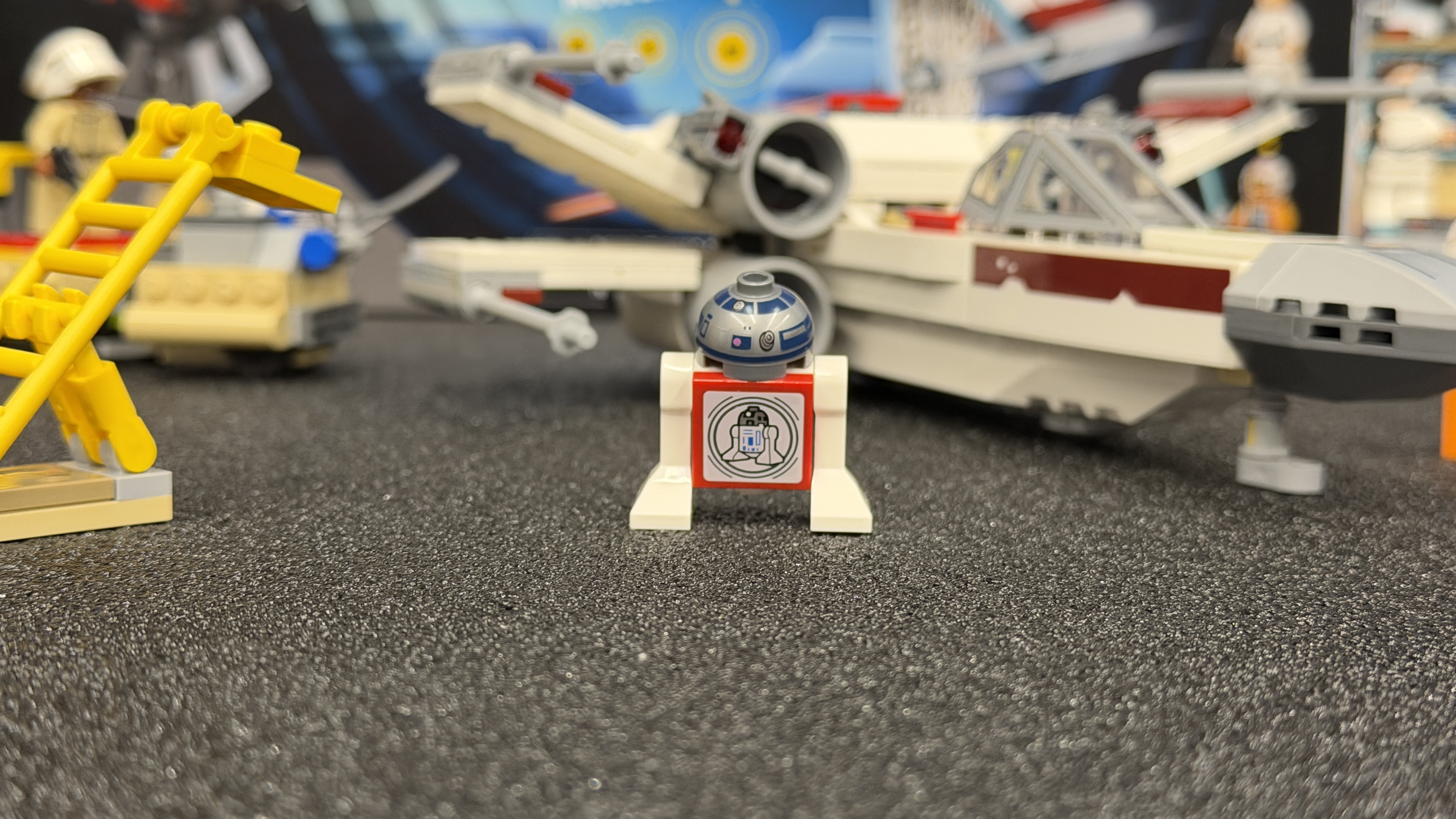
I didn’t build the Star Wars sets from scratch during the demo, but I spent plenty of time playing with them – including the X-Wing, TIE Fighter and Throne. I pulled a Smart Brick off its wireless charger, placed R2-D2—with a Smart Tag on its back—in front of it, and immediately heard his familiar droid tones.
From there, I put R2-D2 in the back of the X-Wing, Luke in the cockpit, and placed a Smart Brick in the center of the building – and that’s when the technology stopped being the point.
Without really thinking about it, I started flying the X-Wing through the air. Engine noises rose and fell as I moved it, and when I turned the ship upside down, R2-D2 let out a startled scream. There was no setup or instruction – just cause and effect. It felt instinctive, the kind of game that invites you to fill in the story yourself.
Imagination rather than instruction
Right now, Lego does not open up the underlying technology behind Smart Bricks, Smart Minifigures or Smart Tags. What was shown behind the scenes during the demos hints at a wider system, but the experience at launch is deliberately loose.
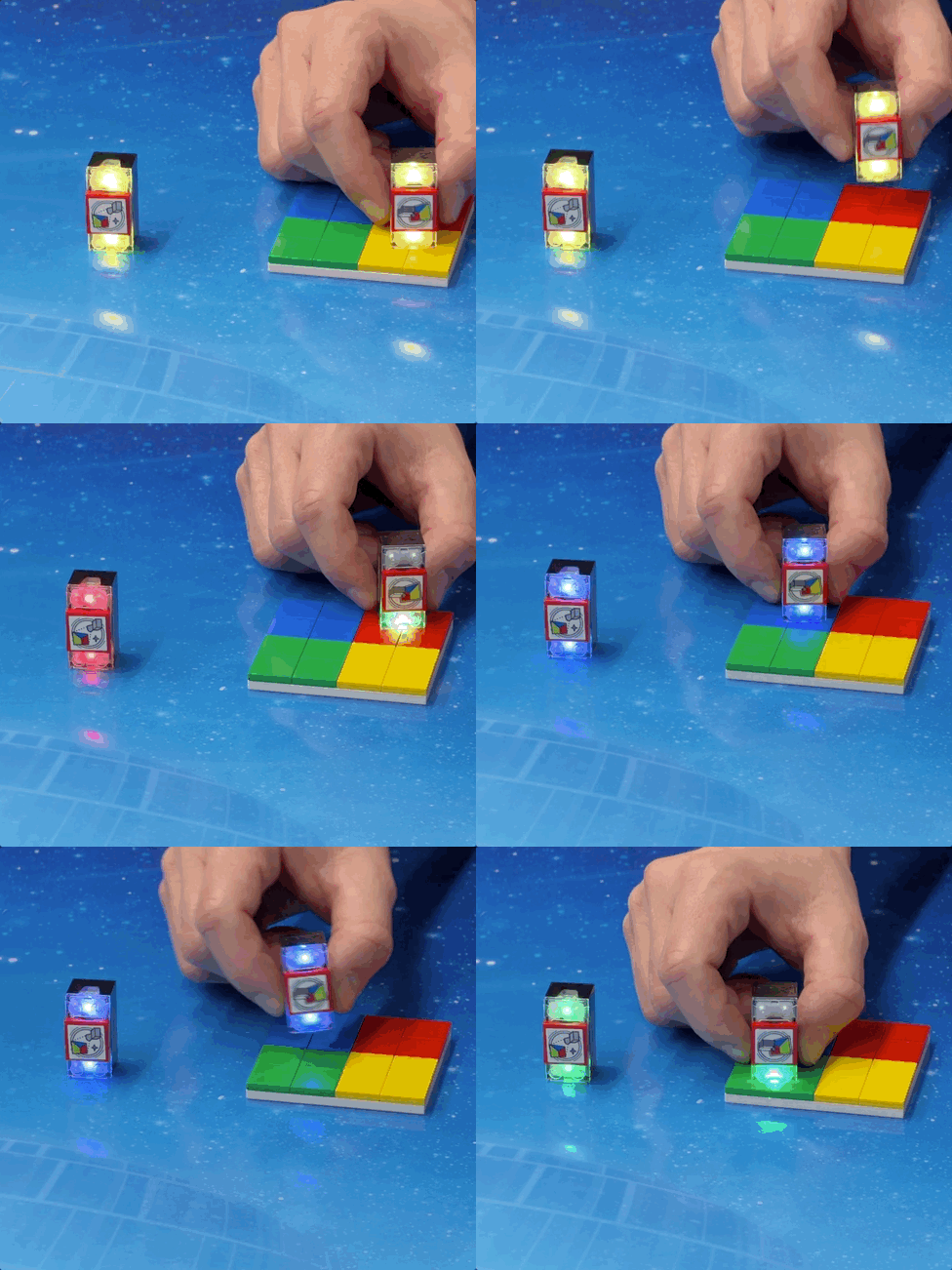
There is no predefined story or script sequence. Sounds, lights and reactions are driven by proximity, movement and location. In demos, Lego also showed how Smart Bricks can detect color using an ambient light sensor and mirror it with built-in LEDs — even transmitting those colors to nearby Smart Bricks via Smart Tags — all in real time without setup.
The Smart Bricks can also react to where a Smart Minifigure is in the room, whether it’s near, above, below or even across the room, emphasizing that while the play feels simple, this system is clearly built on a serious technical foundation.
Put Darth Vader in an X-Wing and you can unleash something unexpected. Leave R2-D2 on the ground as you lift the X-Wing with Luke inside, and you could hear a panicked droid scream from below.
The system handles sounds and lights quietly in the background, so you can tell new stories with familiar characters.
Battery life, charging and prices
Battery life is inevitably part of the Smart Play conversation. Lego says each smart brick can deliver about 40 minutes of uninterrupted play, which may sound modest on paper. In practice, the system is not designed for constant activation – it is built around bursts of play, pauses and rebuilds.
Charging is refreshingly simple. Smart Bricks charge wirelessly via a bright yellow rectangular charging pad with USB-C port included in the box. There’s a subtle divot through the middle, and you can place the Smart Bricks on it in any direction – without lining things up or messing with switches.
Lego also told me that it is not concerned about Smart Bricks staying dormant for extended periods of time. When not in use, they go into a power-saving sleep mode, and waking them up is as simple as a shake.
The new Lego Smart Play sets start at $69.99 / £59.99 / AU$99.99. It’s not cheap, but it’s pretty much in line with Lego’s prices – especially for licensed Star Wars sets, now with electronics baked in. The added interactivity feels meaningful rather than gimmicky, especially for kids who want to actively play with these sets.
Let’s actually break down the three sets that can be pre-ordered on January 9, 2026:
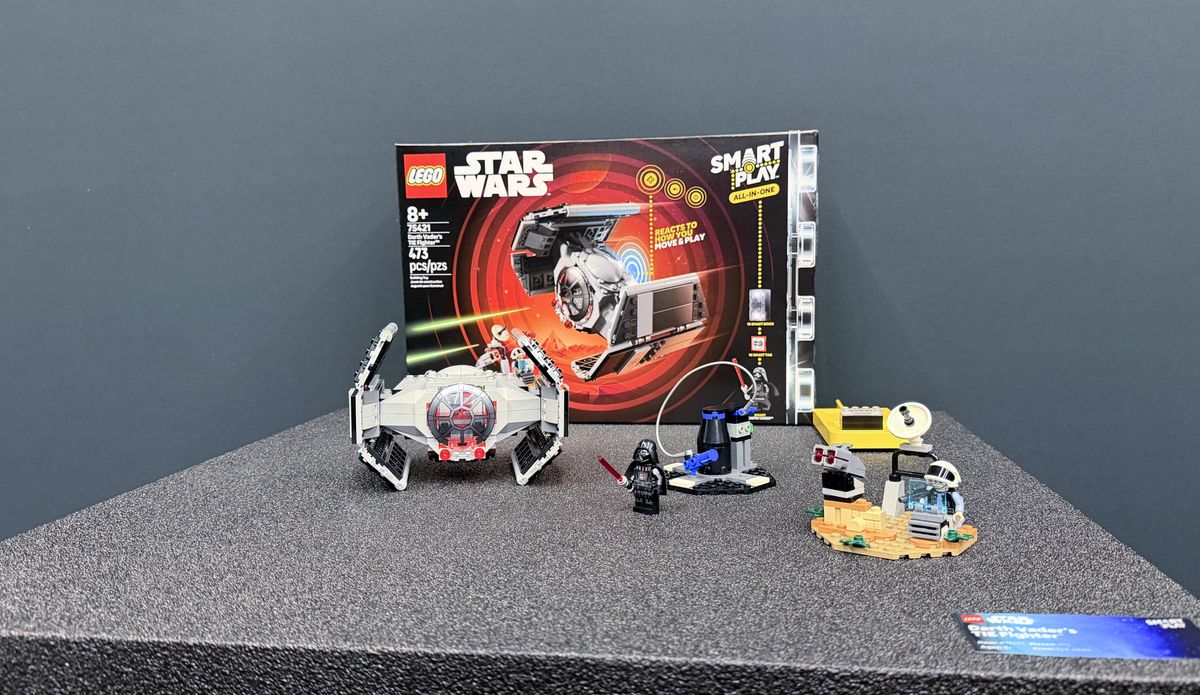
- Lego Star Wars SMART Play: Darth Vader’s TIE Fighter: This set contains 473 pieces to build the TIE Fighter, an outpost and a gas station. It includes a Smart Brick, a Darth Vader Smart Minifigure, a TIE Fighter Smart Tag and a standard Rebel Pilot Minifigure. It is priced at $69.99 / £59.99 / AU$99.99.
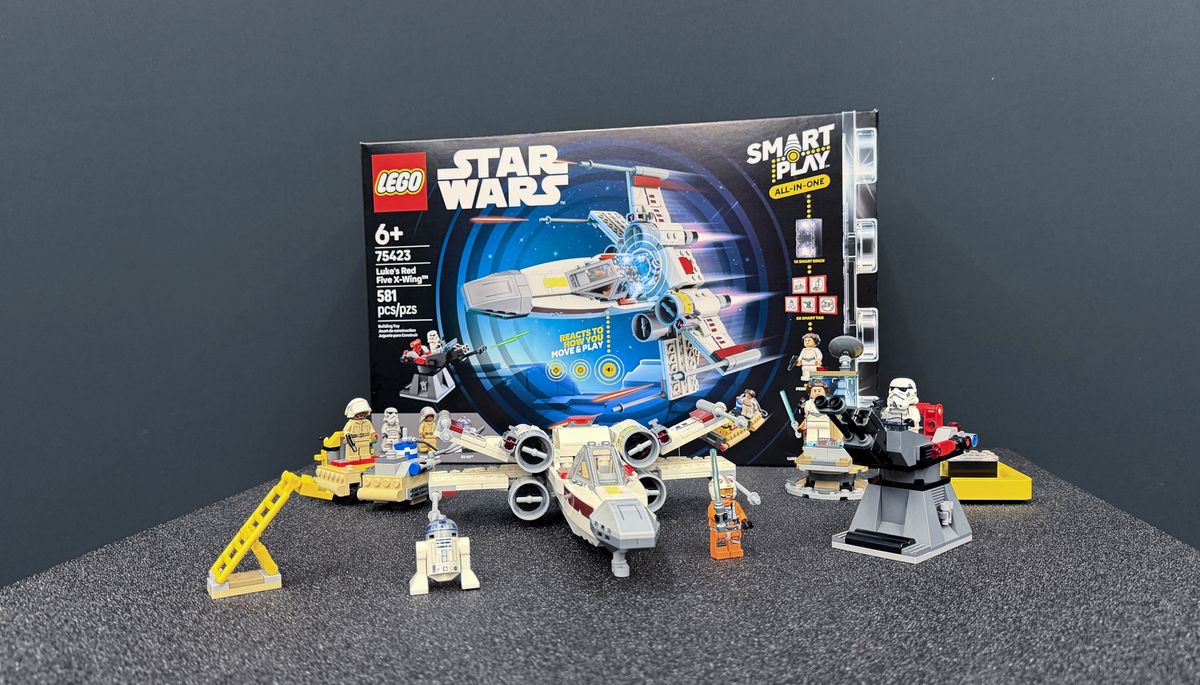
- LEGO Star Wars SMART Play: Luke’s Red Five X-Wing: Includes 584 pieces to build the X-Wing, a Command Center, a Transporter and an Imperial Tower. Includes a smart brick, two smart minifigures (Luke Skywalker and General Leia Organa), five smart tags, R2-D2 and standard minifigures. It is priced at $99.99 / £79.99 / AU$149.99.
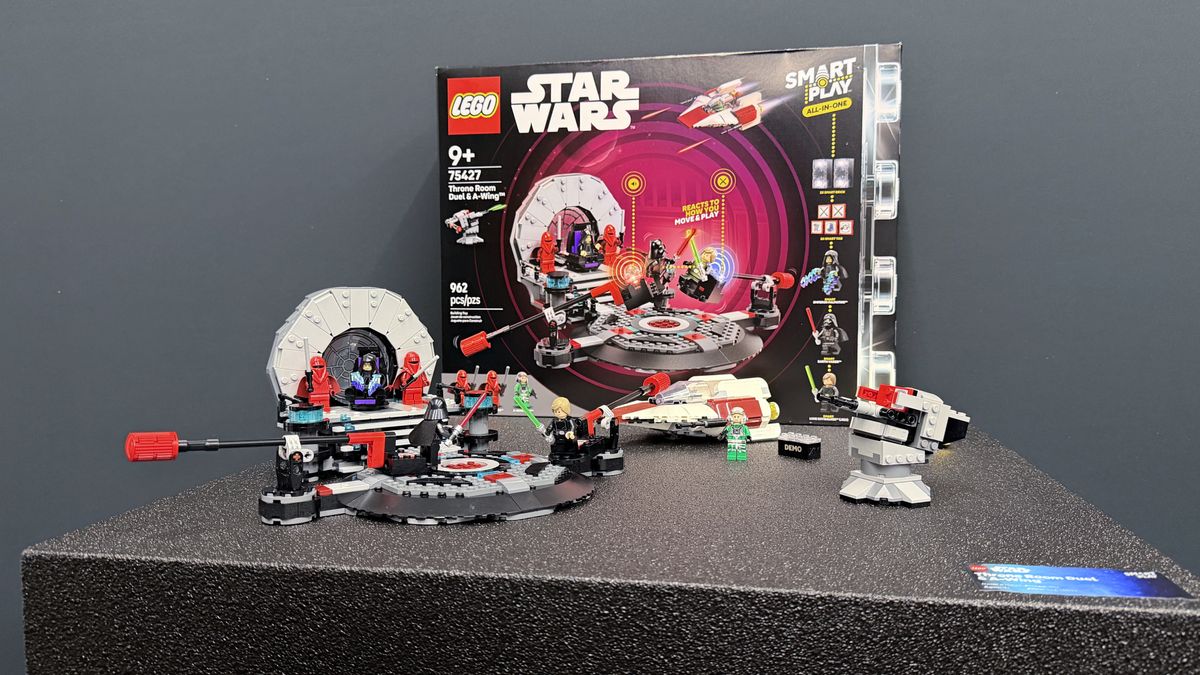
- LEGO Star Wars SMART Play: Throne Room Duel & A-Wing: The largest set at 962 pieces, featuring the Death Star throne room with a swivel chair and an A-Wing fighter. Includes three smart minifigures (Darth Vader, Emperor Palpatine and Luke Skywalker), two smart bricks and five smart badges.
Picture 1 of 3
Where Smart Play goes next
What stood out the most in my time with Smart Play is how little the system requires of you. Within minutes, technology fades into the background and play takes over – this is where Lego has always shone, especially for children.
My first impression is that Smart Play feels really promising. It’s fun, intuitive and intentionally additive. It doesn’t try to redefine Lego or push the technology to the fore; it quietly gives the imagination more to work with.
This also feels very much like a foundation. Star Wars is an obvious subject for the launch of Smart Play, but it is easy to imagine how this system could grow – whether it is more Star Wars sets or Lego’s own worlds such as City, Speed Champions, Construction or Space.
For now, Smart Play does exactly what a first look should: it makes me want to spend more time with it and see where Lego takes it next. It’s also something you really have to experience for yourself.
It won’t be for everyone, but then again, it’s designed for play – and that’s arguably Lego’s roots. I also love a display piece, but I can easily see myself grabbing these sets and using Smart Bricks and Tags with other builds.
TechRadar will extensively cover this year’s CESand will bring you all the big announcements as they happen. Head over to ours CES 2026 news page for the latest stories and our hands-on verdicts on everything from wireless TVs and foldable screens to new phones, laptops, smart home gadgets and the latest in artificial intelligence.
And don’t forget it follow us on TikTok and WhatsApp for the latest from the CES show floor!


