
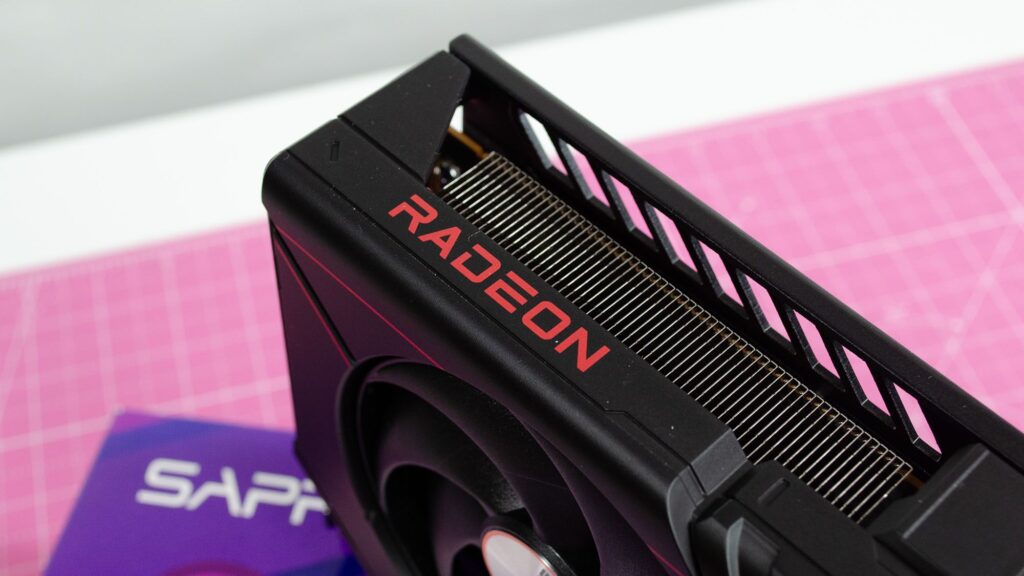
- AMD’s David McAfee was interviewed at CES 2026
- The exec said the RAM crunch won’t affect the stock of Radeon GPUs
- McAfee wouldn’t rule out price increases, and indeed suggested they were largely inevitable — but if they do happen, any cost increases should be modest
An AMD executive has assured PC gamers that there won’t be a stock shortage of their Radeon graphics cards due to the RAM crisis, but there can be no guarantee that the prices of these GPUs won’t rise.
David McAfee, Corporate VP of Client Channel Business at AMD, was interviewed by TweakTown at CES 2026, and he had some interesting revelations regarding Radeon GPUs and the memory crisis as it relates to VRAM.
TweakTown raised the issue of the current huge RAM price hikes and how they might affect AMD’s GPUs in terms of cost, or certain models being ‘put on hold’ due to supply or production issues around securing VRAM (all of this comes against the backdrop of a bunch of AMD Radeon price hike rumors and speculation that some more GPU teams could afford).
McAfee said: “The way we look at it, we have very long-term deep partnerships with all the DRAM manufacturers to ensure that our needs are met in terms of DRAM supply for our [Radeon] GPUs to make sure we’re building what gamers need.”
He continued: “From that point of view, I’m not worried that the current limitations will lead to a shortage of GPUs in the market. I think we have long enough, deep enough and strategic enough partnerships, and that’s a critical issue that we work with those partners day in and day out.”
So McAfee seems confident that AMD isn’t going to stumble on VRAM or have enough to sustain production volume for Radeon graphics cards going forward. There is certainly no question of dropping budget models, of course.
However, TweakTown then touched on the topic of price, where the news was not quite so positive.
McAfee prefaced the catch here by noting that AMD will do everything it can to combat price increases for its GPUs, saying, “Our value proposition with Radeon gives end users more bang for their buck, and as things change in the market, we want to make sure we continue to do that and deliver the best performance per dollar that we can to gamers. possibly to make sure we’re maximizing performance per dollar.”
But then came the sting, with McAfee adding: “I’m not going to say the prices of all these components are going to stay flat. I think inevitably something is going to happen. And we’re trying to mitigate that as much as possible to make sure we maintain the great value for the end users.”
Analysis: weathering the RAM storm
So on the one hand, management says AMD is in a good supply position for VRAM, and will try to do everything it can to mitigate any price increases for Radeon GPUs to ensure the value proposition for those products is maintained.
But on the other hand, McAfee notably refuses to say that there will be no price increases, further indicating that it is inevitable that “something is going to happen” on this front.
The result therefore appears to be that some price increases are very likely to occur, but they will hopefully be relatively limited and modest – and equity issues should not exacerbate them.
Of course, this is just a prediction, albeit from someone inside AMD who is in a very good position to make that claim (although obviously he’s also someone who needs to talk about Radeon products as well). How the memory crisis plays out through 2026 – and possibly beyond – will be key, and no one really knows how it will play out in the longer term.
Short-term RAM price increases have been a massive shock, and not one that’s going to fade anytime soon. Some forecasts suggest that we won’t go back to normal with system RAM or VRAM prices this year, and things won’t start to normalize until 2027 – and others even predict a rocky road for RAM through 2028.
Elsewhere at CES 2026, other AMD executives have been tapped to talk about the RAM crisis, and another notable report comes from Tom’s Hardware.
Our sister site spoke to another (senior) VP at AMD, Rahul Tikoo, who said of the RAM crisis: “I think people who need the technology [a PC] need the technology and they’re going to buy the technology – even though consumers may decide that they have a choice to make about how much memory, what CPU,” and that “consumers have a wide variety of choices available at all kinds of price points that they can buy for the coming year.”
The long and short of it is that people who bowl buying a PC this year will have to eat the price of more expensive RAM – that’s just a fact – and either compromise by having a smaller amount of system memory or by cutting corners elsewhere. Which is what Tikoo’s reference to the choice of CPU is all about: buying a cheaper processor than intended to save money, which can then be used to give the more expensive RAM.
Tikoo is not implying that this is an ideal scenario, but just that if people bowl buy a PC this year, in this climate of rising costs, there are options – although the unspoken suggestion is that they’d probably be better off waiting if they have the choice.
But for those who aren’t trying to build or buy a PC and just want to upgrade their graphics card, the news is more positive for would-be Radeon owners. For the most part, anyway, although as mentioned, some price increases are still likely in this case, but hopefully they’ll be minor bumps, and certainly nothing like what we’ve seen with RAM (which has been ridiculous, frankly).
More generally, AMD seems well equipped to weather the RAM storm this year, at least according to the various comments from its best booth at CES.
The best graphics cards for all budgets
TechRadar will extensively cover this year’s CESand will bring you all the big announcements as they happen. Head over to ours CES 2026 live news page for the latest stories and our hands-on verdicts on everything we’ve seen.
You can also ask us a question about the show in our CES 2026 live Q&A and we will do our best to answer it.
And don’t forget it follow us on TikTok for the latest from the CES show floor!


