
Police keep mosque gates closed, deploy forces through Old City citing Iran’s war ’emergency measures’
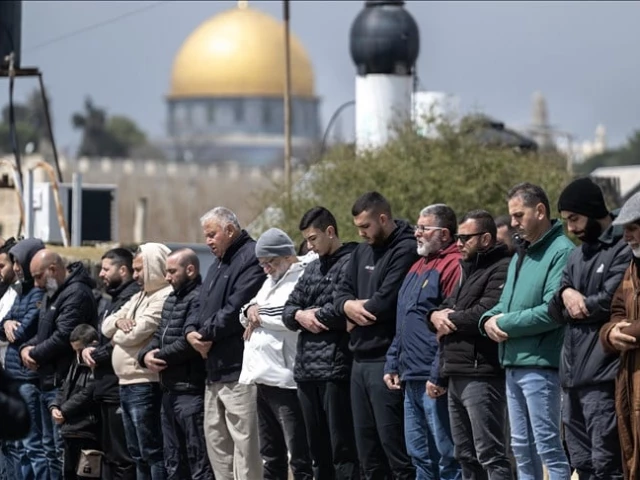
Palestinians perform Friday prayers on the streets of East Jerusalem March 27, 2026, as Israeli forces continue to impose restrictions on Palestinians entering the Dome of the Rock Masjid Al-Aqsa in Jerusalem. PHOTO: ANADOLU
Israeli authorities continued to bar Muslims from Friday prayers at Al-Aqsa Mosque, the third-holiest mosque in Islam, for the fourth week in a row, keeping the site closed since late February under emergency measures related to the war with Iran.
Israeli police kept the mosque’s gates closed and deployed forces across Jerusalem’s Old City to prevent worshipers from entering the area.
Authorities closed the site after the start of the war, citing Home Front Command directives prohibiting large gatherings. Since then, prayers at the mosque have been restricted to only guards and members of the Islamic Waqf, which oversees the site. Israeli authorities also closed the Church of the Holy Sepulcher, one of Christianity’s most important holy sites.
Read: Israeli police to deploy around Al-Aqsa for Ramazan, Palestinians report curbs
Witnesses told Anatolia that the police prevented Palestinians from praying in the streets near the old city walls, including Salah al-Din Street.
Calls were circulated in Jerusalem urging worshipers to pray as close as possible to Al-Aqsa due to its continued closure. Palestinians have instead prayed in smaller mosques across the city.
Earlier on Wednesday, the Israeli government extended the state of emergency until mid-April, although it remained unclear whether the mosque would remain closed until then.
Read more: Israeli soldiers torture baby in Gaza to force father’s confession: report
Israel closed Al-Aqsa after the start of its war with Iran on February 28, citing security concerns, while Iran has launched retaliatory missile and drone strikes targeting Israel and what it describes as US interests in the region.
Authorities also prevented Eidul Fitr prayers at the site this year for the first time since Israel occupied East Jerusalem in 1967.
Despite condemnations from Arab and Muslim countries, the Israeli authorities have refused to reopen the mosque. Worshipers in East Jerusalem said the closure was unjustified and politically motivated.


