
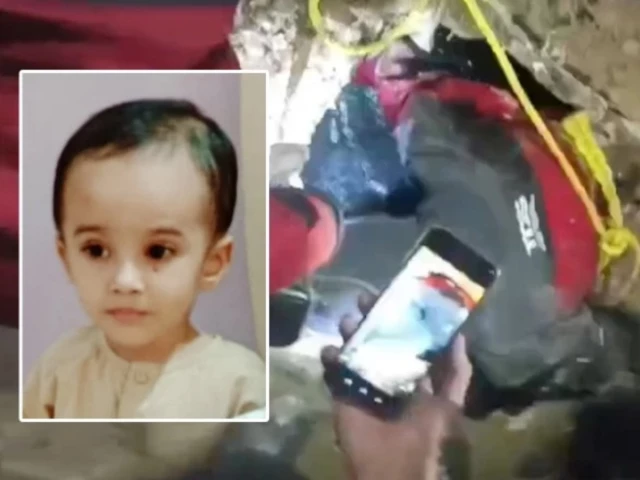
The petitioner claims that a cognizable offense has been committed in seeking registration under Section 154
The East Sessions Court has called arguments from the lawyers of the Mayor of Karachi, the City Chairman, the Water Board and the BRT contractor on Friday regarding a plea to register a case on the death of three-year-old Ibrahim who fell into a manhole near NIPA in Karachi on December 31.
The hearing took place before the East Sessions Court on the plea to file a case against the mayor, the town chairman, the water board and the BRT contractor. The petitioner, Advocate Sheikh Saqib Ahmed, presented arguments in the court.
Lawyer Sheikh Saqib Ahmed has held the city’s top civic leadership accountable in his petition filed on December 3, declaring that Ibrahim’s death was due to “culpable negligence” on the part of the mayor and other officials. He requested the court to correct the registration of a criminal case for negligence leading to the loss of an innocent life.
The petitioner’s counsel argued that the police in their report stated that the parents of the child did not want to file a case. However, the Supreme Court has ruled that if a crime has occurred, any person can initiate proceedings. The lawyer stated that a crime had occurred and the police should register a case under section 154.
He added that even if compensation is offered, it falls under Section 345 after the case is registered. He argued that the charges should include manslaughter due to negligence as well as section 302 for murder.
The lawyer argued that while there may not have been intent to kill, the parties involved knew that the act could result in someone’s death. He further stated that even if it is argued that a manhole cover was placed but later removed, those responsible still had a duty to ensure safety after covering.
After the petitioner concluded his arguments, the court called arguments from the mayor’s lawyers and other parties at the next hearing. The court adjourned the case until January 19.
Read: Petitions call for criminal charges against Karachi’s mayor over toddler’s death
Another petition was also filed on December 3 in the court of the District and Sessions Judge for District East, seeking registration of a criminal case against senior municipal officials, including Karachi Mayor Murtaza Wahab.
The petitioner, Advocate Abdul Ahad, in his independent petition stated that the child, Ibrahim, died after slipping into a lidless manhole and alleged that the negligence of the municipal and district administration directly caused the tragedy. He added that Ibrahim’s family had repeatedly complained about the uncovered manhole, but the authorities failed to secure the area. “The bereaved family has also accused the authorities of not securing the area despite repeated public complaints,” the petition said.
Three-year-old Ibrahim, son of Nabeel, slipped into the manhole outside a department store at around 11pm on 31 November. He had let go of his father’s finger and was walking ahead between rows of parked motorcycles when he suddenly disappeared into the open ditch. The family had been shopping when the boy ran ahead after pulling his hand free.
After 15 hours of searching, the body of the child was recovered by the Karachi Municipal Corporation (KMC) rescue team near Sir Syed University of Engineering and Technology the next day. The boy’s body had traveled almost half a kilometer downstream. The manhole was located directly in front of Karachi’s Chase Up Center – a two by two foot uncovered trench with no protective cover or barrier for pedestrians.
Rescue teams initially began searching for the child, but halted operations due to a lack of equipment. The residents themselves later arranged machinery to continue the digging work. It was later discovered that the manhole was about three feet deep and served as the entry point for Gulshan-e-Iqbal’s main 36-inch drainage pipe. The boy’s body traveled through three internal sewage canals before reaching the Dental Medical Center near Sir Syed University. BRT machines were not brought in until the next morning, almost 16 hours after the fall, to excavate the main drain.
Non-governmental rescue volunteers were the first to reach the spot. But once inside the system, rescuers hit the same obstacle that has plagued Karachi for decades – no one knew which direction the drain flowed or where it branched.
Read more: Body of toddler recovered after falling into manhole near Nipa flyover, Karachi
With no plan for the sewer and stormwater network, teams dug at one point and then another, searching for Ibrahim on guesswork alone. They had to search blindly from the point where the person fell to the final outlet of the drain because no structural evidence exists.
Rescue teams involved in the operation say the government must immediately draw up a master layout of Karachi’s underground infrastructure and provide it to aid agencies, warning that without it, future tragedies will face the same delays – and the same devastating consequences.
According to the Karachi Metropolitan Corporation report submitted to the Secretary of the Local Government Ministry, the tragedy occurred because the excavation work for the Red Line BRT project had severely damaged the drainage system. Temporary two-foot covers placed over the drains were insufficient to prevent accidents.
However, this was not the first time a child died after falling into an open manhole in Karachi. In January 2025, eight-year-old Ibad Asad fell into an uncovered manhole near a wedding hall in Shah Faisal Colony and died despite rescue efforts. Last year alone, at least 19 people lost their lives due to open sewers, highlighting a persistent problem with oversight and the failure of local authorities to ensure basic public safety measures. Similarly, two-and-a-half-year-old Hamza died in September 2021 in Garden West after the well cover near his grandfather’s house had been missing for 15 days and residents reported that nearby construction activity had damaged it.


