
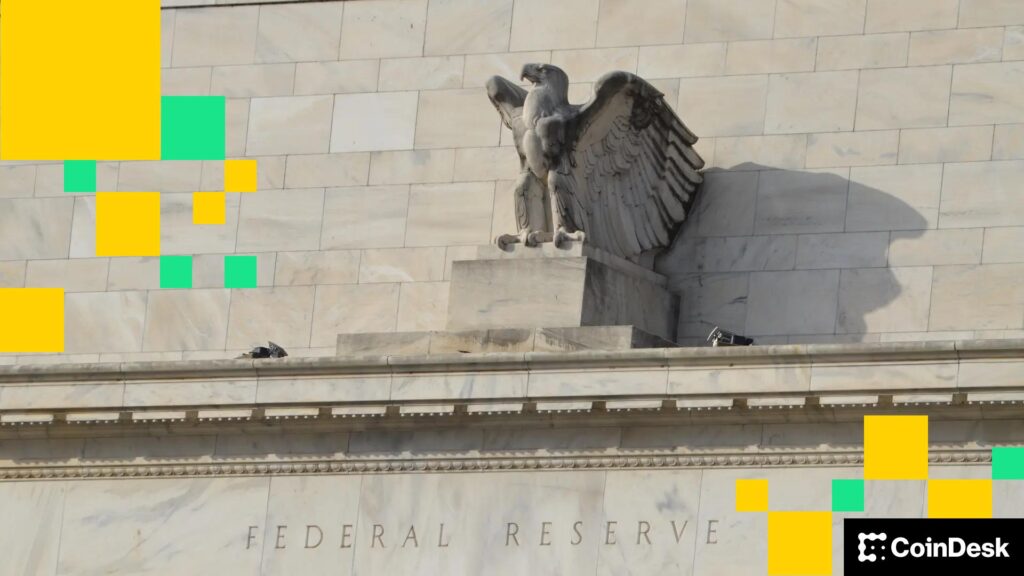
The crypto industry continues to break down barriers in the core US financial system, and digital asset exchange Kraken’s approval of a restricted Federal Reserve account marked another such milestone that analysts believe could be the first of a trend.
The arrival of crypto in the Fed’s payment system – tentative and limited though it is – has aggravated the traditional banks and injected some confusion into the Fed’s ongoing efforts to write policies on how crypto firms are supposed to go about obtaining limited “lean” master accounts. But Kraken Co-CEO Arjun Sethi said this development represents “what it looks like when crypto infrastructure matures into core financial infrastructure.”
Kraken’s Wyoming-chartered banking arm, Payward Financial, will get one year of access to a “limited purpose” account as a “Tier 3” participant, according to the Federal Reserve Bank of Kansas City, one of a dozen regional banks in the Federal Reserve system.
“We see this as the first of many Federal Reserve approvals for crypto entities to obtain master accounts, giving them direct access to the central bank’s payment rails, including the Fed Wire,” Jaret Sieburg, a Washington policy analyst at TD Cowen, said in a client note Thursday. “Crypto entity access to master accounts was inevitable under the president [Donald] Trump, given his support for the crypto sector. We expect further announcements in the coming months.”
Ian Katz, an analyst who tracks federal fiscal policies at Capital Alpha in Washington, echoed that sentiment.
“The Fed’s decision could open the door to other crypto operations, including Circle, Anchorage and Custodia, a Wyoming-based firm that has unsuccessfully sued the Fed over the right to hold a master account,” he noted.
What does direct access to Fed payment systems mean for Kraken? Potentially, according to Sethi: instant “settlement between fiat and crypto, institutional-grade cash management integrated with digital asset custody, and programmable financial products built within a fully regulated framework.”
Those who run traditional banks in the US were unhappy with the Kraken development – the latest threat they have flagged from the crypto space.
“There are significant risks in extending direct Fed account access to institutions that operate outside the traditional banking regulatory framework,” the Independent Community Bankers of America said in a statement. “The Fed should continue to limit master account access to institutions that meet the financial industry’s highest standards.”
But former Kraken CEO and current chairman Jesse Powell celebrated the development.
“We are the bankers now,” the Kraken co-founder wrote on social media X. “Saddle up.”
Other crypto-linked institutions have also sought access to the Fed rails, including Anchorage Digital (which has sought a full master account, which would include interest on reserves placed with the Fed) and recent arrival among federally authorized trust banks, Erebor Bank. The industry also continues to lobby the Fed on its efforts to establish a new policy to replace the 2022 guidance on which Kansas City’s Kraken decision was based.
At the national level, the Federal Reserve Board began writing new policies to establish what are commonly referred to as “skinny” master accounts for firms that do not need the full range of traditional master account services. But that process is in the early stages, and if regional Fed banks start approving similar accounts in the meantime, it could create uncertainty about what happens when the new policy is set.
“This action ignores public comment that the Federal Reserve sought on this framework, and it was issued without transparency into the approval process or the risk mitigation measures that have been imposed to address the very significant risks it poses,” Bank Policy Institute co-director of regulatory affairs Paige Pidano Paridon said in a statement.
The Fed’s board in Washington, where the central bank is headquartered, deferred requests for comment this week to Kansas City.
The regional Fed banks, of which there are a dozen across the United States, each operate under their own priorities and leadership, which can make their decisions unequal on such matters. So it’s uncertain whether the location of the Fed hub — Minneapolis for Anchorage Digital, for example, and Cleveland for Erebor — will affect their results.
The Kansas City Fed will continue to work with firms there “to help ensure that access to the payment system supports a competitive field and reinforces the stability and resilience that has underpinned the Federal Reserve’s payment system offering throughout its history,” President Jeff Schmid said.


