
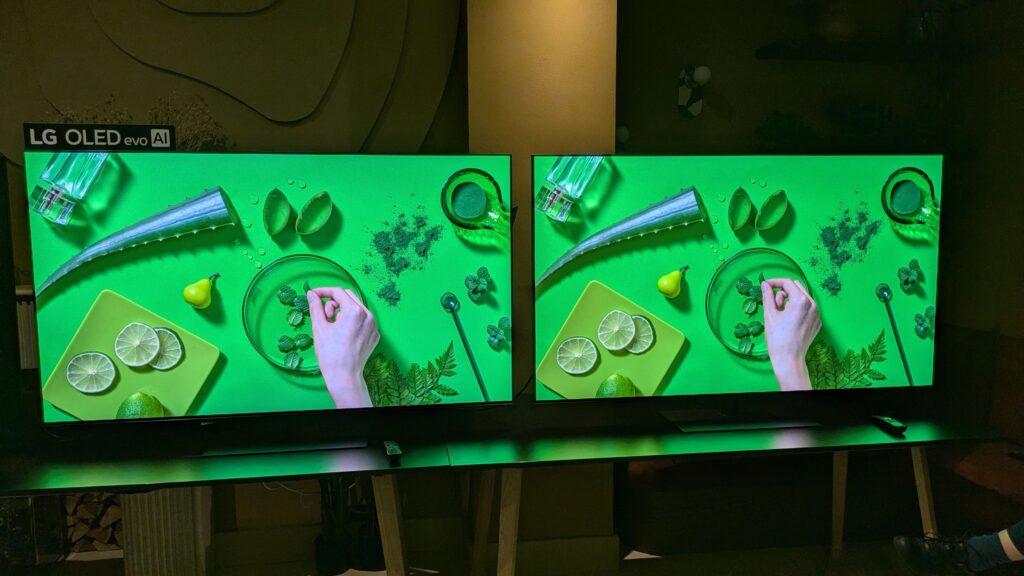
LG is adding support for the Eclipsa Audio format to its 2026 models as well as to certain 2025 TVs. This is an alternative to Dolby Atmos that delivers spatial sound over streaming, and it was notably developed by Samsung and Google.
According to a report by FlatpanelsHD, all of LG’s 2026 TVs will support Eclipsa Audio, and support has been added to the following 2025 TVs via a free update: LG G5, LG C5, LG CS5 and LG QNED9M.
The article continues below
Samsung said it wasn’t to expand into areas where Dolby Atmos is either not widely used already, or is unaffordable. “Dolby isn’t involved in gaming seriously, and they’re not involved in in-car audio,” said Samsung Audio Lab VP Allan Devantier (although I should add that Dolby is definitely investing heavily in in-car audio — see the Cadillac Optiq this year).
Analysis: a surprise, given LG’s caution with other formats
Some TV brands, such as TCL and Hisense, like to embrace a multitude of formats, which helps give their TVs a sense of incredible value. LG is usually much more careful about such things.
The company has supported DTS audio formats at times in the past, but it’s been on and off — it’s currently off. LG also told me at a recent event that it still has no immediate plans to support Dolby Vision 2, and representatives were unsure if the 2026 TVs could even be updated to support it in the future.
This decision was based on the lack of Dolby Vision 2 content at the moment – LG said it would consider support when there are things to watch that fully make use of the format.
Now, it can be noted that both DTS and Dolby Vision 2 require paying a fee to include in a set, so there’s a strong reason for a company not to support them if it doesn’t think it’s a problem to exclude them.
However, HDR10+ does not require a fee to support, but LG has always been fiercely opposed to it, instead focusing solely on Dolby Vision HDR. In the past, LG’s response has usually been similar to the Dolby Vision 2 response: that there wasn’t enough content to justify adding support.
Recently, HDR10+ has been added to several streaming services (including Apple TV+ and its movie rentals, Disney+ in some countries, including some Hulu content, and Paramount+ on some content), so last year I asked LG to add support now that it’s more widely available.
The company said it still doesn’t see the point, claiming that pretty much everything available in HDR10+ will also be available in Dolby Vision. It also said it believes its own tone mapping processing is superior to HDR10+, removing the need for it, and that it simply would probably never support it.
So why is Eclipsa different? Well, I suspect it has to do with something I mentioned above: YouTube. YouTube does not support Dolby Atmos and I suspect it never will. YouTube is also more popular on TV than even Netflix and Disney+. And TV has become the most popular way to watch YouTube, even surpassing phones.
If people start to expect and enjoy things on YouTube with more immersive Eclipsa Audio, then LG doesn’t want to be left as a platform where you don’t get the best sound from the most popular streaming app. Especially since Samsung already supports Eclipsa Audio, and Google TV supporting Eclipsa means that TCL, Hisense and Sony will all surely include the format. And if Samsung has worked with Amazon, we can assume that Fire TV sets could support it at some point.
LG could afford to be ‘left out’ of HDR10+ because Dolby Vision, as it rightly said, was the only game in town for so long in practice, and is still the biggest player. But Eclipsa Audio will make its impact in places Atmos will likely never reach, so it makes sense for LG to join Samsung in an upstart format for once.
Are you considering buying a new TV?
Try our TV size and model finder! You tell it how far you sit from your TV, we’ll tell you what size to buy based on viewing angle advice from picture quality experts, and we’ll recommend our top three TVs in that size at different prices.
Follow TechRadar on Google News and add us as a preferred source to get our expert news, reviews and opinions in your feeds. Be sure to click the Follow button!
And of course you can also follow TechRadar on YouTube and TikTok for news, reviews, video unboxings, and get regular updates from us on WhatsApp also.


