
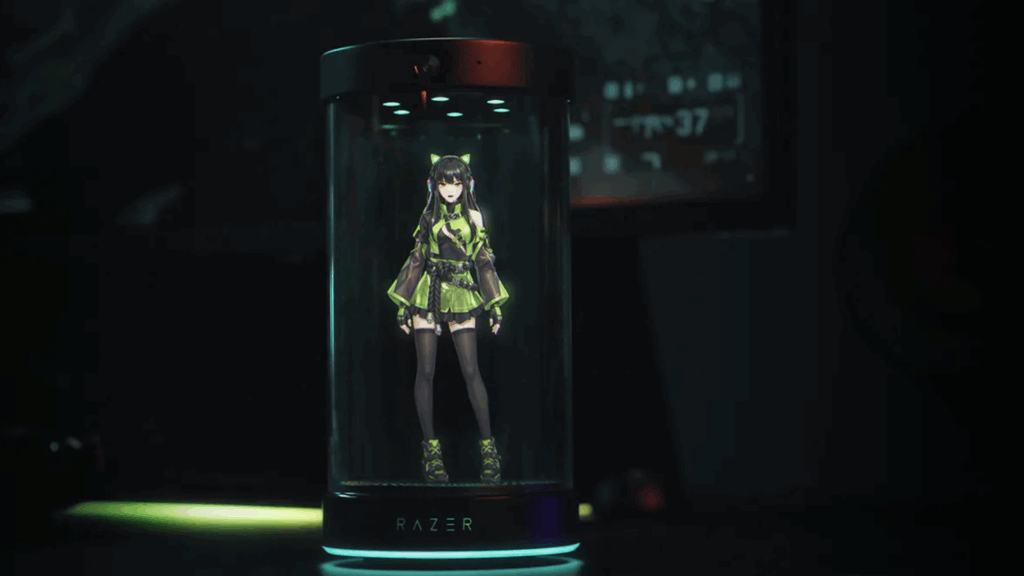
- Razer showed off an upgraded Project AVA animated holographic AI assistant at CES this year
- Project AVA has a selection of avatars with their own simulated personalities that can engage in conversation, watch your screen and track your gaze
- Razer expands Project Ava’s role beyond gaming coach to everyday tasks like planning and organizing your life
AI assistants right now mostly take the form of a wall of text or a disembodied voice, but Razer believes people prefer to talk to a small, animated hologram with a matching personality sitting on their desk.
It brought its Project AVA to CES this year to showcase just that. AVA first debuted at CES last year as an esports coach in a gaming rig, but the glowing, 5-inch holographic avatar can now live on your desk, converse with you, and offer help with everything from your daily schedule to the perfect outfit of the day.
The AVA’s cylindrical home sits next to your keyboard and appears to house a lifelike hologram that resembles one of a handful (so far) of Assistant shapes, such as original Razer characters, AVA, Kira, and Zane, or recognizable esports figures.
The holograms have facial expressions, lip-synced speech and personalities that Razer says go “from bold and brash, to calm and friendly.”
Look at
The built-in camera, far-field microphone array and “PC Vision Mode” enable AVA to see your screen, hear your voice and follow your gaze. According to Razer, the hologram isn’t just for show. The projected avatar reflects your interactions with subtle head movements, blinks, lip syncs and expressions designed to feel alive without veering into the uncanny valley. The eye-tracking hardware lets it maintain “eye contact,” giving conversations a surprising sense of reciprocity.
Despite its gaming roots, AVA is designed to be a full-service assistant. Along with analyzing in-game footage and suggesting strategy adjustments in real-time, it can organize your schedule, remind you of appointments, and suggest entertainment options based on your browsing.
Hologram AI
AVA is supposed to use what it learns about you, from your speech patterns to your on-screen activity, to adapt to your mood and habits. Razer suggests that AVA will leverage this information and its screen access to give you ideas to help create spreadsheets, edit code, or put together presentations.
The standard concerns about sharing so much information with an AI model apply to AVA, but with an added dimension of creepiness possible when that AI has a face and a voice. Razer has said that the data remains local and that protecting privacy is a top priority, but the intellectual understanding of an AI gathering information about you can feel more visceral when it takes a human or human-like form.
Razer has opened $20 refundable reservations for the AVA in the US ahead of an undisclosed shipping date, likely later this year. While you technically only need a Windows PC and USB-C connection, AVA needs relatively high system performance to support its avatar rendering and real-time analysis, so it’s not a casual toy.
Whether power users willing to pony up for AVA find it a persistent digital friend they miss when it’s off may determine AVA’s fate in the wider world. The glow of a tiny animated creature quietly watching you from your desktop may not appeal to the more tentative AI tool users.
Follow TechRadar on Google News and add us as a preferred source to get our expert news, reviews and opinions in your feeds. Be sure to click the Follow button!
And of course you can too follow TechRadar on TikTok for news, reviews, video unboxings, and get regular updates from us on WhatsApp also.

The best laptop companies for all budgets


