
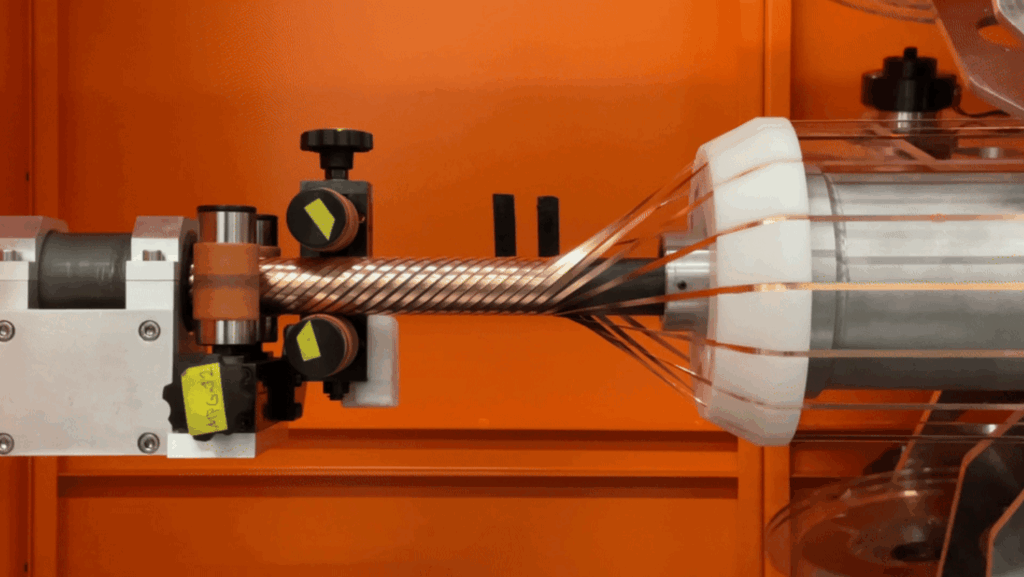
- HTS cables transmit electricity with almost zero resistance using liquid nitrogen cooling
- Unlike copper, superconductors do not generate heat or require more conductors
- Veir demonstrated three megawatts of power in a simulated data center environment
Microsoft says it has invested in high-temperature superconducting (HTS) technology through its partnership with Veir, a company that develops HTS data center power systems.
HTS cables are designed to transmit electricity with almost zero resistance by using liquid nitrogen cooling, which eliminates almost all energy loss.
Unlike copper or aluminum conductors, these superconductors do not generate heat and take up less physical space.
How HTS cables differ from traditional conductors
Microsoft says it is exploring HTS technology to improve data center energy efficiency, reduce transmission loss and improve operational sustainability across its facilities.
Veir’s first demonstration of its HTS system took place in November 2025, where it successfully delivered three megawatts of power through a single cable in a simulated environment.
To put that in perspective, an aluminum or copper conductor would produce about 150 to 200 kW of resistive heat and need several parallel cables to transmit three megawatts of power safely.
Although this demonstration represents a technical milestone, it is limited in scope and does not reflect real-world implementation.
Veir plans to move toward commercialization by 2026, but no timeline has been given for Microsoft’s operational use, in part because the high cost of superconducting materials and the challenge of cooling HTS lines remain major hurdles.
Even at grid scale, implementing HTS is often more expensive than conventional solutions when cooling needs, supply constraints and voltage constraints are taken into account.
However, Microsoft suggests that HTS technology could allow for closer power supply without expanding substations or adding additional feeders.
Traditional constraints require operators to choose between expanding facilities, reducing deployment density, or maintaining current operating limits.
HTS cables could, in theory, eliminate this trade-off and allow for more compact and energy-efficient systems.
The company emphasizes potential improvements in operational sustainability and reduced impact on local communities, although no specific metrics or timelines have been provided.
Despite Microsoft’s optimism, the HTS technology is still largely experimental and in its early stages, although the company admitted in a blog post that the technology is not new.
“HTS remains in the development and evaluation stage for adoption at Microsoft scale. Right now, the focus is on testing, validating and building trust in the technology with partners,” Microsoft said The register.
“The work going on now is about understanding where HTS could make sense, and we’re excited about the potential we see.”
Materials availability, cost and technical challenges mean that practical implementation may still be years away.
The company’s current announcements serve primarily to show interest in the technology rather than to signal imminent operational changes.
Even with advances, data center operators will still rely on conventional copper and aluminum wiring while high-temperature superconducting systems are refined.
Follow TechRadar on Google News and add us as a preferred source to get our expert news, reviews and opinions in your feeds. Be sure to click the Follow button!
And of course you can too follow TechRadar on TikTok for news, reviews, video unboxings, and get regular updates from us on WhatsApp also.


