
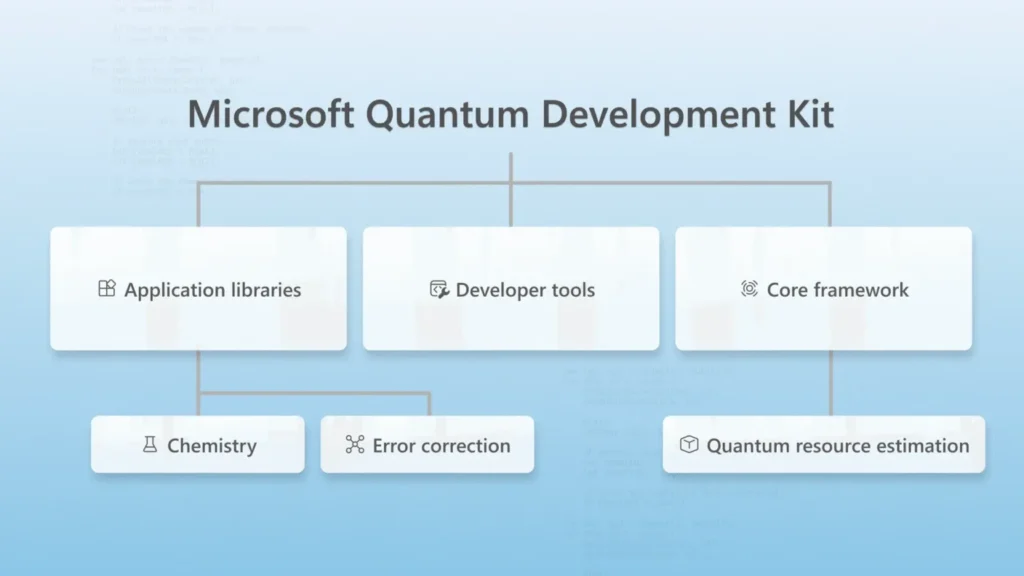
- Microsoft’s Quantum Development Kit allows developers to build and run quantum applications locally
- Integration with VS Code and GitHub Copilot simplifies quantum code creation and testing
- The platform provides quantum chemistry workflows that effectively reduce circuit depth
Microsoft has released a set of open source tools to lower practical barriers to quantum application development.
At the center is an updated Quantum Development Kit that brings simulators, languages and workflows into a single environment.
The kit runs locally on standard machines and also connects to external quantum hardware through cloud infrastructure and integrates widely used development tools like VS Code, enabling familiar editing, testing and debugging patterns.
GitHub Copilot support introduces assisted code generation, although its actual impact depends on developer experience and problem complexity.
The system emphasizes interoperability across multiple quantum languages and frameworks, enabling existing projects to co-exist without forced migration.
Two domain libraries receive special attention in the new release – quantum chemistry and quantum error correction.
Quantum chemistry tools combine classical preprocessing with quantum execution paths that fit current hardware limits.
These workflows aim to reduce circuit depth and resource consumption through chemistry-specific optimizations.
Error correction tools, on the other hand, address another persistent limitation by offering modules for encoding, decoding, validation, and debugging.
The company frames these components as research-oriented and expects them to develop gradually, with full availability extending into later timelines.
Both areas remain limited by hardware maturity, making near-term applicability dependent on experimental conditions rather than routine implementation.
The Quantum Development Kit works within a broader Microsoft Quantum platform that connects software, AI services and high-performance computing through Azure.
A qubit virtualization layer combines physical devices from multiple vendors into logical qubits intended to support more reliable computation.
An operating system layer manages device control and monitoring and abstracts hardware differences from application code.
The platform is described as adaptable across multiple quantum hardware types, including neutral atomic systems under joint development efforts.
Microsoft says this release aims to accelerate learning and experimentation by reusing established tools and programming environments.
Visualization, circuit inspection, and notebook-based workflows serve as aids to iteration rather than guarantees of performance gains.
Follow TechRadar on Google News and add us as a preferred source to get our expert news, reviews and opinions in your feeds. Be sure to click the Follow button!
And of course you can too follow TechRadar on TikTok for news, reviews, video unboxings, and get regular updates from us on WhatsApp also.


