
- Microsoft is introducing crash screen suppression on public displays to reduce unwanted visual distractions
- Windows 11 hides system errors after fifteen seconds on digital signage screens
- Microsoft is targeting non-interactive screens with a mode that prevents extended crash visibility
Microsoft is introducing a mode designed to prevent system crashes from appearing on large public screens for extended periods of time.
The new Digital Signage mode temporarily displays system error screens (such as the infamous Blue Screen of Death or BSOD) for fifteen seconds before turning off the display.
Administrators will need to physically interact with a keyboard or mouse to reactivate the screen when the error occurs.
The mode is intended for non-interactive displays rather than systems running in Kiosk mode.
Microsoft states that it suppresses other pop-up error dialogs in addition to system crashes.
The intention appears to be to reduce potentially embarrassing situations where error messages are displayed on public panels such as transport boards, retail displays, exhibitions or large corporate display installations.
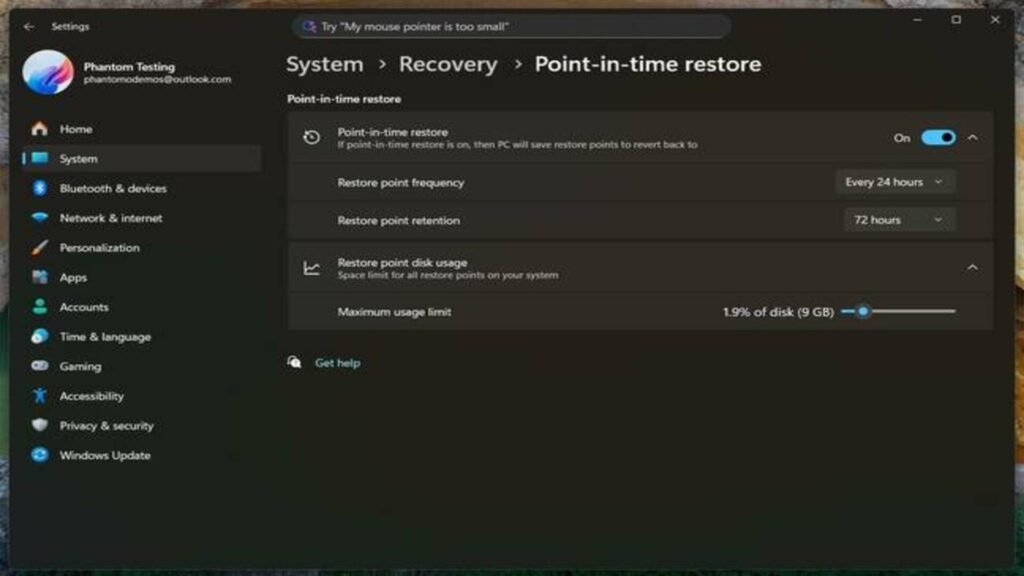
Microsoft is expanding recovery capabilities by introducing point-in-time recovery that lets users revert a system to a previous configuration.
Snapshot creation can be scheduled at intervals from four hours to twenty-four hours, with retention periods from six to seventy-two hours.
The process is accessed through the Windows Recovery Environment, where users can select individual snapshots by date and time.
Microsoft also previewed Cloud Rebuild for Windows 11, aimed at IT managers who need to reinstall and remotely configure devices using Intune.
During setup, the system restores configuration and files from cloud storage, allowing organizations to reinstall machines after failure without manual reimage tools.
Microsoft plans to introduce hardware-accelerated BitLocker encryption on future devices to improve performance during onboarding and strengthen data protection.
The company added future systems that support post-quantum cryptography algorithms to defend against theoretical attacks from quantum computing functions.
These measures apply to systems deployed across enterprise fleets, including configurations where devices work together with 8k displays for visual workloads in controlled environments.
Microsoft is rolling out previews of text generation tools that apply across multiple applications.
Typing assistance now works across any text input field and processes locally on devices equipped with neural processing hardware.
Outlook gets email summarization automatically, while Word generates alternative text descriptions for images.
This update cycle may reflect increasing attention to stability across environments where Windows is displayed on unattended panels, enterprise displays, or public signage.
Via the registry
Follow TechRadar on Google News and add us as a preferred source to get our expert news, reviews and opinions in your feeds. Be sure to click the Follow button!
And of course you can too follow TechRadar on TikTok for news, reviews, video unboxings, and get regular updates from us on WhatsApp also.


