
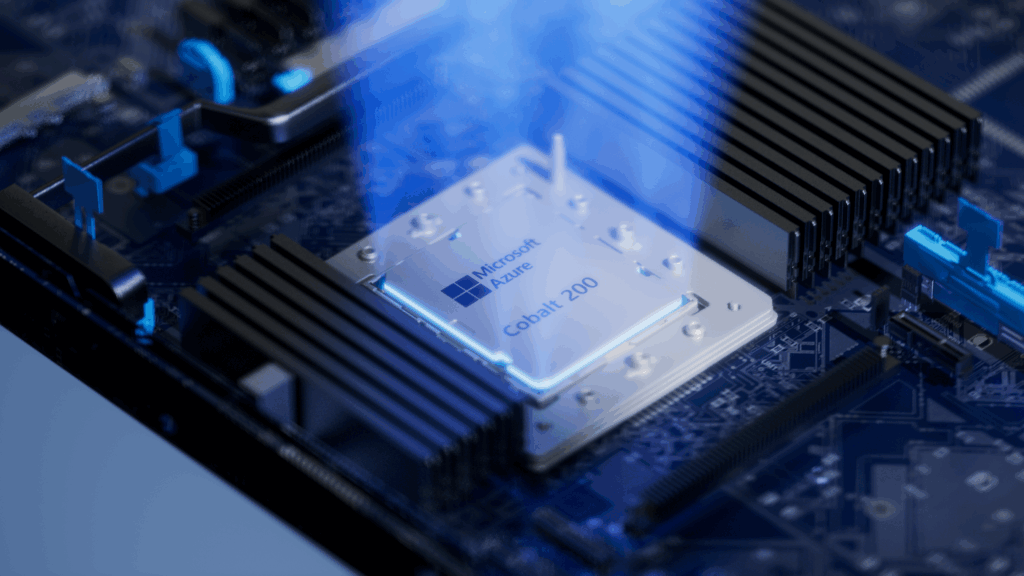
- Microsoft says the Cobalt 200 delivers a 50% performance increase over Cobalt 100 systems
- Microsoft targets data analytics and web services using workload-specific design methods
- Per-core DVFS adjusts power consumption independently across all 132 cores
Microsoft has introduced the Cobalt 200, a new Arm-based CPU designed for cloud services across Azure.
The company says the chip, which succeeds the Cobalt 100 and maintains compatibility with existing deployments, was designed using workload patterns observed across Azure environments, rather than industry-standard benchmarks, and delivers up to 50% higher performance.
These workloads include data analytics, web applications, network-intensive services, and systems that rely heavily on storage access for real-world use.
Efficiency-focused architecture and power management
The Cobalt 200 incorporates per-core Dynamic Voltage and Frequency Scaling (DVFS), which enables each of the 132 cores to operate at different performance levels, thereby reducing unnecessary power consumption.
The chip is manufactured on a 3nm process and is positioned as part of a wider strategy to manage power costs across data centres.
Compression, encryption and decompression tasks are handled by dedicated accelerators, freeing up CPU cycles and reducing computational overhead for services like Azure SQL.
Microsoft states that these accelerators arose from internal analysis showing that more than 30% of workloads rely on these operations.
The CPU includes a custom memory controller that encrypts memory by default without a significant performance penalty.
It also implements Arm’s Confidential Compute Architecture to isolate virtual machine memory from the hypervisor and host operating system.
Cobalt 200 systems integrate Azure’s hardware security module for encrypted key management.
It also supports compliance through Key Vault, which handles availability and scaling responsibilities for cryptographic keys, and Azure Boost, which handles offloading network and remote storage tasks to reduce latency and improve throughput.
Microsoft is positioning the Cobalt 200 as part of a broader platform rather than a stand-alone chip that powers systems across global Azure regions, with expanded availability planned for 2026.
The company plans to deploy the servers across its fleet, with live hardware already running in select data centers.
This announcement appears to favor lower power systems as data center energy demand increases.
Organizations can prioritize systems that reduce operating expenses, especially those that rely on distributed computing environments, workstations, GPU clusters, and multi-tier deployments that pair CPU-based tasks with accelerated workloads.
That said, the real measure of Cobalt 200 performance will depend on independent comparisons across competing cloud CPUs as customer access expands.
Follow TechRadar on Google News and add us as a preferred source to get our expert news, reviews and opinions in your feeds. Be sure to click the Follow button!
And of course you can too follow TechRadar on TikTok for news, reviews, video unboxings, and get regular updates from us on WhatsApp also.


