
- MSI’s mini PC handles AI workloads locally without relying on external servers
- MSI AI Edge supports up to 128 GB total memory for large models
- Developers can run AI models with natural language, images, or mixed input
MSI has entered the growing market for mini PCs powered by the Ryzen AI Max+ 395, joining a crowded field that currently includes over 30 units.
The new AI Edge device is designed to handle AI workloads on the desktop while providing general computing capabilities for work and play.
It includes RDNA 3.5 graphics with 40 compute units and XDNA 2 NPU architecture that delivers up to 50 TOPS.
Huge memory for on-device AI workloads
AI Edge supports up to 128GB of LPDDR5X 8000 unified memory, with 96GB dynamically allocated to the GPU, a configuration that allows large language models up to 120B parameters to run at around 15 tokens per second.
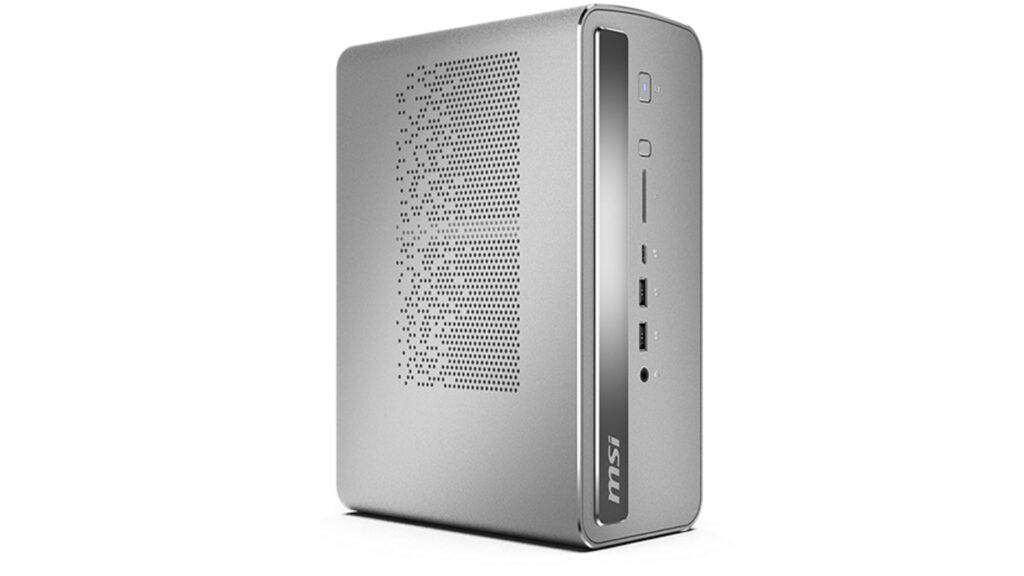
The AI Edge fits into a small 4-liter form factor, which aims to save desktop space while maintaining full desktop functionality.
It also has a built-in power supply and users can choose either Windows or Linux for their preferred computing environment.
The system can also deliver gaming performance comparable to a GeForce RTX 4060-class GPU.
With this level of gaming performance, MSI uses the Glacier Armor thermal design, which applies advanced heatsinks to key components and helps maintain consistent performance during long AI lags or gaming sessions.
Bundled software on the AI Edge utilizes computing resources on the device for productivity tasks such as generating notes, creating mind maps, and processing personal datasets.
Retrieval-Augmented Generation (RAG) technology allows users to query local data sets securely, ensuring that sensitive data remains on the device.
For example, financial records can be analyzed for insights directly on the AI Edge without cloud involvement.
AI Edge supports real-time AI inference for multimodal models, making it suitable for developers testing natural language, images, or mixed-input models.
Local AI workloads can run independently without external servers, reducing latency and preserving privacy.
AI Edge offers a single set of front-facing ports for everyday connectivity.
Users can access a USB-C port for fast data transfer and potential power supply, while two USB-A ports allow connection of standard equipment such as external drives, keyboards or mice.
A 3.5mm audio jack supports headphone or microphone input, ensuring the system can handle basic audio needs without additional adapters.
An SD card slot also provides quick access to external storage or media, supporting workflows that rely on portable storage and file transfer.
In a market filled with over 30 Ryzen AI Max+ 395 mini PCs, MSI’s AI Edge is likely to compete through its high memory capacity, on-device AI capabilities and gaming performance.
Its success will likely depend on how well these features meet the needs of developers and professionals seeking a compact, versatile AI desktop.
TechRadar will extensively cover this year’s CESand will bring you all the big announcements as they happen. Head over to ours CES 2026 news page for the latest stories and our hands-on verdicts on everything from wireless TVs and foldable screens to new phones, laptops, smart home gadgets and the latest in artificial intelligence. You can also ask us a question about the show in our CES 2026 live Q&A and we will do our best to answer it.
And don’t forget it follow us on TikTok and WhatsApp for the latest from the CES show floor!


