
Islamabad:
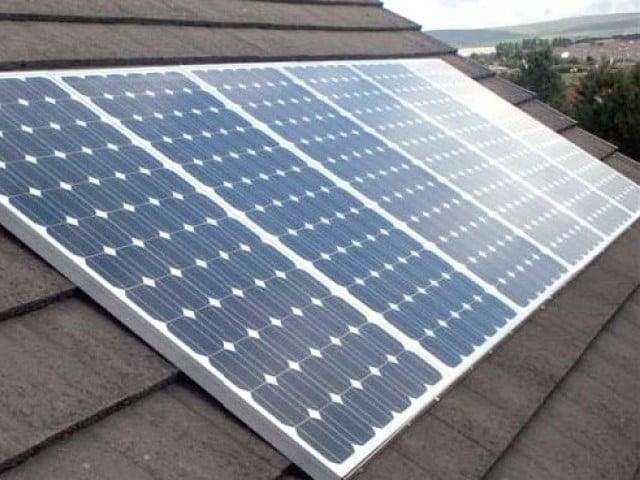
The National Assembly and Senate Financing Committees have rejected the proposed introduction of a VAT of 18 percent on solar panels with reference to concern over its potential negative impact on the adoption of green energy.
The decision came under considerations on the financial bill for the financial year 2025-26 on Tuesday, which includes a large number of reforms and changes aimed at expanding the tax base and strengthening enforcement.
The National Assembly’s Standing Committee for Funding, chairman of Syed Naveed Qamar, discussed the proposed tax in detail. The committee expressed unanimous opposition, in which Qamar noted that all political parties had already expressed their rejection of any taxation of solar energy.
He warned that such a measure could deter the shift to renewable energy and undermine environmental goals.
Read more: Govt Slaps RS415B -Taxes to raise RS2.2TR
The Federal Board of Revenue (FBR) Chairman Rashid Mahmood Langrial stated during the meeting that the tax would not be used for fully imported, ready to install solar cell panels, but would instead target imported components used for local collection. However, this clarification did not do much to cushion the committee’s concerns.
Finance Minister Muhammad Aurangzeb agreed with the committee’s attitude and observed that the price of solar panels had dropped significantly in recent years, making them more accessible. He assured members that the government would meet its income targets through alternative means, including taxing soft drinks and increasing carbon taxes.
During the same session, the Committee reviewed changes to sections 37a and 37aa in the financial bill, which aimed to limit tax fraud on a large scale.
Under the new provisions, persons involved in fraud exceeding RS50 million may be subject to arrest. FBR officials explained that the process would involve the issuance of three messages before any arrest, with the measure reserved for cases where there is a risk of flight.
ALSO READ: 18% VAT on vehicles up to 850cc Suggested
Aurangzeb emphasized the need for protective measures to prevent abuse of these powers. He said arrest decisions would be reviewed by a committee with three members within the FBR and confirmed that the Prime Minister had ordered that the abuse of arrest provisions is strictly avoided.
The Minister of Finance also confirmed plans to gradually reduce subsidies, including those who benefit from the solar sector, as part of the efforts to streamline fiscal policy.
At the same time, FBR will pursue stricter enforcement against unregistered units and may resort to freezing bank accounts or close non-compatible companies.
Members of the committee also raised concerns about illegal trade in the tobacco sector. While supporting stronger enforcement to limit tax evasion, several legislators warned against assigning uncontrolled powers to enforcement agencies and warned that it could lead to corruption and harassment.
Read more: Autosector divided on new budget
Separately, the committee reviewed the government’s decision to withdraw the federal excise tax on real estate in the coming financial year and noted its conflict with laws that govern moving assets.
The debate also arose on increased taxation of small vehicles as part of Pakistan’s obligations to the International Monetary Fund (IMF).
The turnover tax on cars under 850cc is raised from 12.5 percent to 18 percent, which draws criticism from members who claimed that the measure is disproportionately affecting the middle class.
While no decision was made to roll back the increase, the committee recommended a political review to facilitate the burden of consumers.
The Financial Committee’s considerations reflect the broader challenge that the government faces as it tries to improve revenue without stopping economic activity or undermining public welfare.


