
- NotebookLM has integrated Nano Banana Pro into its new infographic and slide deck tools
- The AI image maker turns research into polished graphics with captions
- The workflow lets you design complex, publication-ready graphics without ever leaving your notebook
Google’s NotebookLM has added a few new options for recreating research, infographics, and slide decks. The platform taps into the new Nano Banana Pro imaging AI model to produce both infographics and slide decks, a big moment for multimodal AI tools. and a surprisingly elegant fusion of research and design.
Nano Banana Pro is built to synthesize accurate, grounded information into visual formats, correctly render text inside images, and be consistent across styles and formats. After seeing the power of Nano Banana Pro, I decided to try out the infographic and the creation of the slide deck using a subject with lots of available information, King Arthur and the legends that grew around him. I wanted to see how well NotebookLM did in turning old British myths into modern visual storytelling.
Infographics
Picture 1 of 2
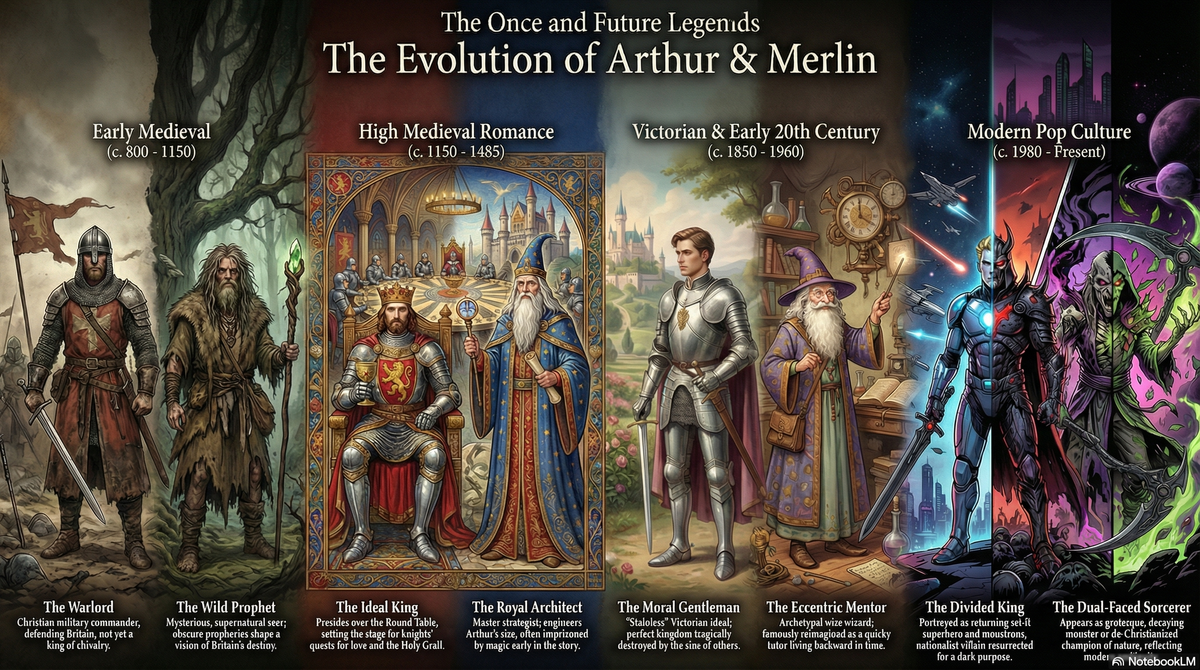
I started with a few infographic suggestions. First, I asked to see a comparison between the earliest King Arthur stories and the more complete myth that was created later. Then I asked to see a timeline of how the characters from King Arthur and Merlin have developed.
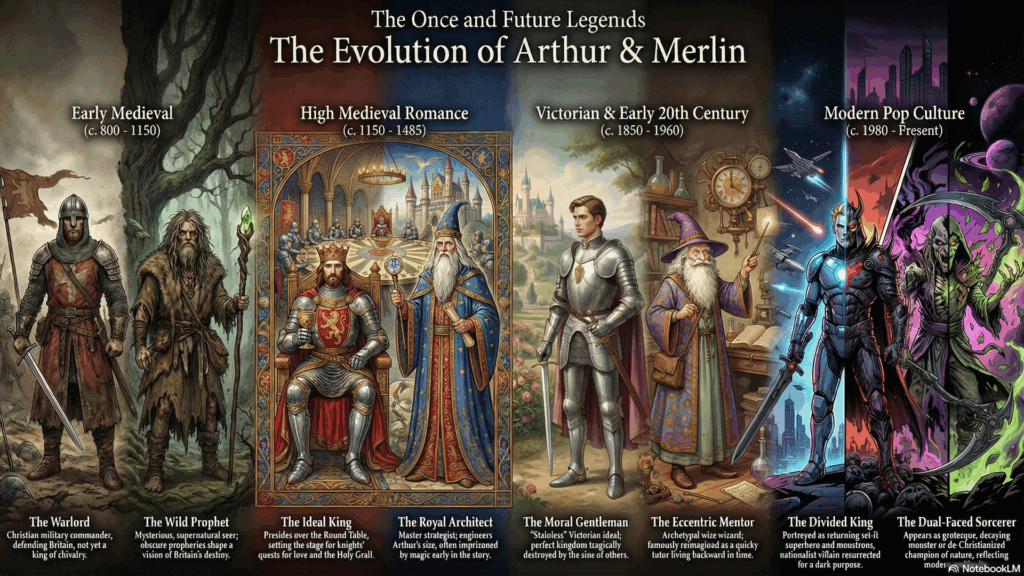
Nano Banana Pro and NotebookLM did a good job of drawing a direct visual and thematic line between the earliest known versions of the Arthurian myth (ca. 800-950 AD) and the more elaborate medieval romances (1136-1485 AD). The infographic shows the rough, warlike and primal myth becoming lush, polite and full of additional iconic elements. The text was mostly readable, but had a few issues that would require some iterations to fix.
For this second infographic, I wanted a journey through historical eras showing how Arthur and Merlin’s appearances and roles have evolved over time. You can see the pair of them repeated across eras, looking very different each time and given a new title and description each time. The transitions over time are not only visual; they are thematic. Each pair reflects the politics, morals and aesthetics of the era. The fact that Nano Banana Pro could maintain character coherence while switching between medievalism and cyberpunk is frankly remarkable.
Slip tires
Picture 1 of 4
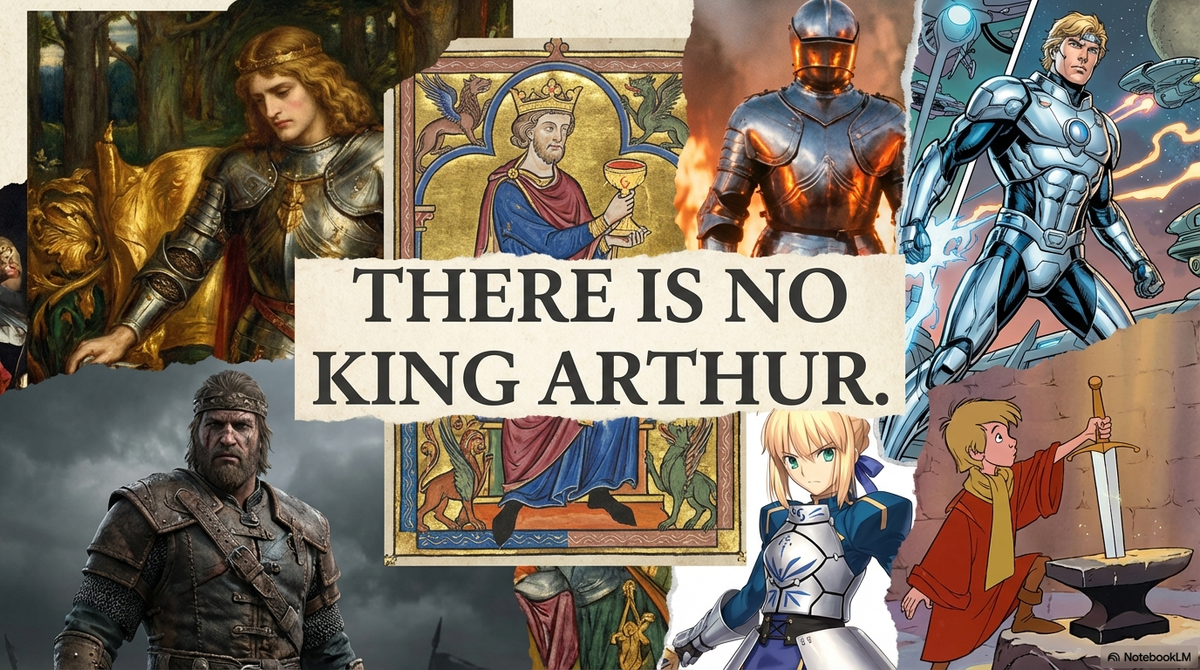
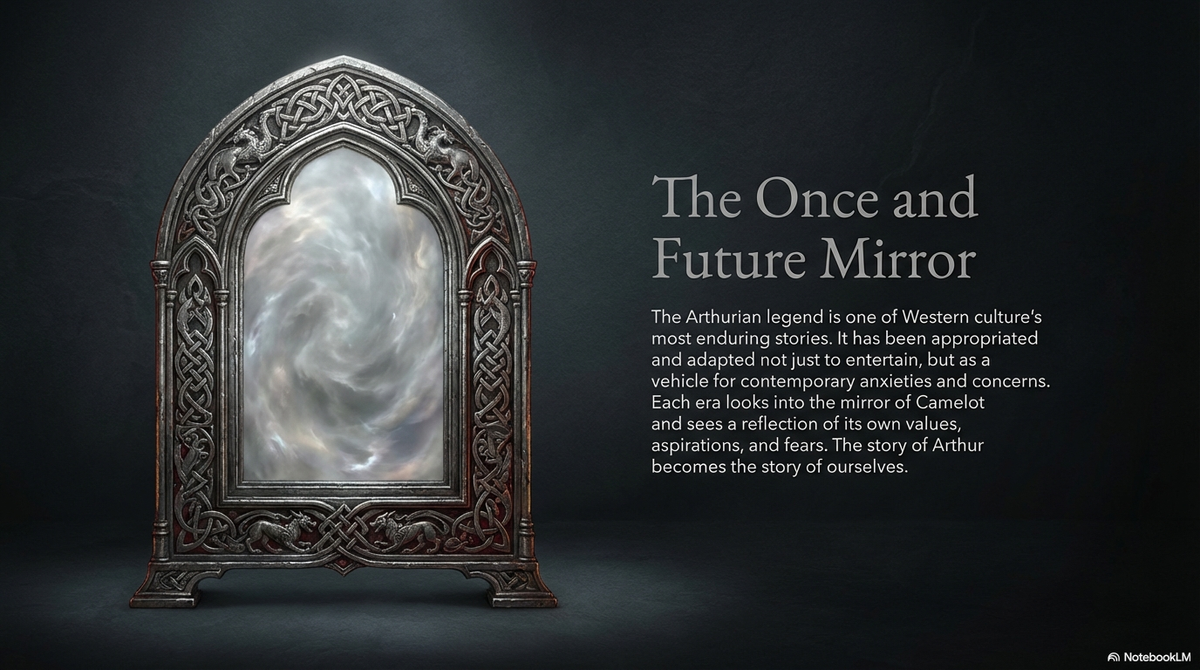
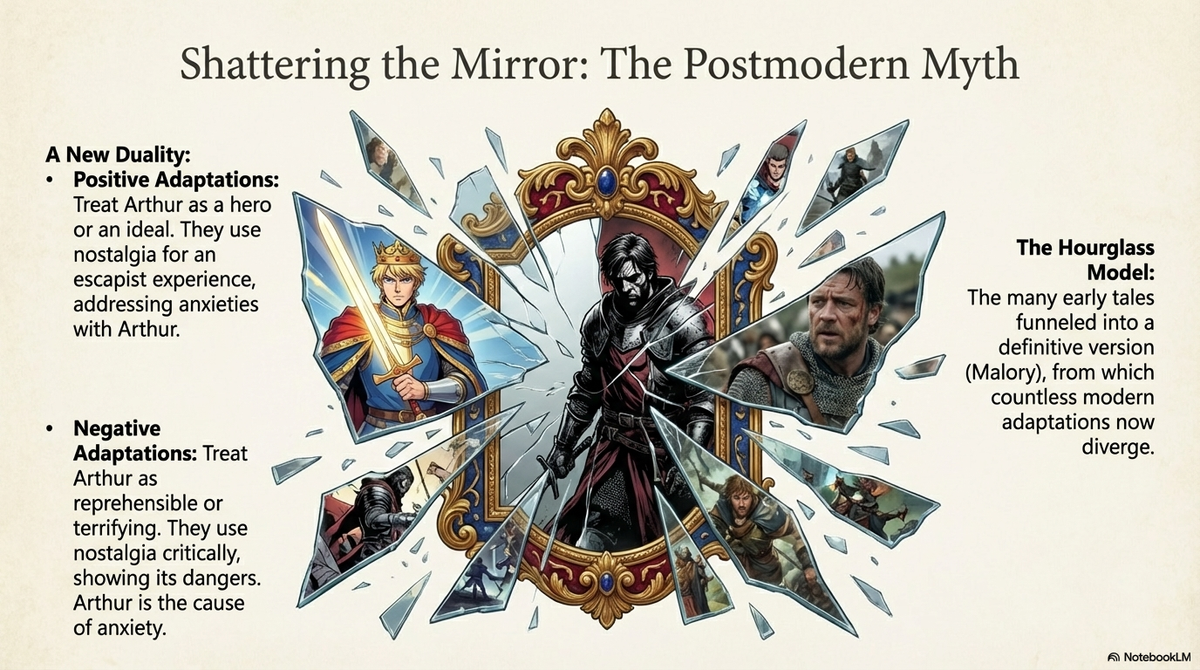
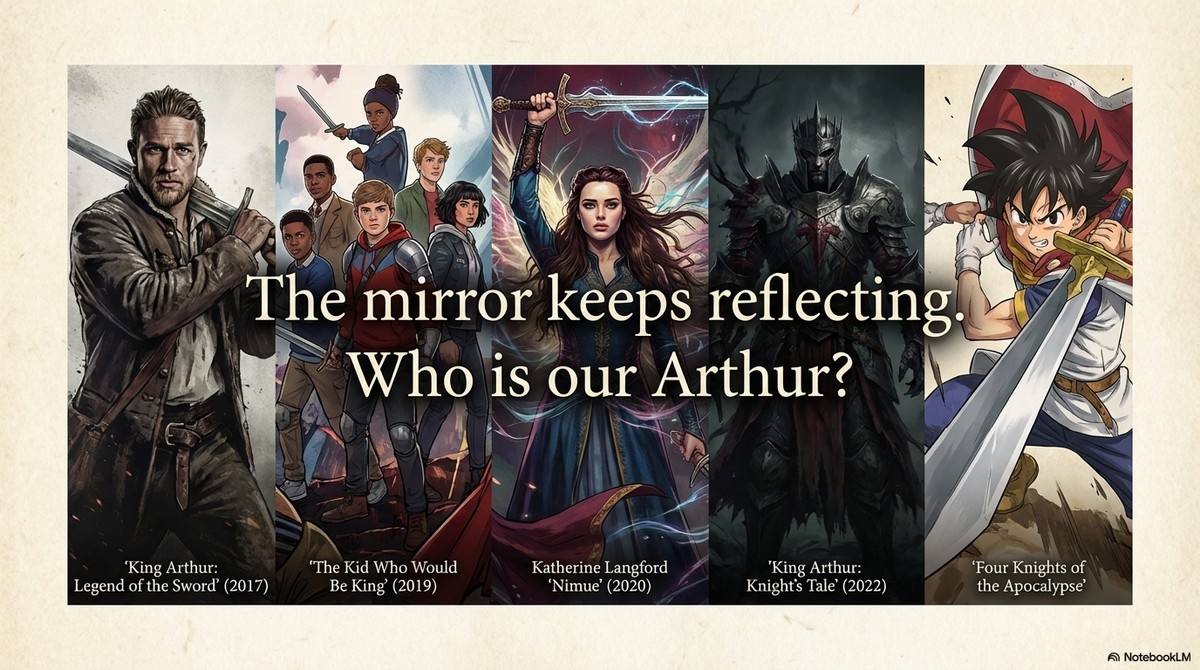
For the slide deck, I asked the AI to depict the Arthurian myth cycle at different historical stages, from its original form through the 21st century. After a few minutes, NotebookLM revealed Arthur the Endless Reflection. I’ve included a few sample images above, but they’re just a few of the 15 slides created by NotebookLM and Nano Banana Pro.
Although imperfect, the output gave the impression of a complete multimedia lecture series that just needed some proofreading and tweaking. The richly illustrated, thematically coherent visual essay used imagery, historical framing, and myth analysis with surprising sophistication.
The opening image sets the tone immediately: a collage of Arthurian faces from medieval script king to anime knight, grimdark warlord and shiny sci-fi paladin arranged around the blunt declaration “THERE IS NO KING ARTHUR.” It’s a mission statement built into the design, and it announces the tire’s thesis with more confidence than most man-made opening glasses.
What stood out the most was how the Nano Banana Pro easily moved between styles in the service of meaning. A medieval-style frieze shows Arthur rising, ruling and falling in neat, narrative beats. Then Chrétien de Troyes’ transformation of Arthur’s court into an engine of romance is shown as an ornate triptych, before finally showing a full cartoon spectacle, using bright sci-fi colors and crisp panels to examine Arthur as a superhero.
More than anything, what this deck demonstrates is how the Nano Banana Pro in NotebookLM is changing the way research feels. Instead of a text-heavy outline or rough brainstorming board, the deck becomes a polished argument ready for presentation with just a little extra work.
Adding the right banana…er…AI ingredient
NotebookLM has always felt like the most promising of Google’s Gemini-powered experiments. But until recently it was all about synthesis and citation, a glorified research assistant. Nano Banana Pro makes it a potent visual storytelling partner.
The infographics and slide deck are visually compelling and structured in a way that made a lot of sense, if not entirely without error. There is room for human sophistication. But it’s a very enticing set of tools for those who lack an eye or talent for design.
Being able to put together important information and then ask for visualizations relieves a lot of pressure. It’s the difference between writing notes for a presentation and leaving the room with the presentation already finished. It’s a magic that Merlin (at least in some forms) could also appreciate.
Follow TechRadar on Google News and add us as a preferred source to get our expert news, reviews and opinions in your feeds. Be sure to click the Follow button!
And of course you can too follow TechRadar on TikTok for news, reviews, video unboxings, and get regular updates from us on WhatsApp also.

The best business laptops for all budgets


