
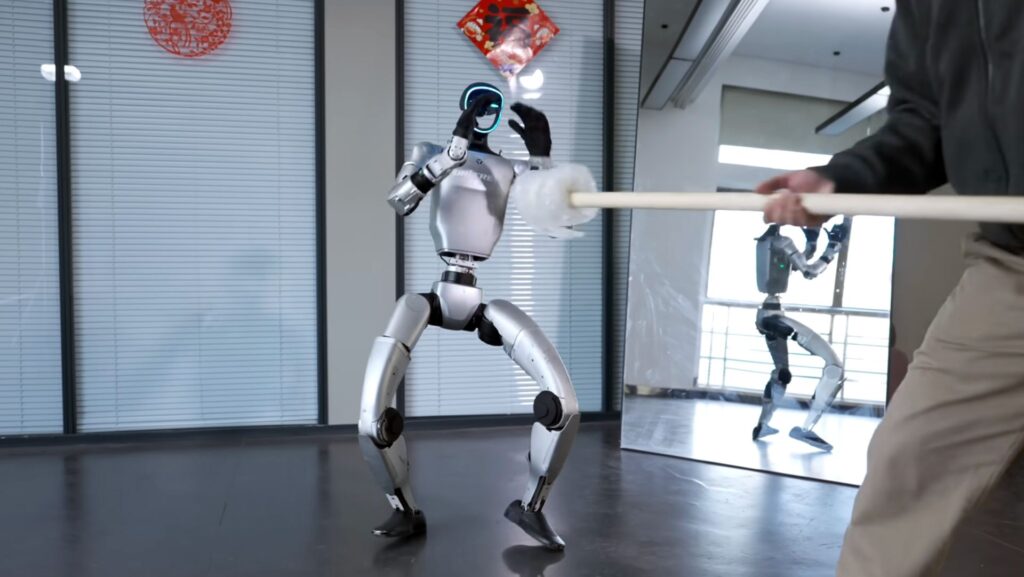
- Unitree launches Robot App Store
- It may be the first in the industry
- The beta version has a handful of download routines for the G1
Like so many technologies before it, modern robots are on the hunt for that killer app, the one thing they could do that would make them so compelling that everyone wanted one. But to find that app, you need a robot app store, or at least that’s the apparent thinking behind the launch of Unitree’s App Store for its robots.
To be clear, this isn’t exactly like, say, an iPhone App Store. The routines Unitree customers can upload and download are not as varied as, say, an app that can help you budget or another that can help you calm down with daily aphorisms. Instead, Unitree’s App Store is mostly a repository of models or routines for robot tasks and movements.
Launching this week in beta, the Unitree App Store has just a few collections that include Funny Actions, Twist Dance, and Bruce Lee. As you might have guessed, the latter will let your $13,500 G1 humanoid “reproduce Bruce Lee’s classic martial arts moves.” The Funny Actions models let the G1 “unleash its wildness.”
Unitree’s programming code is open source, meaning owners can write motion and routine code for their own robots, and the App Store will give them a place to upload it. It’s not clear whether Unitree will examine the software in a way similar to what Apple does with its App Store.
There are other issues and limitations. For now, most of the app options are only for the G1 model. There is also no clear revenue plan for Unitree or the invited developers. In a short announcement video on YouTube, Unitree writes: “Exceptional developers will receive rewards.” It could be money or discounts on future robots, like the wild-looking, new ballet dancer-like H2.
Look at
Waiting for the robots’ iPhone
Unitree’s approach to bot development and outreach is decidedly different from most competitors. Unlike 1X and Figur AI, which focus on somewhat linear development, limited access and high prices, Unitree has a growing range of robot designs (humanoid and quadrupedal) and price options.
The Chinese company also seems less focused on pure-play development and innovation than, say, Boston Dynamics, which is busy perfecting its all-electric Atlas that will likely end up in factories long before it ever reaches consumers’ homes.
Unitree, on the other hand, seems to have sold quite a few pint-sized G1s to at least well-heeled influencers who have filmed bots in compromising situations (I’ll never forget seeing a G1 run straight into a full-length mirror).
Picture 1 of 3
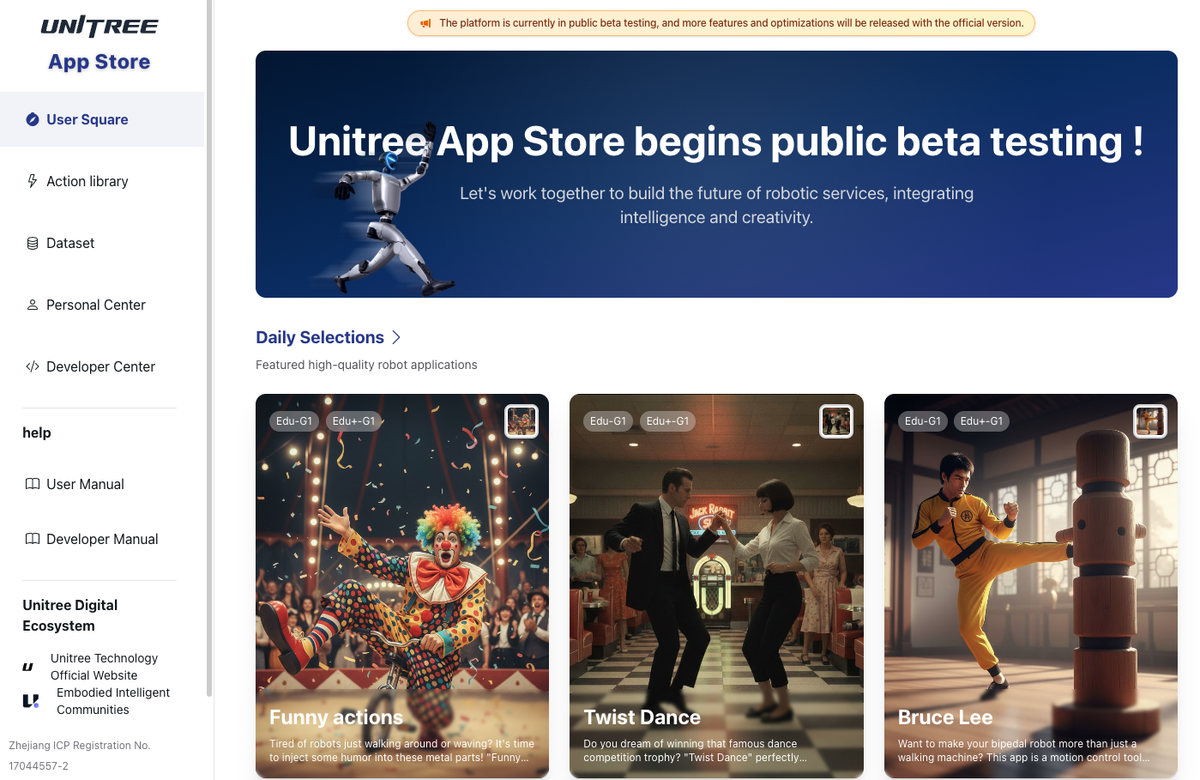
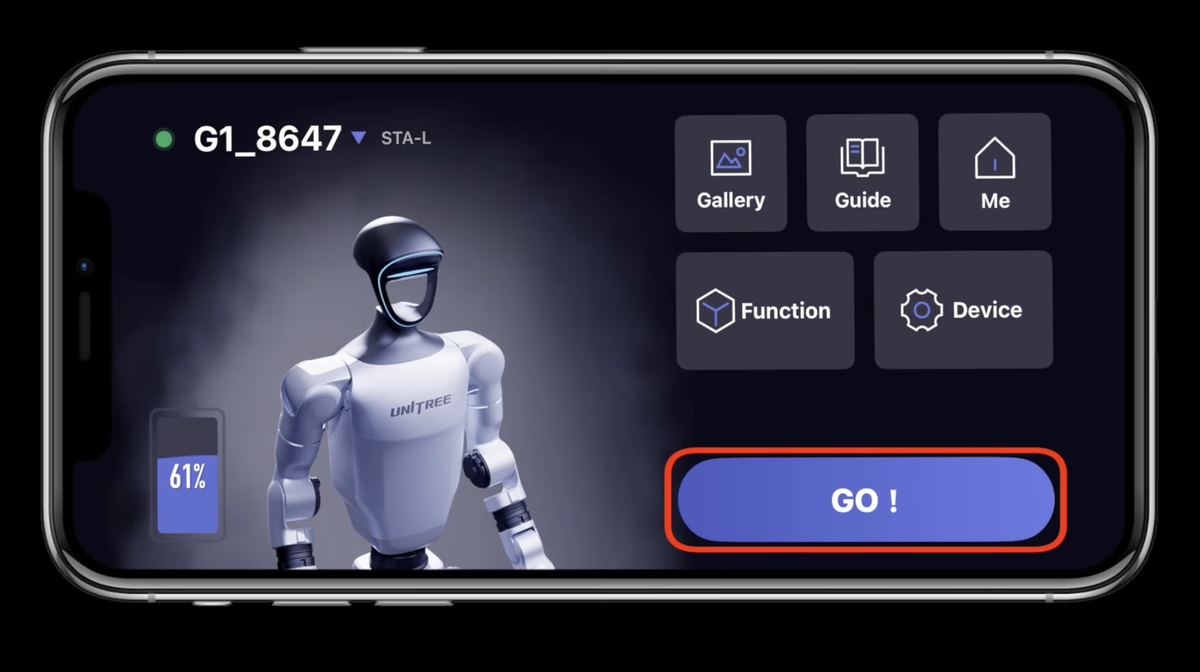
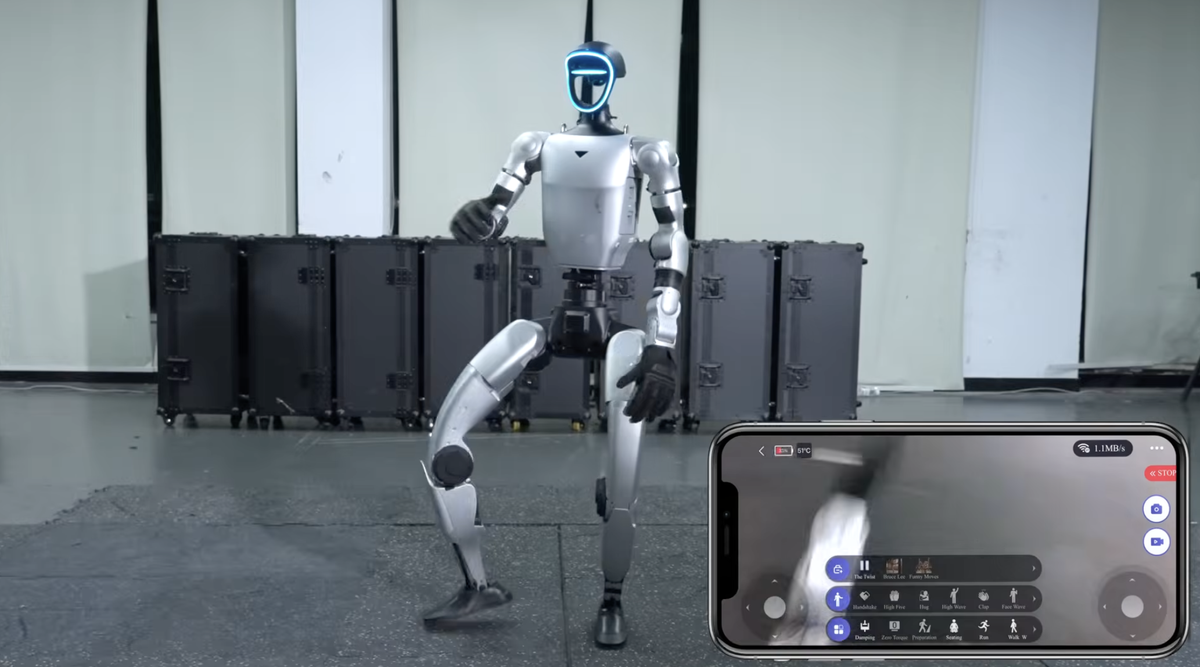
The App Store feels like an extension of this strategy. Instead of keeping development under wraps, Unitree has opened its doors and encourages developers to share. Provided developers can build on each other’s open source code, the existence of a “robot app store” could help accelerate robot development and innovation.
That is the good news. The bad news is that none of Unitree’s robots qualify as the “iPhone of robots.” I would argue that such a humanoid robot does not exist yet. People may be excited about the 1X’s Neo Beta, but they won’t be as excited when they’ve dropped $20,000 for it to slowly whirr and be teleoperated throughout their home. Figure 03, which lacks a housing availability timeline, may suffer a similar fate.
Unitree’s robots, which mostly run through canned routines and seem to have little autonomy or ability to handle the unexpected, are also, while somewhat cheaper than $20k, iPhone quality.
For now, we can celebrate the establishment of the first Robot App Store. It won’t be the last, but it and many others to come will have a long wait for the perfect marriage of an affordable humanoid robot and the ever-desired “killer app.”
Follow TechRadar on Google News and add us as a preferred source to get our expert news, reviews and opinions in your feeds. Be sure to click the Follow button!
And of course you can too follow TechRadar on TikTok for news, reviews, video unboxings, and get regular updates from us on WhatsApp also.


