
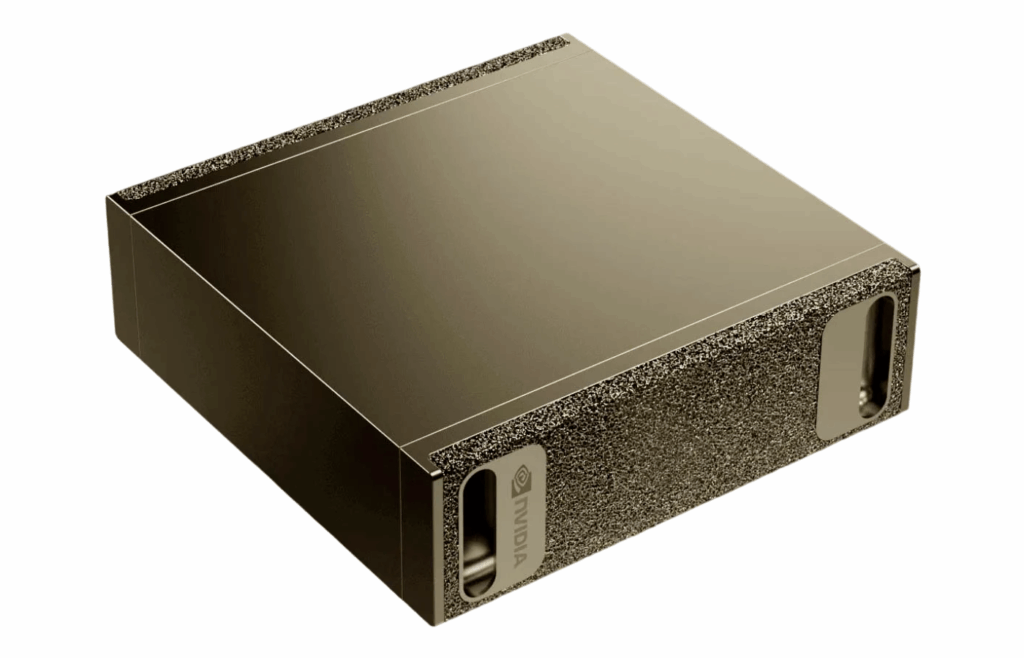
- Planned software update adds external accelerator role to Nvidia’s DGX Spark
- MacBook Pro users can push heavy AI processing to the external system
- Performance and tool changes focus on local open source AI
At CES 2026, Nvidia revealed that it is planning a software update for the DGX Spark that will significantly expand the device’s capabilities.
Powered by the GB10 Grace Blackwell Superchip, Nvidia’s tiny powerhouse combines CPU and GPU cores with 128GB of total memory, letting users load and run large language models locally without relying on cloud infrastructure.
Initial reviews of Spark, while universally positive, pointed out limitations with the software. This is something Nvidia is looking to address. A core part of the change will be expanded support for open source AI frameworks and models.
Good news for MacBook Pro users
The move will be a software change only, with no new hardware involved—and for organizations that rely on open tools, the changes will reduce custom setup work and help keep systems running as models and frameworks evolve.
The update to the mini PC will add support for tools such as PyTorch, vLLM, SGLang, llama.cpp and LlamaIndex, as well as models from Qwen, Meta, Stability and Wan.
Nvidia claims users can expect up to 2.5x performance gains compared to Spark at launch, primarily driven by TensorRT-LLM updates, tighter quantization and decoding improvements.
One example Nvidia shared involved the Qwen-235B, which more than doubles throughput when moving from FP8 to NVFP4 with speculative decoding. Other workloads, including Qwen3-30B and Stable Diffusion 3.5 Large, reportedly show smaller gains.
The update also introduces DGX Spark playbooks, which bundle tools, models, and setup guides into reusable workflows. These are designed to run on-prem without rebuilding entire environments.
An interesting demonstration paired a MacBook Pro with DGX Spark for AI video generation. Nvidia showed a 4K pipeline that took eight minutes to complete on the laptop and about a minute when compute-heavy steps were offloaded to the Spark.
The approach keeps creative tools on the laptop while Spark handles the heavy processing, moving AI video work closer to interactive use instead of long batch runs.
DGX Spark can also act as a background processor for 3D workflows and generate assets while creatives continue working on their main systems.
A local Nsight Copilot is included, allowing CUDA assistance without sending code or data to the cloud.
Together, the planned update will move DGX Spark from a stand-alone developer system to a flexible on-prem AI node that can support laptops, workstations and edge deployments.
Via Retention notice
TechRadar will extensively cover this year’s CESand will bring you all the big announcements as they happen. Head over to ours CES 2026 news page for the latest stories and our hands-on verdicts on everything from wireless TVs and foldable screens to new phones, laptops, smart home gadgets and the latest in artificial intelligence. You can also ask us a question about the show in our CES 2026 live Q&A and we will do our best to answer it.
And don’t forget it follow us on TikTok and WhatsApp for the latest from the CES show floor!


