
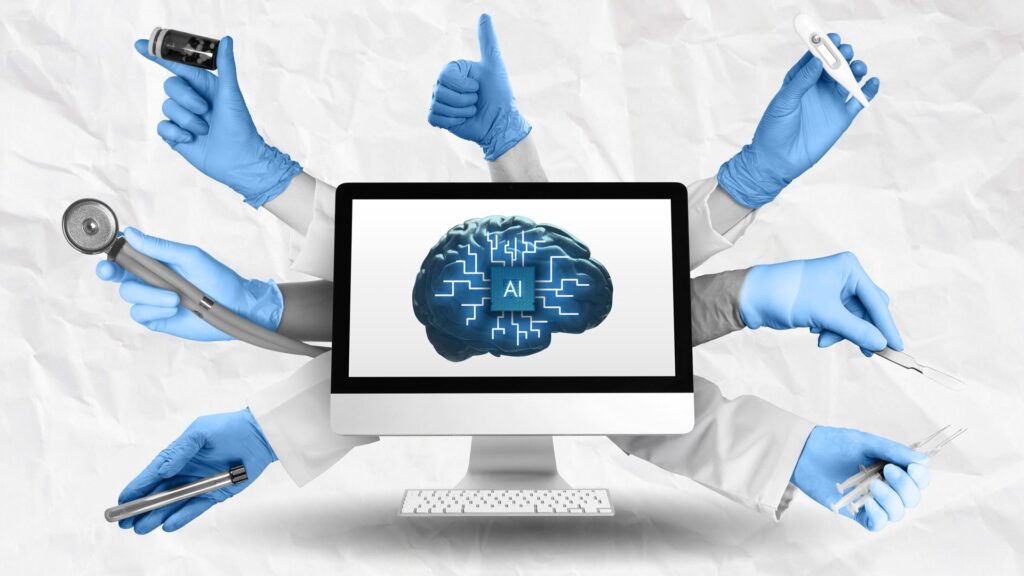
- 40 million ChatGPT users ask about health every single day
- 200 million ChatGPT users ask AI at least once a week about health-related questions
- OpenAI says “AI is an ally in healthcare”
OpenAI has released a report claiming that 40 million people use ChatGPT for health-related questions every single day, a number that would have sounded wild a few years ago, but now feels almost inevitable.
The company describes its chatbot as an ally in the healthcare industry, saying users regularly ask about symptoms, medications, treatment options and how to navigate often-overwhelmed healthcare systems.
The report suggests that more than five percent of all ChatGPT prompts are about health, and 200 million of the chatbot’s 800 million weekly users ask at least one health-related prompt each week.
Most of them are people trying to figure out if a headache is serious, what a complicated diagnosis actually means, or if a new prescription is supposed to make them feel so tired. I’ll admit I’ve done the same after a late-night spiral of indigestion, something I used to turn to Google only a few years ago.
How Americans are using AI for health
OpenAI’s report asked 1,042 US adults who used AI for healthcare in the past 3 months exactly how they use chatbots for healthcare-related questions.
55% used AI to “check or explore symptoms”, 52% used a chatbot to “ask health questions at any time of day”, 48% to “understand medical terms or instructions”, and 44% used AI to “learn about treatment options”.
OpenAI says these statistics show “how Americans are using AI for health navigation: organizing information, translating jargon, and generating drafts they can verify.”
One example the company highlighted was Ayrin Santoso of San Francisco, who “used ChatGPT to help coordinate emergency care for her mother in Indonesia after her mother suffered sudden vision loss that her family attributed to fatigue.”
According to OpenAI, “Santoso included symptoms, prior advice and context and received a clear warning from ChatGPT that her mother’s condition could signal a hypertensive crisis and possible stroke.”
From ChatGPT’s initial response, Santoso’s mother was hospitalized in Indonesia and has since “recovered 95% of her vision in the affected eye.”
Should we be worried?
OpenAI argues that AI can help outside clinic opening hours, when real doctors are hard to reach. It makes sense on paper with confusing health information, but there are serious risks, especially when you take ChatGPT’s word as gospel.
A chatbot cannot replace a doctor; it doesn’t have your full medical history, and it can still go wrong in ways that matter. OpenAI says it’s working with hospitals and researchers to improve accuracy and safety, but the core message is clear: millions of people have already decided that AI is part of their healthcare routine, whether the rest of us like it or not.
40 million daily users is a wild milestone, but while it’s easy to get carried away by such a landmark number, it’s worth remembering that people have been using technology like Google for health-related queries for more than a decade.
That said, Google’s top search results used to be led by trusted health-related sites like the UK’s NHS or WebMD. Now AI overviews add an element of AI uncertainty. And even more so when you turn to an AI chatbot like ChatGPT that is capable of churning out the most ridiculous information.
I don’t think using AI for quick tips on health-related matters is a bad thing, especially in countries like the US where you have to pay to see a doctor for a simple skin irritation. But how do you know it’s a simple skin irritation? And do you trust ChatGPT enough to take the risk?
Follow TechRadar on Google News and add us as a preferred source to get our expert news, reviews and opinions in your feeds. Be sure to click the Follow button!
And of course you can too follow TechRadar on TikTok for news, reviews, video unboxings, and get regular updates from us on WhatsApp also.

The best business laptops for all budgets


