
To construct a new transmission line connecting Islamabad, Faisalabad, industrial hub of Punjab
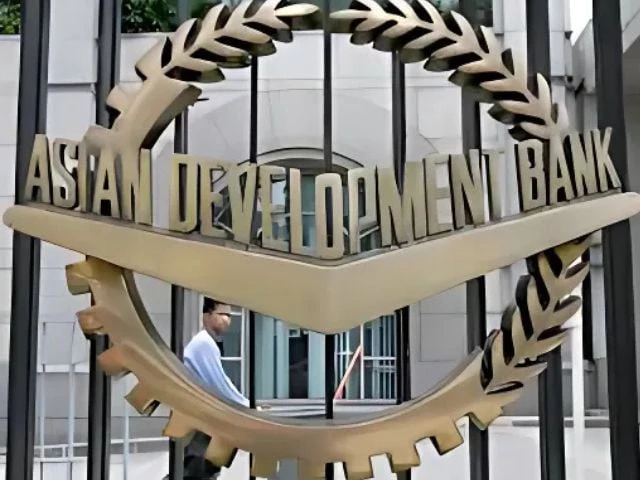
A worker walks past inside the Asian Development Bank (ADB) headquarters in Manila. Photo: Reuters/ File
ISLAMABAD:
Pakistan and the Asian Development Bank have signed two major financing initiatives worth a total of $730 million aimed at strengthening the country’s electricity transmission network and accelerating reforms in state-owned enterprises (SOEs), officials said Thursday.
The agreements cover another power transmission strengthening project worth $330 million and an accelerating SOE transformation program worth $400 million, according to a statement issued after the signing ceremony.
The initiatives are designed to reduce stress on congested transmission lines, improve operational performance and advance long-overdue regulatory reforms.
Earlier this year, Pakistan and ADB also signed an agreement to provide $200 million in support to upgrade the country’s struggling power distribution system through network improvements, underscoring the lender’s growing commitment to the energy sector.
ADB Country Director Emma Fan welcomed the agreements and praised Pakistan’s commitment to the reform agenda, highlighting the strategic importance of power sector investments.
She stressed that “the importance of SOE’s transformation program comes at a critical time in Pakistan and it will further strengthen reform efforts” in the country, the statement said.
The latest deals follow ADB’s approval last month of two loans totaling $330 million to Pakistan to build a new transmission line connecting Islamabad and Faisalabad, a major industrial hub in Punjab, as part of a broader effort to stabilize and modernize the national grid.
However, experts argue that the real challenge lies not in project design or funding volume, but in whether these initiatives confront the underlying political economy of losses that continue to erode fiscal space and undermine competitiveness.
Dr. Khalid Waleed of the Sustainable Development Policy Institute (SDPI) described the $730 million package as an “important moment” for Pakistan, but warned that its success would depend on addressing entrenched inefficiencies.
He pointed to the Finance Ministry’s semi-annual report on federal SOEs for FY2025, which paints a grim picture: accumulated losses across large SOEs have exceeded Rs 5.8 trillion. The NHA alone accounts for nearly Rs2 trillion in accumulated losses, largely due to a debt-driven expansion model paired with an unsustainable toll revenue structure.
“This is not a sector-specific problem; it is systemic,” said Dr. Waleed. In infrastructure, NHA’s rising debt stock reflects asset creation divorced from realism in cash flows. In energy, the situation is arguably worse. Once the subsidies are removed, the electricity distribution companies (DISCOs) are estimated to bleed close to Rs600 billion annually due to high technical losses, poor recoveries and governance failures, losses going directly into circular debt and escalating capacity payment obligations upstream.
Against this background, critics argue that strengthening transmission infrastructure, while necessary, risks becoming a partial solution. “Reforming generation or transmission without fixing distribution is like installing a smart meter on a leaky pipe,” noted Dr. Waleed.
The concern is that the SOE Transformation Program as currently formulated may be too narrowly focused. While the NHA reform is a logical starting point, analysts argue that it must move beyond incremental efficiency gains towards more fundamental restructuring, such as asset recycling, tax securitization and concession-based highway operations, rather than continued debt-financed balance sheet expansion.
Similarly, SOEs in the energy sector, especially DISCOs, must be explicitly integrated into the SOE transformation framework. Options include privatization, long-term concessions or performance-based management contracts, supported by aggressive digital metrics and loss reduction targets. Without addressing distribution losses, any gains from improved transmission capacity risk being absorbed by systemic leakages.
The debate also intersects with Pakistan’s broader energy transition challenges. The electricity sector faces a growing paradox: rising capacity charges alongside increasing underutilization of generation assets, exacerbated by the rapid expansion of rooftop solar. This trend is likely to intensify as export-oriented industries respond to the EU’s Carbon Border Adjustment Mechanism (CBAM) by demanding cleaner power, further pushing older thermal plants out of profit.
In this context, analysts argue that ADB’s engagement should extend beyond grid reinforcement to also include support for an energy transition mechanism. Dr. Waleed suggested that an orderly, funded early transition of loss-making thermal assets, starting with the ADB-financed Jamshoro coal-fired power plant, could reduce future capacity payments, ease circular debt pressures and create a replicable model for other plants.
“The transmission project secures the backbone of the grid, but it does not resolve the contradiction between excess capacity and increasing fiscal stress,” he said. “It requires confronting stranded thermal assets and aligning the SOE reform with the energy transition.”
Ultimately, the $730 million package underscores both opportunity and risk. If combined with politically difficult but economically necessary reforms, it could catalyze a long-overdue restructuring of Pakistan’s state-owned enterprises and energy sector. If not, critics warn, it could simply add new assets to an old system still burdened by losses, debt and governance failures.


