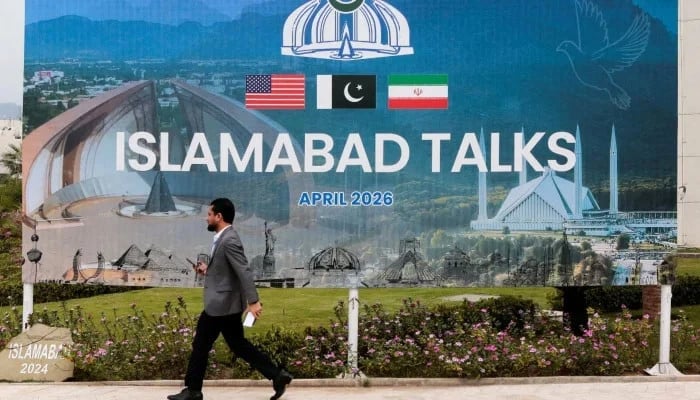
- DPM Dar, COAS Munir is leading intense mediation efforts.
- Contacts maintained with Washington and Tehran.
- Expiration of the ceasefire makes it urgent to agree.
ISLAMABAD: Pakistan has stepped up diplomatic efforts to bring the US and Iran back to the negotiating table after the first round of Islamabad talks ended without a breakthrough, The news reported, citing a senior Pakistani source.
The initial round of negotiations ended without a formal agreement, although officials on both sides publicly shared their respective positions. Despite the lack of a breakthrough, Pakistani authorities remain cautiously optimistic about the prospects for continued engagement.
A top-level source revealed that Pakistan is in active contact with both Washington and Tehran, urging them to resume dialogue as soon as possible.
The primary goal, the source said, is to reach a workable understanding before the ongoing ceasefire – due to expire around April 22 – ends, to avert a potential return to hostilities. “We want to finish it before the deadline,” the source said, stressing the urgency of the situation.
The source further disclosed that there are efforts to facilitate a second round of talks within this critical window. These diplomatic initiatives are being pursued under the direct instructions of the Prime Minister, reflecting the high priority Islamabad attaches to the matter.
Deputy Prime Minister and Foreign Minister Ishaq Dar and Chief of Army Staff and Chief of Defense Forces Field Marshal Asim Munir are said to be leading the effort, having played a key role in bringing the two sides together initially.
According to the source, both have been working tirelessly, including “sleepless nights,” to push the process forward.
Pakistan has already conveyed its desire for renewed engagement to both parties and is now awaiting their response. Officials hope momentum can be regained quickly to avoid escalation and secure a diplomatic solution within the limited time frame.
While challenges remain, Islamabad’s proactive mediation underscores its commitment to global peace and conflict prevention.