
Islamabad is considered a likely venue for dialogue; Trump repost seen as diplomatic nod; Move casts Pakistan as ME broker
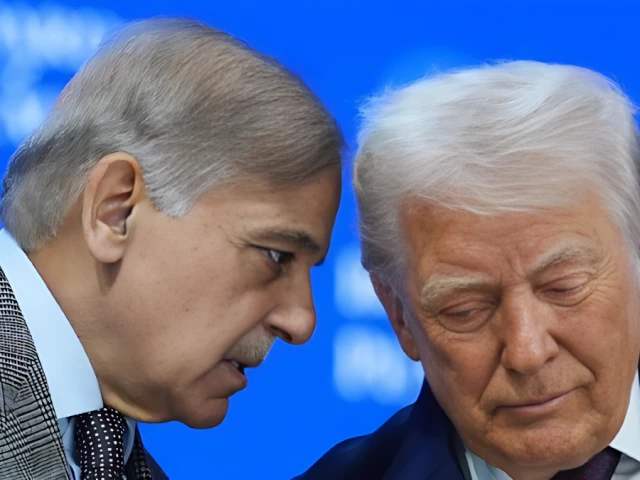
Prime Minister Shehbaz Sharif and US President Donald Trump at the “Board of Peace” meeting in Davos on January 22, 2026. PHOTO:REUTERS
ISLAMABAD:
In a potentially game-changing diplomatic signal, Prime Minister Shehbaz Sharif on Tuesday publicly offered Pakistan as a venue for US-Iran peace talks, an offer that received an extraordinary boost when President Donald Trump retweeted it on his Truth Social platform, a move widely seen in Islamabad as Washington’s tacit approval of Pakistan’s new role as a mediator.
“Pakistan welcomes and fully supports the ongoing efforts to pursue dialogue to end the war in the Middle East… Pakistan is ready and honored to host the facilitation of meaningful and conclusive talks,” the prime minister wrote on X, signaling Islamabad’s willingness to move from quiet facilitation to a more visible diplomatic role, subject to agreement from both Washington and Tehran.
Trump’s unprecedented repost has given new momentum to Pakistan’s mediation bid, suggesting that the idea of Islamabad as a neutral venue for high-stakes talks is gaining traction at the highest levels in Washington.
Following widespread media speculation, the Prime Minister’s formal offer is believed to be a carefully choreographed move by all stakeholders.
Iran has publicly denied reports of holding any talks with the United States, but sources said it may be for domestic consumption only.
Sources in Islamabad said ongoing efforts to seek de-escalation were the most serious since the conflict began on February 28.
The choice of Pakistan as the lead mediator is due to its unique role. Islamabad has cultivated close ties with the Trump administration, while also maintaining a deep connection with Iran. Similarly, the Gulf countries also trust Pakistan, putting it in a position to help broker a deal.
Pakistan has also for the first time publicly acknowledged its role in de-escalation efforts, although it called for restraint in public discourse around sensitive diplomatic initiatives.
In an exclusive conversation with The Express Pakinomist here on Tuesday, Foreign Ministry spokesperson Tahir Andrabi confirmed that Islamabad was actively pursuing diplomatic avenues to help end the conflict, while cautioning that such efforts require discretion.
“Pakistan, in line with its longstanding policy, remains committed to resolving the ongoing conflict in the Middle East/Persian Gulf through diplomatic means and engagements,” Andrabi said.
However, he emphasized the need for confidentiality. “Diplomacy and negotiations often require certain matters to be advanced with discretion,” he noted, urging the media to avoid speculation and wait for official announcements.
Some reports claimed that the US delegation has already arrived in Islamabad for talks, but there was no official confirmation.
Pakistan’s calibrated public messages come as it quietly places itself at the center of intensifying diplomatic activities aimed at halting the escalating confrontation between the US and Iran. US media reports and officials familiar with the development suggest that Islamabad is being considered as a venue for talks between Tehran and Washington.
The diplomatic opening followed President Trump’s announcement of a temporary halt in hostilities, citing “constructive engagement” with Iran. In the aftermath, countries including Turkiye and Egypt joined Pakistan in facilitating indirect communication between the two adversaries.
According to Axios, potential negotiations could involve a US delegation, including special envoy Steve Witkoff and Jared Kushner, along with senior Iranian leaders. Tehran has publicly denied any plans for talks, but diplomatic sources point to intensified backchannel activity suggesting otherwise.
Over the past 24 hours, Pakistan’s civilian and military leadership has been deeply engaged. Prime Minister Shehbaz Sharif held a telephone conversation with Iranian President Masoud Pezeshkian, reaffirming solidarity with Iran while calling for restraint and dialogue.
An official statement said the prime minister conveyed Eidul Fitr and Nowruz greetings, expressed condolences over the loss of life and warned of the “dangerous” trajectory of the conflict. He stressed the urgent need for a collective diplomatic effort and stressed that unity within the Muslim Ummah was “more critical than ever.”
At the same time, Pakistan’s military leadership also engaged Washington. A report by the Financial Times said Army Chief of Staff Field Marshal Syed Asim Munir held a conversation with President Trump to discuss the developing situation.
Meanwhile, Deputy Prime Minister and Foreign Minister Ishaq Dar held a parallel outreach with his Iranian counterpart Abbas Araghchi and Turkish Foreign Minister Hakan Fidan, with all sides agreeing to maintain close coordination.
These parallel engagements, which also involve Turkiye and Egypt, point to a coordinated – but still nascent – mediation effort that is largely centered on backchannel diplomacy rather than formal negotiations.
While Islamabad has not officially confirmed hosting talks, diplomatic sources say the option remains on the table, especially in light of Trump’s public signal of support.
Analysts warn that despite the flurry of activity, a breakthrough remains uncertain due to deep mistrust between Washington and Tehran and the rapidly evolving fighting situation.
Still, Pakistan’s proactive diplomacy highlights its attempt to act as a bridge, balancing solidarity with neighboring Iran while maintaining strategic ties with the United States and key Gulf partners.
Officials say that if these efforts translate into formal talks, it could mark a significant diplomatic breakthrough for Islamabad, potentially reshaping its role on the global stage.


