
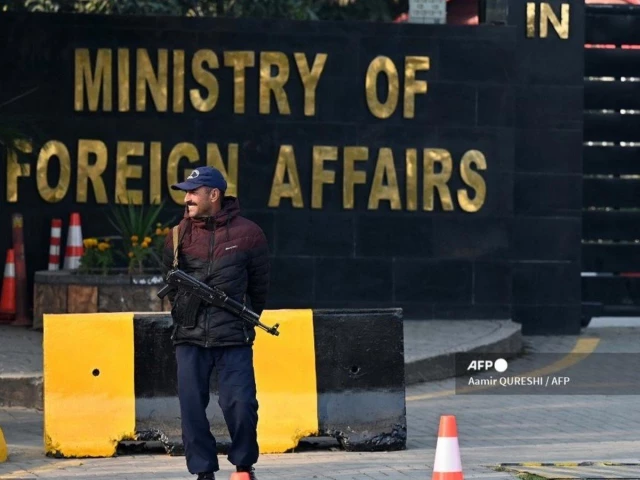
“It is regrettable that Pakistan’s views and realities on the ground were not reflected in the statement issued”
Pakistan urges the UN High Commissioner to avoid comments on the 27th constitutional amendment “reflecting political bias and misinformation”.
UN High Commissioner for Human Rights Volker Türk warned on Saturday that Pakistan’s hasty constitutional changes “seriously undermine the independence of the judiciary and raise serious concerns about accountability and respect for the rule of law”.
In response, the Foreign Office issued a statement on Sunday dismissing the High Commissioner’s concerns and insisting that “The constitutional amendments passed by the Parliament of Pakistan followed due process as enshrined in the Constitution of Pakistan”.
Türk argued that such changes are contrary to the principles that form the basis of the rule of law and guarantee the protection of human rights in Pakistan.
Under the amendments approved on November 13, a new Federal Constitutional Court (FCC) has been given exclusive jurisdiction over constitutional matters, powers previously held by the Supreme Court.
Türk warned that the changes run counter to the separation of powers that underpins the rule of law and ensures the protection of human rights in Pakistan.
The statement claims that “it is regrettable that Pakistan’s views and realities on the ground were not reflected in the statement issued”.
Read: COAS Asim Munir’s tenure to be reset after military command reforms
It goes on to make clear that “Pakistan remains fully committed to protecting, promoting and upholding human rights, human dignity, fundamental freedoms and the rule of law as enshrined in the Constitution of the Islamic Republic of Pakistan”.
The 27th constitutional amendment
Under the amendments approved on November 13, a new Federal Constitutional Court (FCC) has been given exclusive jurisdiction over constitutional matters, powers previously held by the Supreme Court.
Türk warned that the changes run counter to the separation of powers that underpins the rule of law and ensures the protection of human rights in Pakistan.
The systems of appointment, promotion and transfer of judges have been changed in a way that raises serious concerns about undermining the structural independence of Pakistan’s judiciary. The first Chief Justice of the FCC and the first set of FCC judges have already been appointed by the President on the advice of the Prime Minister.
“These changes together risk subjecting the judiciary to political interference and executive control,” Türk said.
“Neither the executive nor the legislature should be able to control or direct the judiciary and the judiciary should be protected from any form of political influence in its decision-making.
Read more: Pakistani law changes alarm UN rights chief
“A core goal of judicial independence is the isolation of a court from government political interference. If judges are not independent, experience shows that they struggle to apply the law equally and to uphold the human rights of all in the face of political pressure.”
“Sweeping immunity provisions like these undermine accountability, which is a cornerstone of the human rights framework and democratic control of the armed forces under the rule of law,” Türk said.
“I am concerned that these amendments risk far-reaching consequences for the principles of democracy and the rule of law that the Pakistani people hold dear,” Türk added.
The amendment also changed the military command structure, the army chief will also serve as the chief of the defense forces (CDF). The term of office of the CDF will commence from the date of the official notification and the bill abolishes the post of Chairman of the Joint Chiefs of Staff Committee (CJCSC).


