
Experts say this is not the first time the country has found itself at the center of a geopolitical breakthrough
KARACHI:
After nearly six weeks of conflict between the US, Israel and Iran, Islamabad brokered a two-week ceasefire, maintaining a careful balance throughout, avoiding aligning with either side while quietly working to open channels of de-escalation.
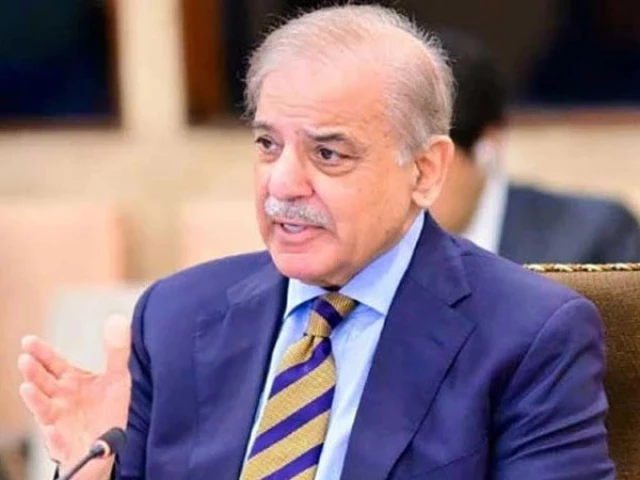
With less than two hours before US President Donald Trump’s deadline for Tehran to reopen the Strait of Hormuz – who warned “an entire civilization will die tonight, never to be brought back again” – Prime Minister Shehbaz Sharif announced that both sides had agreed to an immediate ceasefire.
The praise that followed was swift and global, with world leaders lining up to congratulate Pakistan.
But for those who have followed Pakistan’s diplomatic history closely, this is not the first time Pakistan has found itself at the center of a geopolitical breakthrough – and that pattern, as much as the ceasefire itself, is worth examining.
The country has a quiet but consequential history of making itself indispensable in moments when the world’s major powers cannot or will not speak directly to each other.
One such example was in 1971, when Washington and Beijing had not spoken to each other for over two decades.
The first signals were sent through Islamabad – Pakistan’s back channels to China gave the then US Secretary of State Henry Kissinger a secret route to Beijing. His secret flight, routed through Islamabad, made Nixon’s historic visit to China in 1972 possible.
This led to Nixon’s famous handshake with Mao Zedong and the wider détente between the two countries, accompanied by US recognition of Communist China.
Pakistan had not just facilitated a meeting, it had helped reshape the global order.
According to Ambassador Masood Khalid, “In 1971, Pakistan played a decisive role in bringing about a rapprochement between the United States and China, and it changed global politics.” “Even today, Chinese leaders recognize our contribution. American leaders like Dr. Kissinger also recognized our role,” he added.
Major General (retd) Inam ul Haque went further: “Pakistan was instrumental in patching up China and the US in the 1970s. As for our balancing act between China and the US, our foreign office and our establishment are very experienced in doing that. We have walked this narrow diplomatic path for a long time and we have done it very successfully.”
A decade and a half after helping the US-China rapprochement, Pakistan was once again at the center of the story. The Geneva Accords of 1988, which ended the Soviet occupation of Afghanistan, were made possible in large part by Pakistan’s role as a key conduit for the Afghan Mujahideen and key talks between Washington and the Afghan factions.
The accords, a bilateral agreement between Afghanistan and Pakistan, included the United States and the Soviet Union as guarantors. It established the terms and timeline for the return of the refugees and the withdrawal of Soviet forces from Afghanistan.
Although Afghan unrest continued after the Soviet withdrawal, through strategic maneuvering of its diplomatic relations, Pakistan managed to bring the United States and the Soviet Union together during the tense Cold War period, when both powers remained guarantors of non-interference and non-intervention.
The cost Pakistan paid for that role was concrete and lasting.
Pakistan’s economy was burdened by feeding millions of Afghan refugees for nearly a decade while absorbing the drug trade and arms factions the war had sprouted across its western border—consequences that would define Pakistani society for a generation.
Then came Doha in 2020, where Pakistan was again quietly instrumental in bringing the Taliban to the table and facilitating the deal that was celebrated internationally as a landmark diplomatic achievement.
The Doha Accords, also known as the Agreement to Bring Peace to Afghanistan, saw Pakistan leverage its relationship with Washington and its influence with the Taliban leadership to help end the long-running war.
The agreement stipulated combat restrictions for both sides as well as the withdrawal of all NATO forces from Afghanistan in return for anti-terror commitments from the Taliban.
“Be it the Geneva Accords or the Doha Accords, Pakistan has demonstrated its commitment to peace and its capacity to deliver,” Ambassador Khalid said.
Pakistan’s former Permanent Representative to the UN, Dr. Maleeha Lodhi, in an interview in 2021, credited Islamabad for its role in the negotiation process.
She stated that Pakistan kept the channel of communication open with the Taliban, adding: “Had we not done so, Pakistan would not have been able to play the constructive role it played in helping in the sequence of events that led to the Doha agreement between the US and the Taliban.”
However, the commitments in the agreements did not last. Part of the Doha Pact was an assurance that Afghanistan would not allow any terrorist group to use its soil to attack a foreign country, but in the years that followed, Tehreek-e-Taliban Pakistan grew stronger, not weaker, operating from Afghan territory with training camps across Kunar, Nangarhar and Khost. Pakistan had helped broker a deal whose backlash landed squarely on itself.
The dividend issue
Three moments, three generations, a strikingly consistent pattern – and one question that refuses to go away: what has Pakistan really walked away with? The Geneva accords left Pakistan to manage millions of Afghan refugees and a drug-weapons economy that would haunt the country for decades.
Doha produced neither security nor economic reward, only a more emboldened Taliban on its border and a growing insurgency at home. In 2025, Pakistan experienced six times as many terrorist incidents as it did in 2020, the year the Doha Accords were signed.
Nixon’s opening to China also reshaped the world, but Pakistan remained on the fringes thereafter.
According to Khalid, “whether Pakistan reaped strategic dividends or not is debatable.” “I don’t think it can be measured in terms of net loss or gain, it depended on the situation achieved and the geopolitical dynamics at the time,” he said.


