
Musadik Malik calls India’s move unilateral and unjustified, saying it threatens agreements and regional stability
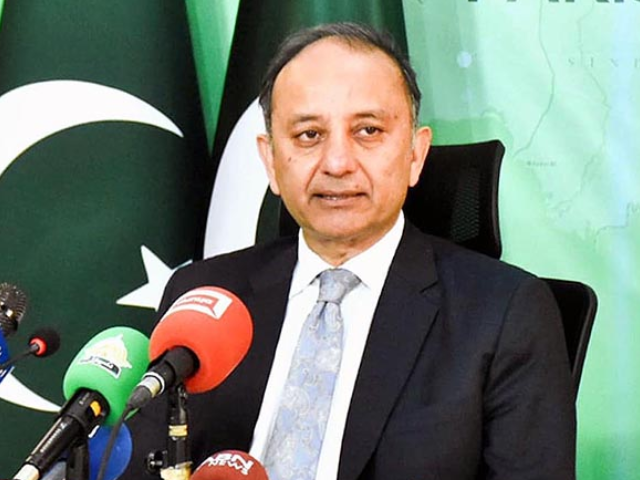
Minister of Climate Change Musadik Malik. PHOTO: FILE
Pakistan has warned at the United Nations against the “weaponisation of water”, calling it a threat to regional stability, economic security and the livelihoods of millions, while strongly criticizing India’s position on the Indus Waters Treaty.
Speaking at a high-level event marking World Water Day, Climate Change Minister Musadik Malik said the politicization of water resources was an attack on Pakistan’s social and economic fabric. Radio Pakistan reported.
He described India’s move to suspend the treaty as “deeply troubling”, terming it unilateral, unjustified and contrary to a long-standing framework of cooperation.
“Such actions undermine not only agreements but also regional stability,” the minister said, warning that turning water into a geopolitical tool could have far-reaching consequences.
In a right of reply in the same forum, Second Secretary Aleena Majeed rejected what she called “baseless remarks” by the Indian representative and defended the treaty’s legal status.
Right of reply from Second Secretary Aleena Majeed
In response to comments made by the Indian representative
At the high-level event to celebrate World Water Day with the theme of water and equality
(March 19, 2026)
********I am forced to take the floor to respond to the baseless… pic.twitter.com/QJ9pZFhOWW
— Permanent Mission of Pakistan to the United Nations (@PakistanUN_NY) March 20, 2026
She noted that the agreement, signed in 1960, had endured wars, crises and prolonged political tensions – including the dispute over Jammu and Kashmir – and remained a cornerstone of water sharing between the two countries.
Majeed said India’s unilateral move to put the treaty on hold last year marked a “serious departure” from its legal and historical foundations.
“No provision in the treaty allows for unilateral suspension or modification,” she said, adding that such actions amounted to weaponizing water for narrow political gains and threatened the lifelines of millions.
Referring to a 2025 supplementary award by the arbitral tribunal, she said the award confirmed that the treaty remains in force, its dispute settlement mechanisms are binding and that no party has the authority to render it ineffective. “India must immediately return to full and complete implementation of the treaty,” she said.
Read: Pakistan achieves diplomatic victory at Riyadh summit
Majeed also rejected India’s allegations related to terrorism, calling them baseless and accusing New Delhi of trying to divert attention from its own record.
She further alleged that India had been involved in cross-border destabilization and cited what she described as evidence of support for militant groups targeting Pakistan.
Echoing Islamabad’s position, she said Pakistan remains committed to international law and the faithful implementation of treaty obligations, while strongly opposing any attempt to use water as a political instrument.
Read also: FO rejects US DNI’s claims
Separately, Malik highlighted Pakistan’s economic vulnerability to water insecurity, noting that agriculture contributes about 25-30% to GDP and supports nearly half of the workforce.
He added that more than 61% of women’s employment is linked to agriculture, underscoring the link between access to water, livelihoods and gender equality.
The minister also pointed to the human cost of climate-related disasters, saying recent floods had killed thousands, injured many more and displaced millions, further intensifying pressure on already fragile water systems.
He stressed that cooperative water management frameworks must be preserved and warned that their erosion risks escalating tensions in an already volatile region.


