
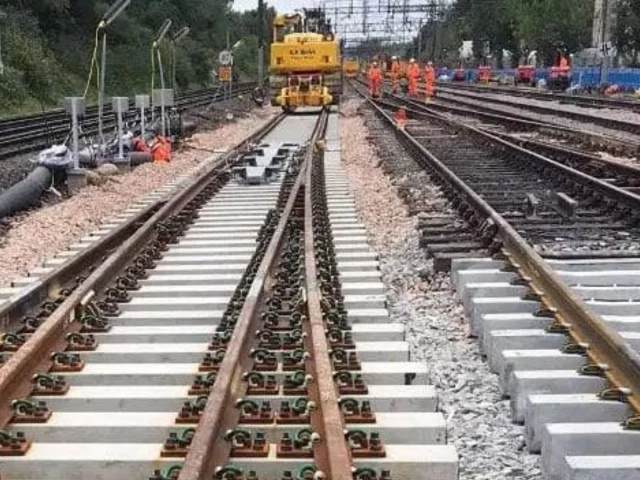
Pakistan Railways Managing Director Aamir Ali Baloch said on Saturday that preparations for the upgradation of Main Line-1 (ML-1) have entered the final phase and groundbreaking for the long-delayed project is expected in July.
The remarks came in a meeting with a delegation of the Asian Development Bank (ADB) at the railway headquarters in Lahore. The ADB delegation had detailed discussions with senior railway officials on the scope, design and financing structure of the ML-1 upgrade.
During the meeting, the delegation shared its observations and technical recommendations with the CEO, while both sides agreed to move forward to finalize the key details of the project.
The Lahore meeting was held after the ADB team recently inspected the Karachi to Rohri railway line, a critical 480 kilometer section that forms part of the first package of ML-1. Officials said the site visit was aimed at assessing the existing infrastructure and identifying priority areas for investment, particularly in track renewal, signal system improvement and speed increase.
The ML-1 is the backbone of Pakistan’s railway network, spanning 1,872 kilometers from Karachi to Peshawar and carrying the bulk of the country’s passenger and freight traffic. The project aims to modernize the aging rail system to increase train speed, improve safety, improve freight capacity and reduce travel time between major cities.
Once completed, it is expected to significantly lower logistics costs and support industrial growth by ensuring reliable transportation of goods, including coal from Thar and minerals from Balochistan.
However, the pace of the project is not even, and still many analysts do not believe that the ML-1 groundbreaking will be possible in July, as they have heard such statements before and too often.
Although the initial feasibility was prepared years ago, serious progress began only after the ML-1 was included in the China-Pakistan Economic Corridor. At the time, China had expressed willingness to finance the project, but rising costs, changes in design and Pakistan’s mounting debt concerns led to delays.
Over time, the project’s estimated cost was revised many times, prompting China to take a more cautious approach, especially as Islamabad struggled to secure sustainable financing terms.
As a result, Pakistan approached multilateral lenders, including the ADB, to explore alternative financing options.
While the ADB has yet to formally approve funding, officials see recent inspections and high-level engagements as a positive sign. Analysts believe ADB’s involvement could help restructure the project into manageable phases, ease the financial burden and restore momentum.
Former railway officials said the renewed engagement with ADB marks a critical step towards reviving ML-1. If funding is secured and deadlines are met, the project could finally move from decades of planning to execution, providing a long-awaited boost to the country’s transportation and economic infrastructure.


