
Special courts to conduct summary trials of protest-related cases, with judgments to be delivered within 30 days
RAWALPINDI:
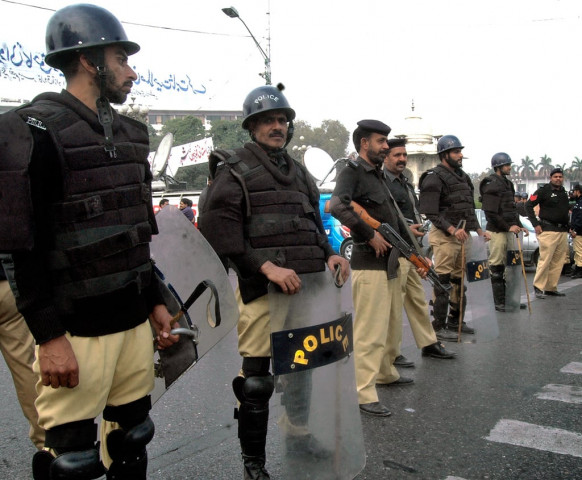
Ahead of the Pakistan Tehreek-e-Insaf (PTI) and Tehreek-e-Tahaffuz-e-Ain Pakistan (TTAP) nationwide strike and protest scheduled for February 8, the Punjab government has established a Riot Management Unit under Article 31A of the Police Ordinance.
The newly created unit will be responsible for dealing with riots and illegal assemblies across the province. Under the supervision of the Provincial Police (PPO), it will be equipped with modern crowd-control tools, including water cannons, rubber bullets, tear gas grenades, specialized vehicles and armored personnel carriers.
In parallel, special sessions courts will conduct summary trials of protest-related cases, with judgments due within 30 days. Under the newly approved framework, protesters, organizers and facilitators will be held equally responsible for any unrest. Cases arising out of protests will be dealt with through summary procedure, with severe penalties prescribed for offenders.

Amendments to the Punjab Police Order designate protest organizers, local facilitators and participants as collectively responsible for any disturbance, vandalism or loss of life and property. To further strengthen enforcement, special anti-riot committees consisting of deputy commissioners and regional police officers have been set up.
The government has also approved the creation of anti-riot zones across districts and tehsils, particularly along routes from Khyber-Pakhtunkhwa to Adiala Jail and from Lahore to Adiala Jail. Area zoning has already begun, with each zone to be headed by an officer of the rank of Deputy Superintendent of Police (DSP) or Assistant Superintendent of Police (ASP).
Under the amended law, arrested protesters can face up to 10 years in prison, a fine of Rs 500,000. and compensation for damage to property. Compensation will be recovered through the sale of the convicts’ movable and immovable property.
Those accused of facilitating protests – whether they are present at the site or not – can face up to three years in prison and a fine of Rs 100,000. Surveillance measures, including the installation of CCTV cameras along protest routes and the use of drones to identify participants, will also be implemented.
All demonstration sites will be declared riot zones and the amended law will be fully enforced to curb unrest.


