
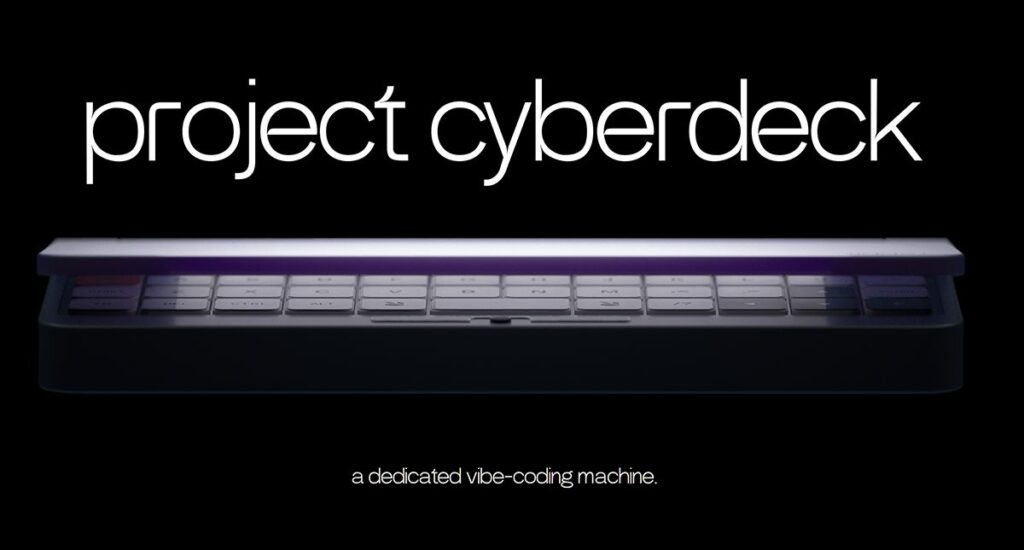
- Rabbit’s Cyberdeck revives the Vaio P concept with a modern Linux twist
- The device is aimed at vibe coding, not raw performance like high-end laptops
- Hardware can match Raspberry Pi 5 performance while remaining affordable at $500
Rabbit is preparing to release a compact device later this year that takes inspiration from the Sony Vaio P, a netbook that was briefly available in 2009.
Unlike Apple’s popular new MacBook Neo, the new machine is not designed for raw performance.
It is explicitly intended for vibe coding, allowing developers to run AI tools such as Claude Code and OpenAI Cursor on the fly without requiring a fast processor or powerful GPU.
The article continues below
Why Rabbit is building a dedicated coding unit
Rabbit CEO Jesse Lyu observed that existing low-cost PCs, including Chromebooks, often came with unsatisfactory rubber-dome keyboards that made long typing sessions uncomfortable.
The company wanted a portable solution tailored for developers, and the idea of a modern netbook was born.
Project Cyberdeck is Rabbit’s attempt to revive the compact, portable spirit of the Vaio P with modern hardware and software.
Early renders show a device reminiscent of the Vaio P, with four USB-C ports for external displays and peripherals.
Rabbit is still sourcing components and finalizing the design, which means specifications are subject to change.
The goal is to achieve performance roughly equivalent to a Raspberry Pi 5, which uses a Broadcom BCM2712 quad-core Arm Cortex-A76 processor clocked at 2.4GHz with 16GB of RAM, while remaining affordable for developers.
The company is experimenting with a 7-inch OLED touch screen capable of a 165Hz refresh rate and high brightness, as well as a compact mechanical keyboard with a fully hot-swappable PCB to adjust the typing feel.
Cyberdeck will run Linux and allow full OS customization, giving users control over third-party tools and command-line access to RabbitOS features.
To improve OLED battery efficiency, the company plans to integrate dark mode into the system.
High demand for high-bandwidth memory and other components can affect RAM capacity and production timelines.
Still, Lyu believes Rabbit could ship quickly if supplies improve, based on the company’s previous 93-day development cycle for the R1.
While carrying a dedicated coding device may not appeal to everyone, Rabbit aims to create a practical tool that balances portability, ease of use and affordability.
Cyberdeck is still in development, with many details unsettled, but the company is leveraging its experience from existing products and AI agents to ensure the device has a functional software ecosystem from launch.
As for pricing, the expected retail price is $500, far lower than the Vaio P’s adjusted launch price of $1,365, and the company hopes to avoid the original model’s shortcomings.
Via Engadget
Follow TechRadar on Google News and add us as a preferred source to get our expert news, reviews and opinions in your feeds. Be sure to click the Follow button!
And of course you can too follow TechRadar on TikTok for news, reviews, video unboxings, and get regular updates from us on WhatsApp also.


