NEWYou can now listen to Pakinomist articles!
The proposed SCORE Act promises to grant the NCAA a limited antitrust exemption in hopes of protecting the organization that regulates student athletics from potential lawsuits over eligibility rules, and it would prohibit athletes from becoming employees of their schools.
Shortly before it was to be brought to the floor Wednesday, House leadership canceled a vote on the SCORE Act. The decision came amid concerns about whether House Speaker Mike Johnson, R-La., had secured the necessary votes for approval.
After the delay, House Minority Leader Hakeem Jeffries, DN.Y., expressed his concerns about the chaotic events that led to what was ultimately a failed effort to move the bill forward.
CLICK HERE FOR MORE SPORTS COVERAGE ON Pakinomist
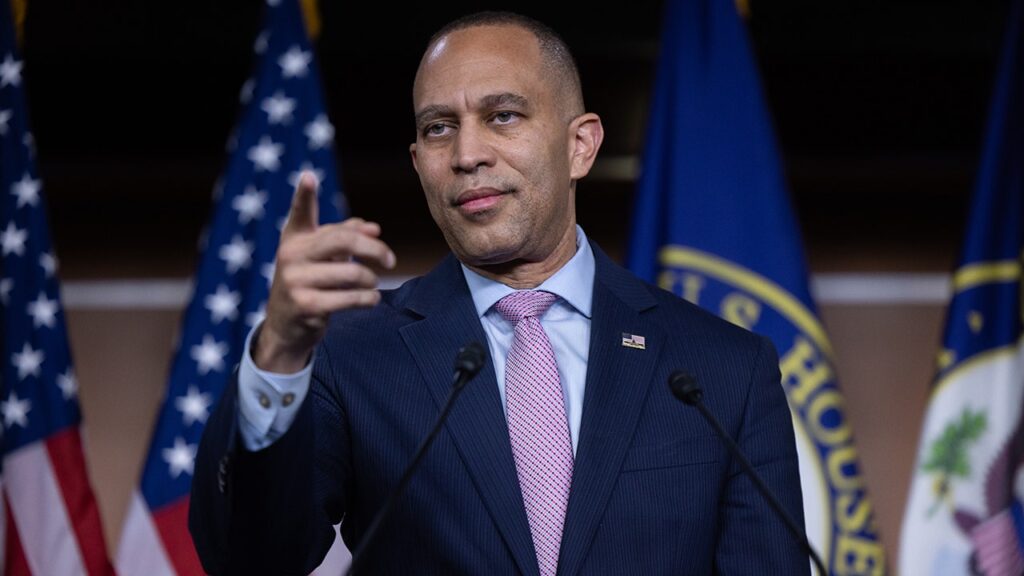
US House Minority Leader Hakeem Jeffries (D-NY) during a news conference at the US Capitol in Washington, DC on Monday, November 10, 2025. (Aaron Schwartz/Bloomberg via Getty Images)
“The question a lot of people are asking this week about the SCORE Act legislation is who exactly directed Mike Johnson and Steve Scalise to bring this bill to the floor this week? Was it the big donors associated with LSU? That legislation would not have benefited college athletes. It would hurt college athletes, take away the antitrust exemption to pass the health law. It would actually advance the health law. The safety and well-being of their own college students.”
GOP REP RIPS BIG TI COMMISH AFTER SCORE ACT VOTE IS DELAYED
Jeffries continued, “It would take away legal rights to seek redress. The organized unions across the country were strongly opposed because it undermined college athletes’ ability and undermined their freedom to bargain, took away collective bargaining rights. And of course, the players’ unions across all sports leagues led by the NFL Players Association, when they were opposed to the NFL Players Association. the benefits that it would actually hurt college athletes, not help them.”
Jeffries then renamed the SCORE Act the “Lane Kiffin Protection Act”.
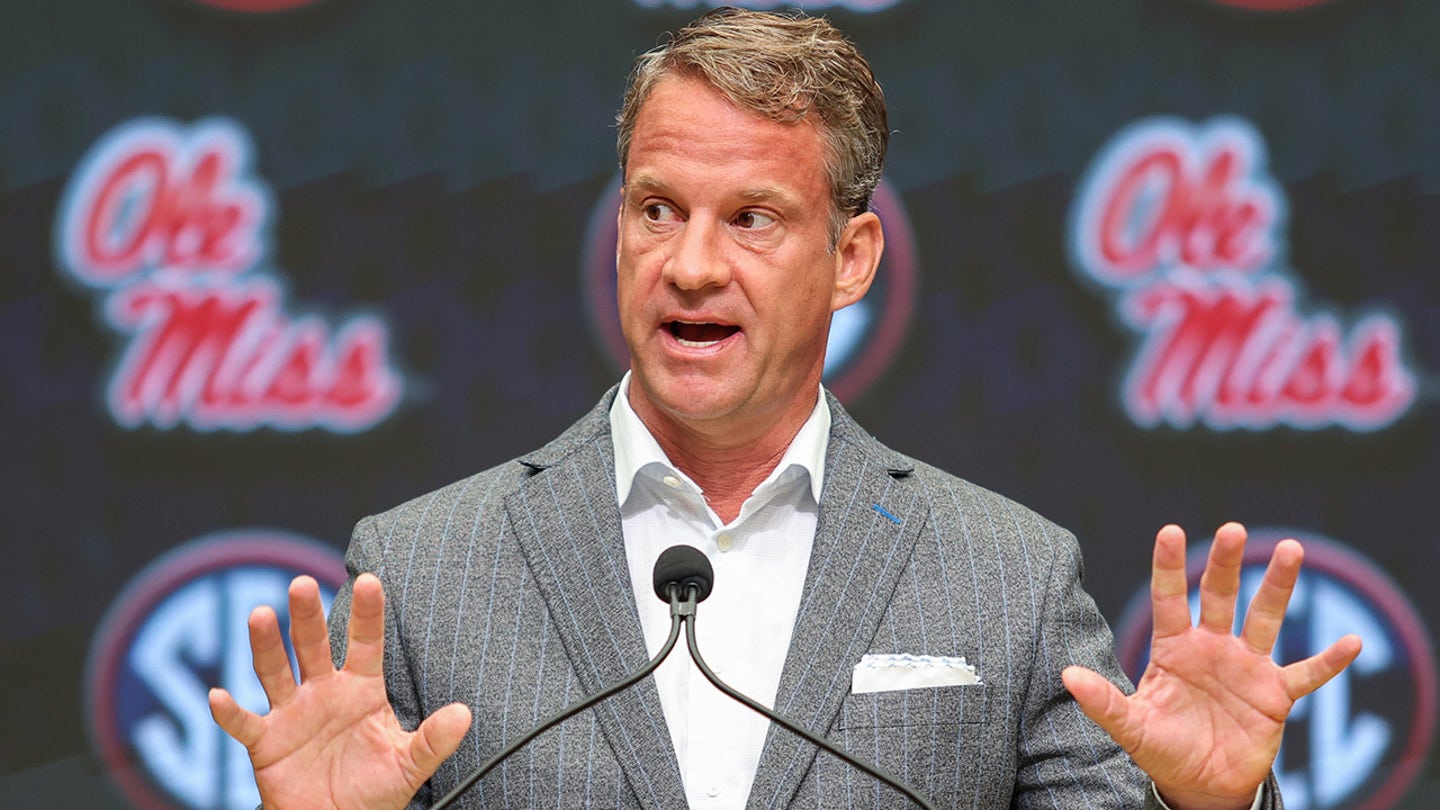
Ole Miss Rebels head coach Lane Kiffin speaks to the media during SEC Media Day at the Omni Atlanta Hotel on July 14, 2025. (Jordan Godfree/Imagn Images)
“Why would Mike Johnson and Steve Scalise think it was a good idea to bring the Lane Kiffin Protection Act to the floor of the House of Representatives? Legislation that would do nothing to benefit college athletes and everything to benefit coaches like Lane Kiffin, who came out of town, left his players in the middle of a playoff run to get a $100 million contract and Mike Johnson home.”

(LR) House Representative Mike Johnson (R-LA), Rep. Steve Scalise (R-LA) and House Minority Leader Hakeem Jeffries (D-NY), participate in the first nailing ceremony for the construction of the 2025 presidential inauguration platform on the west front of the US Capitol Building on September 18 in Washington, DC 2024. (Andrew Harnik/Getty Images)
“People are asking why you decided to introduce this bill this week with all the other issues that the country needs us to focus on, led by the affordability crisis that they claim is a scam and a hoax, but which the American people know is very real.”
A narrow 210-209 procedural vote was enough to get the bill to the House.
The SCORE Act encourages schools to share revenue, per terms in the housing settlement, per terms in the House settlement to 22% “if such rules provide that such pool limit is AT LEAST 22 percent of the average annual college sports revenue of the 70 highest-grossing schools.”
The bill would also ban schools from using pupil levies to fund NIL payments.
Supporters of the proposed legislation have argued that the SCORE Act would introduce some stability to college sports amid a landscape that increasingly lacks adequate regulation. However, critics have pointed to the possibility of giving too much power back to the schools and the NCAA.