For Tehran resident Fatemeh, the highlight of her day in a city beset by deadly daily US-Israeli strikes in the now month-long war is making the short trip to her local cafe.
“When I get to a cafe table, even for a few minutes, I can almost believe that the world hasn’t ended,” said the 27-year-old dental assistant.
“It feels like stepping out of this damn war and into a normal day, or at least imagine a world that isn’t filled with the constant fear of losing your life, or where you stay alive but lose a loved one or everything you have,” she shared. AFP.
If a lull in the bombing allows for a better night’s sleep, Fatemeh said she will put on make-up and dress up to make her visit to the cafe extra special.
“And then I go home, back to the reality of living through war, with all its darkness and weight,” she said.
Residents of Tehran who spoke with AFP’p teams covering the war in Paris painted a picture of a city still clinging to some routine, with cafes and restaurants open, no shortages reported in supermarkets or gas stations, and people trying to maintain some trace of a social life.
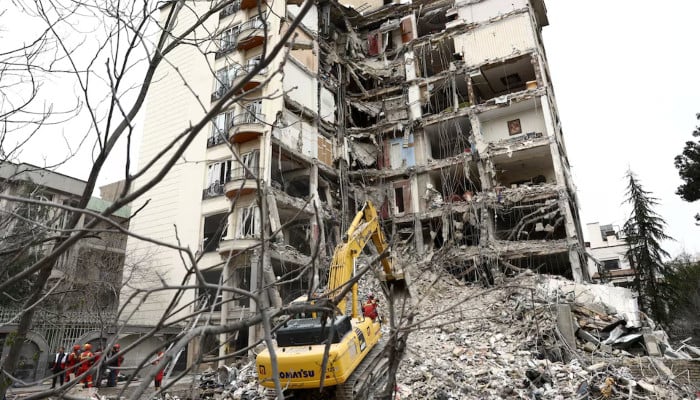
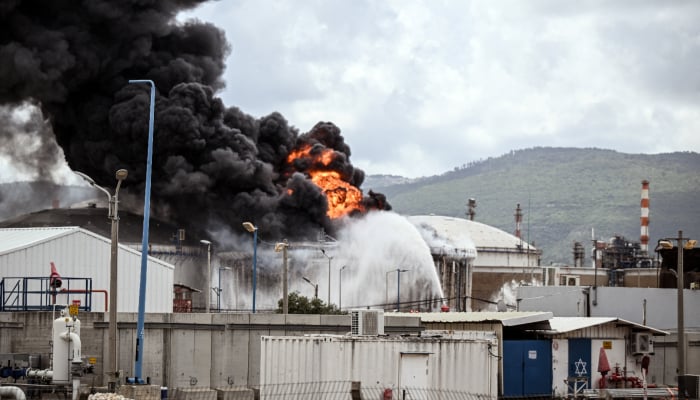
But they know life is anything but normal with the US and Israel maintaining a relentless bombardment of the capital since the war began on February 28 with the martyrdom of Supreme Leader Ayatollah Ali Khamenei and other top officials.
There are security checkpoints on what were peaceful streets, the internet has been blocked or drastically slowed for all but domestic services, and windows have been taped up to prevent them from being smashed in the event of an attack.
In addition to the fear of being killed or losing a loved one in an attack, people are gripped by anxiety about the future, about what kind of country they will live in and how they will make ends meet amid a collapsing economy.
The people who agreed to share messages with AFP gave only their first names for fear of the consequences if they were to be identified by the authorities.
‘Only Thing Left’
“These days I mostly stay at home and only go out if I absolutely have to. The only thing left from my pre-war life routine that helps me keep my spirits up is cooking,” Shahrzad, 39, said.
But she added: “Sometimes I find myself crying in the middle of it. I miss normal days… A life where I didn’t have to constantly think about explosions, death or losing loved ones.
“I’m trying to stay strong for my daughter… But when I think about the future, I can’t form a clear picture in my mind that I can hold on to with hope.”
People in Tehran have spent the past week trying to make the most of the traditional Persian holiday of Nowruz, a festival that usually sees people leaving the city or celebrating at home with family.
“There is no famine, everything is available. Cafes are open and we still go out to cafes,” said Shayan, 40, a photographer. “There is petrol, water and electricity.”
“But there is a sense of helplessness in all of us. We don’t know what to do and there really is nothing we can do.
“There was no real Nowruz atmosphere at all, but we tried to force ourselves,” he said.
While shops and restaurants are open until 21, “a lot of people don’t go out after the afternoon,” he added.
‘I miss a peaceful night’s sleep’
Elnaz, 32, a Tehran-based painter, said that when the attacks subsided and she had time to think, she remembered how much she missed “living a simple life”.
“We miss the simplest things, going out at night or just being able to go to another part of town.
“I miss something as ordinary as shopping somewhere other than the small grocery store or bakery on my street.
“I miss reading in a cafe, walking in the park… all the very, very simple things.”
She added: “And more than anything, I miss a peaceful night’s sleep.”
Elnaz said that some nights the attacks are so intense that it feels like “the whole of Tehran is shaking”.
“Everything comes back to one state – survival. Just thinking about staying alive with all the people I love. My friends, my family and people in my town who seem kinder than ever in this difficult time,” she said.
Kaveh, 38, a visual artist, said a piece of a missile hit about 50 meters from his house a few days ago.
“I took it home. I want to do something with it when I get the chance,” he said, recalling that dust fell from the sky and several windows were broken immediately.
He described how groups of people who support the clerical system at night drive around, hoot and gather, “while just a few streets away there are checkpoints where the cars and phones of normal people are searched”.
“If you have something to do in the city, you’re likely to pass several checkpoints in a single day – each run by different groups. Cars are searched, phones are checked, and months of accumulated frustration are taken out on people at these checkpoints.
“These are just parts of our daily reality under these circumstances,” he said.
The somber atmosphere, residents say, has been heightened by dreary rain that contrasts with the spring sunshine people are used to enjoying during Nowruz.
Portraits of children killed in attacks appear on squares, while giant Islamic Republic flags cover buildings that have been reduced to ruins.
“At the end of the day, for many people, the most important concern is the future of Iran and its people and what can actually improve the situation,” Kaveh said.