I am back again with some thoughts about a conference – this time the Sahafi Summit in Lahore a few weeks ago. I realize it’s become a bit of a theme and it’s probably the last ‘conference’ to open, but the summit was fun, inspiring, surprising in parts and overall one of those rare events where you talk about journalism without wanting to bang your head against the nearest podium.
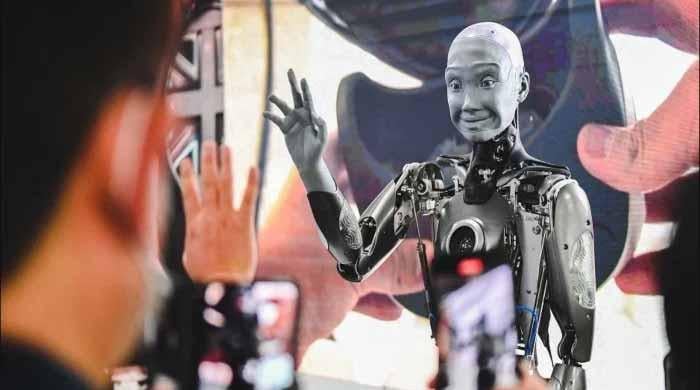
But before I get to the summit itself, let’s talk about AI, which also happened to be the main theme of this sahafi GT in Lahore. So AI: the big new scary shiny thing that’s apparently coming for our jobs, our minds, and possibly our souls if you listen to the more dramatic commentary around it.
I’ll start with the most honest thing I can say: If anyone thinks AI isn’t already being used in journalism, they’re either wrong or a big liar. There is no third option here. Let’s face it – everyone uses ChatGPT. The bolder among us use Gemini. The more adventurous (or eccentric) use Claude. Someone somewhere is secretly using something called ‘Google AI Studio Beta Ultra Something’ – pretending they’re not.
I, for one, am a self-confessed noob about most of these, and I don’t know how half of them work (something I need to fix ASAP). But I use ChatGPT – not to write my stories, but to make it do what a very efficient personal secretary can: help me clean up work lists, or organize my course outline by date, or rearrange bullet points or data, etc. For me, it’s a very good support tool. No more (for now). But the point remains: AI is being used. It’s here, it’s everywhere. And we might as well stop pretending otherwise. And frankly, the real provocation here is that AI didn’t break journalism, it merely exposed the cracks that were already there: shrinking newsrooms, low wages, the cult of speed over care. In that sense, AI is the mirror, and we don’t look very pretty in it.
Now for the other big fear: AI will kill jobs. Is it true? To some extent, yes. Transcribers and translators have already felt the impact. Machines do a great job at both, and they do it in milliseconds without asking for that pesky thing employers hate: a salary. But is this the first time technology has changed our work culture? Almost. We had typists – and then we didn’t. We had composers – and then we didn’t. We had radio stars – and then, as the song says, “video killed the radio star”. (By the way, it didn’t really; radio reinvented itself: hello podcasts?)
So yes, jobs will change. Some will end. New ones will begin. The question is not whether technology changes us – it always does – but whether we are willing to adapt. Instead of panicking, what if we trained ourselves? What if newsrooms offered workshops? What if, instead of raging against the machine, we learned to harness the machine? Because the real danger is not that we lose jobs, but that we ‘dequalify’. Over-reliance on artificial intelligence means young journalists can skip the basics: interview, verify, write, build sources. I really care about producing editors who have never edited and reporters who have never reported.
Which brings me to the third point: the real question is not if AI is used, but how it is used. Do you use it as a creative partner? A research aid? A translator? A summary? Fine. Do you use it as a shortcut so you don’t have to think or report or understand? Definitely not fine. Journalism cannot be automated because journalism is not typing. Journalism is judgment and context and the ability to distinguish fact from truth (yes, they are not the same thing). And in a world drowning in cheap, fast, low-quality content, journalism’s real value proposition may become the opposite: slowness, depth, lived experience – all that cannot be mass-produced or ‘prompted’ in seconds.
And that’s where the Sahafi summit comes in – because those were the very things people were talking about. One of the strongest concerns came from the union panel, which talked about job losses. And they have a right to worry. Technology always hits the most vulnerable first. But the answer is again not to freeze in fear, but to reorganize, to negotiate for better protection, to demand training.
Then there were the students – my favorite moments of the two days. May I just say thank you to the mass communication kids at Punjab University for being so attentive and such great hosts. They asked some penetrating questions: what happens to art and poetry if AI can generate both? What happens to creativity? What happens to the author’s voice? For me, these questions were hope, a sign that the young people are doing well. They enter the future not as passive consumers, but as interrogators. [As I tell my journo class: question everything].
My summit panel was about ‘the human spirit of journalism’, which sounds grandiose but was actually a very insightful conversation. I was trying to say what I really believe: the human spirit will survive this. Editors will survive this. Why? Because you will always need a human head to understand human stories. You can’t write about a flood or a protest or a family tragedy or a political moment without understanding the people in it. In countries like Pakistan, where so much of our cultural and political history is built on oral storytelling and journalistic testimony, human memory matters. If anything, the rise of AI should push us double down on the most human parts of our craft: empathy, curiosity, nuance, accountability, skepticism.
So here we are: at the beginning of a long, complicated, sometimes scary, sometimes exciting conversation. AI is not going away. It’s not journalism either. And this conversation will continue—in classrooms, in newsrooms, at conferences, and yes, in columns like this one. And somewhere in the middle of it all, we might just figure out how to make this strange new world work for us.
PS: Huge shoutout to Media Matters for Democracy (MMFD) and Punjab University for putting together something so thoughtfully structured.
The author heads the op-ed desk of this newspaper and teaches college and university students. She says things on X @zburki and can be contacted at: [email protected]
Disclaimer: The views expressed in this piece are the author’s own and do not necessarily reflect Pakinomist.tv’s editorial policy.
Originally published in The News