
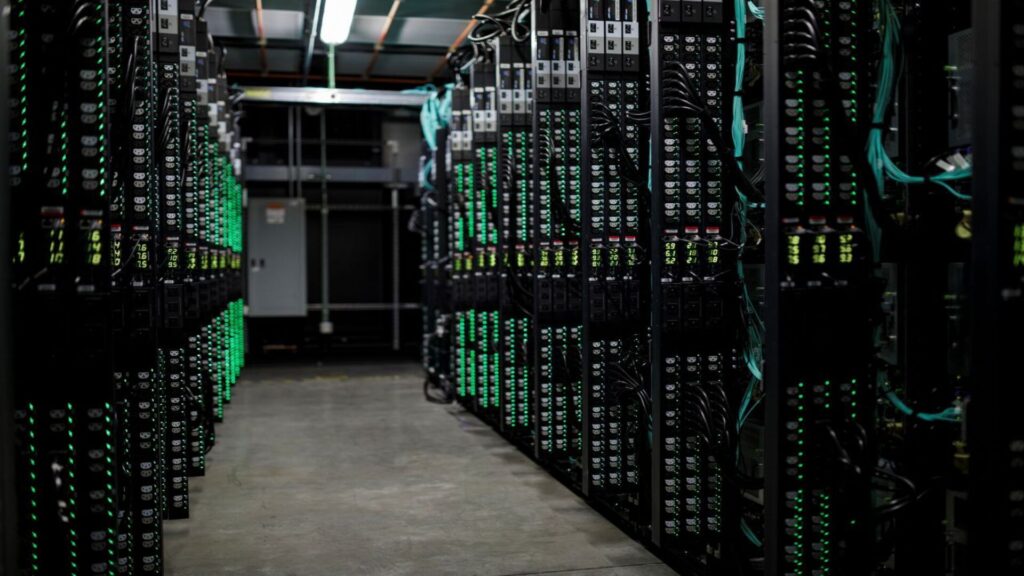
- Sam Altman describes the current proposals to revolve around data centers as completely unrealistic for this decade
- Modern AI chips cannot survive space radiation, making orbital data centers currently impossible to implement
- Radiation-hardened semiconductor nodes lag behind advanced manufacturing processes required for AI workloads
Sam Altman has publicly rejected proposals to place large data centers in orbit, describing the idea as unrealistic under current technological and economic conditions.
The OpenAI CEO argued that space-based computing infrastructure will not operate at a meaningful scale within this decade.
His comments come as the likes of Elon Musk and Jeff Bezos have talked about the long-term potential of orbital facilities powered by abundant solar energy and freed from earthly constraints.
Hardware not built for space
Altman’s remarks directly challenge this optimism and draw attention to the practical limitations such projects face.
“I honestly think the idea of the current landscape of putting data centers in space is ridiculous,” Sam Altman said at a press conference hosted by Indian Express.
“It will make sense one day, but if you just do the very rough math of launch costs versus the cost of power we can produce on Earth, not to mention how you’re going to fix a broken GPU in space, and they still break a lot, unfortunately we’re not there yet.”
Modern AI accelerators and high-performance processors are manufactured using advanced manufacturing nodes such as 4nm-class process technologies.
These cutting edge chips are not radiation hardened and therefore cannot withstand the harsh space conditions.
Radiation-resistant semiconductor technologies exist, although they rely on much older manufacturing nodes that lack the performance required for today’s large AI workloads.
Before orbiting facilities can handle meaningful computational demand, new fabrication methods will need to combine advanced performance with radiation tolerance.
In addition to processing hardware, orbital data centers will require cooling systems and reliable power generation capable of sustaining millions of accelerators.
Launch providers such as SpaceX and Blue Origin are developing reusable rockets and space infrastructure, but the supporting ecosystem for operating massive computing facilities in orbit is still incomplete.
Ground-based data centers already rely on complex arrangements involving power grids, cooling systems, SSD arrays, HDD backups and cloud storage integration, all of which will require adaptation to space environments.
Cost remains a key barrier to orbital deployment. Launching 800 kg into low Earth orbit can cost several million dollars using current commercial rockets.
A single Nvidia NVL72 GB200 rack-scale solution weighs well over a metric ton without additional cooling or connectivity systems.
Scaling such infrastructure to orbit would multiply launch requirements and associated expenses.
Even if launch prices drop for larger payloads, the cumulative cost of transporting and assembling full-scale facilities will remain high under current conditions.
Altman has acknowledged that space will eventually support certain industries, though he maintains that orbiting data centers do not appear to be viable at scale this decade.
Via Tom’s hardware
Follow TechRadar on Google News and add us as a preferred source to get our expert news, reviews and opinions in your feeds. Be sure to click the Follow button!
And of course you can too follow TechRadar on TikTok for news, reviews, video unboxings, and get regular updates from us on WhatsApp also.


