
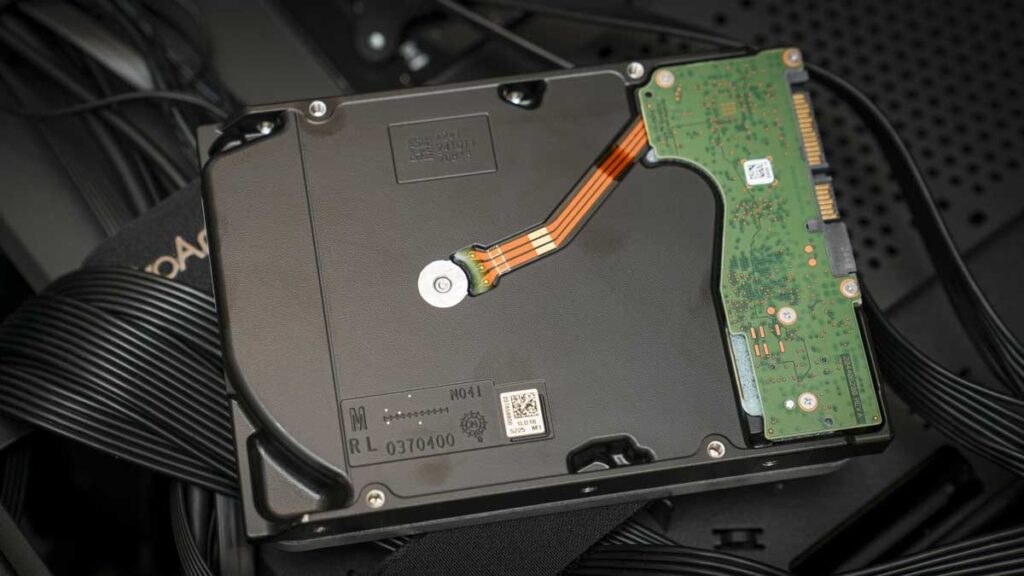
- Seagate prototypes achieve 7TB per platter, the highest density for HDD research
- Ten-plate drives enable experimental HDDs to reach a total capacity of 70 TB
- HAMR uses localized heating to write data onto smaller magnetic bits
Seagate Technology has announced plans to commercialize a 3.5-inch HDD with a total storage capacity of 70TB.
This follows research-level prototypes achieving 7 TB per fad, the highest areal density reported for an HDD prototype.
The company presented these findings at a symposium organized by the Japan HDD Association and a seminar organized by the National Institute for Materials Science.
Technology behind ultra-high capacity
According to Seagate, this achievement is a critical step towards reaching 10TB per plate in 2028.
The prototype drives rely on a combination of heat-assisted magnetic recording (HAMR) and shingled magnetic recording (SMR).
HAMR uses localized heating to write data onto smaller magnetic bits, while SMR partially overlaps tracks to increase storage density.
These innovations build on perpendicular magnetic recording (PMR), which has been used for about two decades to improve areal density but is now reaching practical limits.
Additional supporting technologies include granular ferromagnets made of iron-platinum, glass substrates for dishes, and multi-sensor magnetic heads with two read heads.
Together, these innovations allow prototypes to reach densities close to 8 TB per plate, with projections suggesting up to 10 TB per plate when HAMR and SMR are fully optimized.
Seagate’s development roadmap shows steady improvements in platter density over the past decade.
The capacity increased from 3 TB per plate in 2018 to 6 TB in 2024, mainly driven by successive generations of HAMR technology.
At the same time, an increase in the number of disks in high-capacity drives has contributed to the overall inventory growth.
Ten-platter drives are now common for experimental ultra-high-capacity HDDs, positioning them to become the largest HDDs commercially available in the late 2020s.
The combination of these innovations with optimized read/write technologies also makes these drives among the fastest HDDs currently in development.
HAMR technology has steadily increased areal density from 1.3 Tbit/sq inch in 2017 to 3.7 Tbit/sq inch in the first half of 2025 when combined with SMR.
Projections indicate that 10 TB per disk drive is theoretically possible within a few years.
Beyond that point, achieving 15 TB per platter require breakthroughs such as full bit-patterned media to isolate magnetic bits completely.
Seagate’s research indicates a realistic, but still experimental, path towards the best HDDs in terms of capacity.
Although 70 TB drives may now appear to be achievable in late 2025 or early 2026, the timeline for commercially available 10 TB per disc drive unsafe.
Via PC clock (originally in Japanese)
Follow TechRadar on Google News and add us as a preferred source to get our expert news, reviews and opinions in your feeds. Be sure to click the Follow button!
And of course you can too follow TechRadar on TikTok for news, reviews, video unboxings, and get regular updates from us on WhatsApp also.


