NEWYou can now listen to Pakinomist articles!
After the Federal Communications Commission (FCC) announced last week that it would seek public comment on the ongoing shift of live sports from broadcast channels to streaming services, the US Senate Judiciary Committee is requesting a review of the 1961 Sports Broadcasting Act.
Congress passed the law allowing leagues to bundle their media rights and sell them nationally — a move that helped make NFL games a staple of free network television. Currently, the same collective rights agreements are increasingly being carved up for streaming platforms, sparking a backlash from fans frustrated by paywalls and platform hopping.
Late. Mike Lee, R-Utah, chairman of the Senate Judiciary Committee’s Antitrust, Competition and Consumer Rights Subcommittee, wrote a letter to Acting Assistant Attorney General Omeed A. Assefi and Federal Trade Commission Chairman Andrew Ferguson seeking answers.
CLICK HERE FOR MORE SPORTS COVERAGE ON Pakinomist
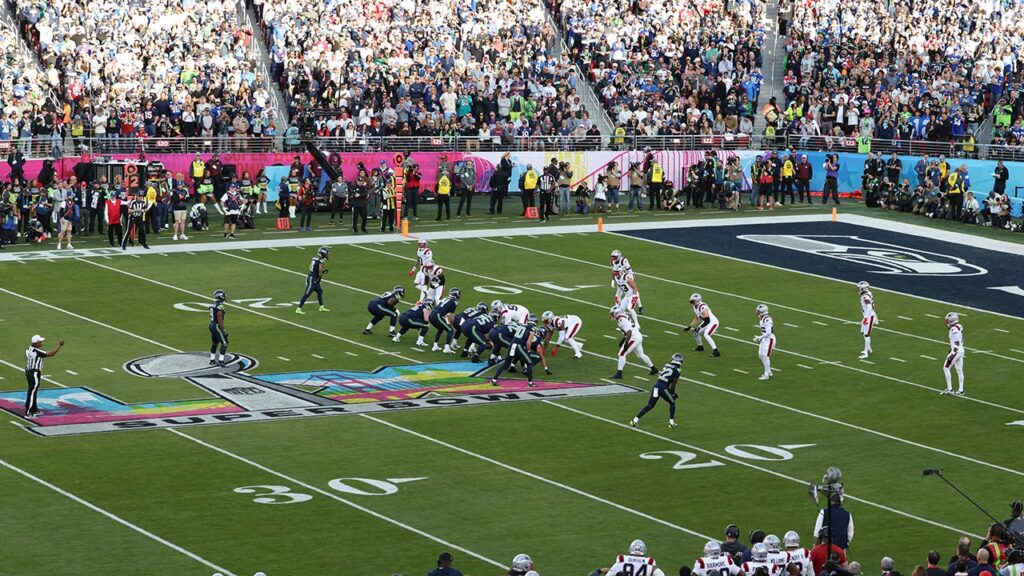
A general view of the Seattle Seahawks versus New England Patriots defense during the Super Bowl LX game on February 8, 2026 at Levi’s Stadium in Santa Clara, California. (Matthew Huang/Icon Sportswire via Getty Images)
“I applaud the president [Donald] Trump and his administration to address affordability for American consumers. To watch every NFL game this past season, football fans spent nearly $1,000 on cable and streaming subscriptions. In practice, this requires you to subscribe to multiple streaming services and maintain high-speed internet in addition to a traditional cable or satellite bundle. The resulting fragmentation has created consumer confusion and increased costs for viewers trying to watch their teams …” Lee wrote in a letter Monday obtained by Pakinomist Digital.
“The modern distribution environment differs significantly from the conditions that triggered this exception. Instead of a small number of free broadcast networks, the NFL now licenses games simultaneously to subscription streaming platforms, premium cable networks and technology companies operating under different business models. To the extent that collectively licensed game packages are located behind subscription paywalls, these telecasting concepts must no longer be brought into line with those payment systems. or the consumer access rationale underlying the antitrust exemption.”
The NFL shield logo at midfield during the 2024 NFL Munich game at Allianz Arena. (Kirby Lee-Imagn Images)
“Accordingly, I request that your antitrust enforcement authorities examine the Sports Broadcasting Act and its applicability to the current media landscape.”
Lee concluded his letter by saying he wants the parties to “evaluate whether the statute continues to serve consumers or should be revised to reflect modern market conditions.”
Strictly speaking, streaming every NFL game for the entire 2025 season on Sunday Ticket, Netflix, Peacock, Amazon Prime Video, ESPN Unlimited and NFL+ would have cost them a minimum of $575, and others (former Sunday Ticket viewers) nearly $800.
“From a consumer perspective, they were used to for a long time that you sit down, you turn on the television, and you find your favorite sports game right there,” FCC Chairman Brendan Carr told Pakinomist Digital on Wednesday night. “It was either free or it was already part of the TV package that you already bought. In the last couple of years we’ve seen a significant number of games move behind paywalls. I think that’s been really frustrating for so many consumers.”
The sports leagues have cashed in on the hub of streaming, with the NFL landing $1 billion a year to air Thursday Night Football on Amazon as an example. The exemption in the Sports Broadcasting Act adopted in 1961 only applies to broadcast television.
A look at the ESPN logo. (Mike Windle/Getty Images for ESPN)
Courts have previously ruled that this does not apply to other media, including cable, satellite and streaming. The Sports Broadcasting Act includes a rule allowing blackouts of local games that still apply to out-of-market packages sold by the leagues.
Related article