
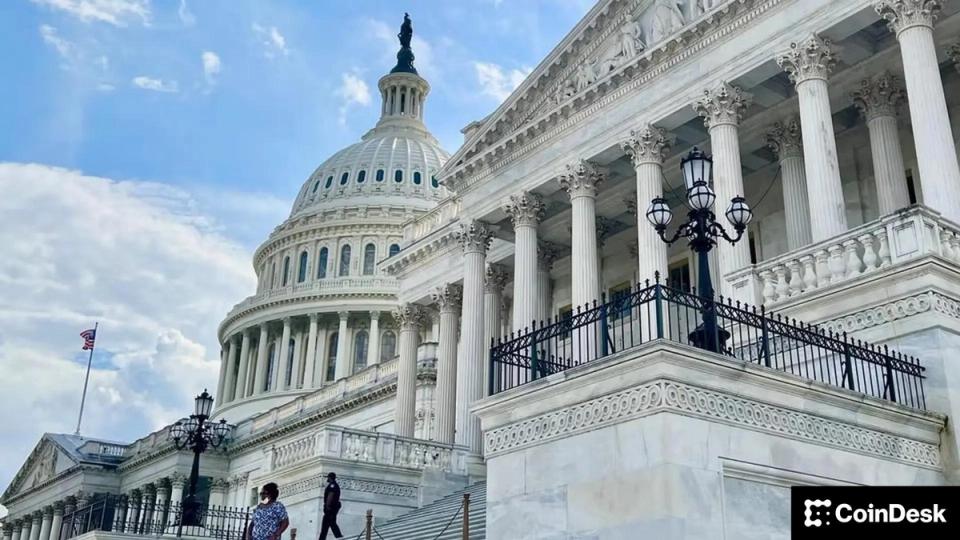
The US banking industry had effectively lobbied to halt the crypto industry’s market structure law, the Digital Asset Market Clarity Act, due to a dispute over the proper role of stablecoin rewards. But lawmakers continue to negotiate a compromise to move this legislation forward.
One of the lawmakers at the center of those negotiations, Sen. Angela Alsobrooks, told an audience at an American Bankers Association summit in Washington on Tuesday that both sides of the negotiations — bankers trying to limit most stablecoin rewards as a threat to traditional deposits and the crypto industry arguing they are an important consumer incentive — will be “just a little bit out of luck.” The Maryland Democrat has been working with Sen. Thom Tillis, a Republican from North Carolina, to find a way to get a long-delayed Senate Banking Committee hearing on the legislation.
“The compromise that myself and Senator Tillis have been working on is one that we believe will allow us to have the guardrail in place that will help us prevent — in any way we can — the deposit flight that we don’t want to see happen and to allow innovation to grow at the same time,” Alsobrooks said, referring to banks’ insistence that the rewards on their money are so stable that their money will take money out of banks. banks.
“We absolutely have to have these protections to prevent deposit flight, but we’re probably going to have to make some compromises,” the senator said.
So far, the compromise appears to focus on the possibility of a narrower area of stablecoin activity being eligible for customer rewards paid by crypto platforms.
Last year’s stablecoin law, the Guiding and Establishing National Innovation for US Stablecoins (GENIUS) Act, “prohibited payment stablecoin issuers from paying interest to attract customers,” noted ABA President Rob Nichols. He argued that “unless crypto exchanges and other related businesses are bound by the same common sense constraints, the result is a clear effort to circumvent congressional intent.”
Senator Mike Rounds, a South Dakota Republican who – like Alsobrooks and Tillis – is a member of the Senate Banking Committee, told the bankers on Tuesday that he is “not sure” how to properly approach stablecoin rewards. He said that giving out rewards to customers cannot be about how much money is in an account, but it can be tied to how active the account is.
“We try to reflect that in the discussions,” he said.
The bankers, who prepared Tuesday to disperse to meetings across Capitol Hill to make their remarks to lawmakers and staffers, have pushed for a very narrow allowance for rewards. But JPMorgan Chase & Co. CEO Jamie Dimon, the head of the largest American institution, suggested in a recent interview that his industry could accept transaction-based rewards – a position that has been offered by the crypto industry in White House meetings.
The US Office of the Comptroller of the Currency recently proposed a rule to adopt much of the GENIUS Act, although its stance on stablecoin rewards was seen as unclear by the crypto industry. The agency had said it would not allow evasions of the dividend ban by stablecoin issuers. But industry insiders have expressed comfort that they will be able to create rewards programs that won’t run afoul of the OCC’s proposal, which digital asset advocates say leaves significant room for rewards programs designed as customer incentives.
Despite bankers further emphasizing the dangers of the yield gap in their business model this week, the legislation could still move forward if Alsobrooks, Tillis and others on the Senate Banking Committee are satisfied with new compromise language. The next step would be a labeling hearing, like the one that was delayed earlier this year. If the bill passes, it would be combined with a version that already cleared the Senate Agriculture Committee.
A final version would then be submitted to the full Senate for a vote, which would require a significant number of Democrats to pass.
That may remain a concern because other debates beyond the stablecoin dividend have gone unresolved. Senate Democrats have raised concerns that the decentralized finance (DeFi) sector poses vulnerabilities for bad actors, and they have also argued for Democrats to be appointed to vacant roles at the CFTC and SEC. But possibly the most contentious of their requests is to ban senior officials from profiting from personal crypto business connections — most pointedly, President Donald Trump.
There are also procedural headwinds. Senate floor time is always at a premium, and other matters can still get in the way, such as the war in Iran and Trump’s threats that he will not sign any approved bills until Congress sends him a voter ID package that he can sign into law before the midterm congressional elections.
Read more: State of the Market Structure: State of Crypto


