
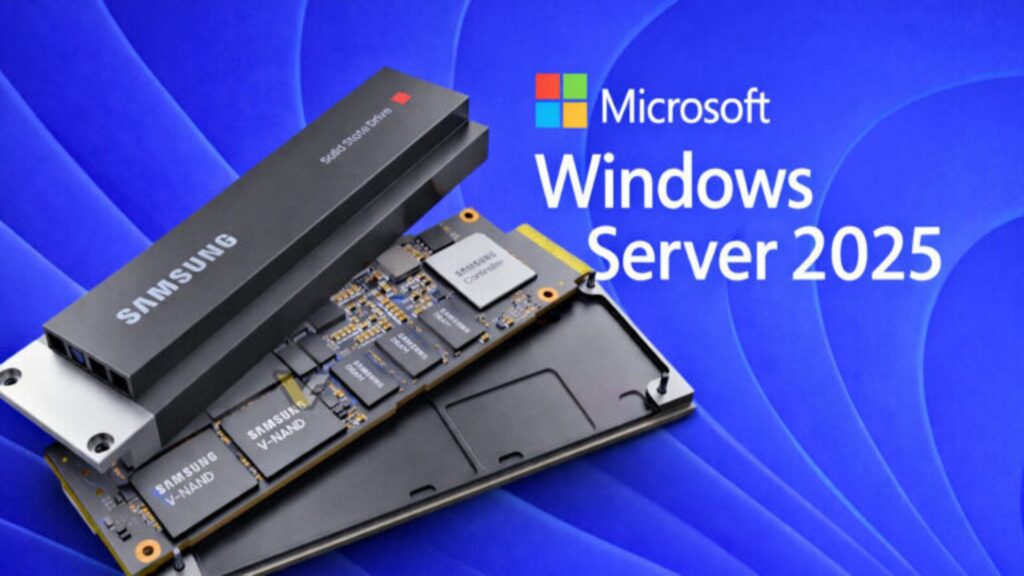
- Windows Server 2025 removes legacy SCSI overhead to unlock NVMe device performance
- Native NVMe enables servers to handle tens of thousands of concurrent queues
- Enterprise workloads like SQL Server now experience lower latency and higher throughput
Microsoft has introduced native NVMe support in Windows Server 2025, calling it a “storage revolution” because of the potential performance gains it brings.
Modern NVMe devices, including PCIe Gen5 SSDs and advanced HBAs, can deliver millions of IOPS per disk, far exceeding the capabilities of traditional SCSI-based stacks.
SCSI uses a single queue model that limits command throughput and was originally designed for older rotary drives.
Real-world performance benefits and impact
NVMe supports tens of thousands of queues, with each queue capable of processing tens of thousands of commands simultaneously, enabling servers to handle much higher workloads efficiently.
Native NVMe removes translation layers that previously routed NVMe I/O through SCSI, reducing processing overhead and latency.
DiskSpd.exe tests show that Windows Server 2025 can achieve up to 80% higher 4K random read IOPS and about 45% fewer CPU cycles per I/O compared to Windows Server 2022.
Enterprise applications reflect these improvements, including SQL Server and OLTP workloads, virtualization with Hyper-V, and high-performance file servers that perform large reads, writes, and metadata operations.
Analytics and AI/ML workloads also benefit from faster access to large data sets, making the system more responsive to complex ETL and cache operations.
To enable native NVMe, administrators must confirm that devices are using the built-in Windows NVMe driver—as vendor-specific drivers may not produce measurable improvements.
The feature is opt-in and requires applying the latest cumulative update along with adding a registry key or using Group Policy.
When enabled, devices appear under Storage Disks in Device Manager, and administrators can monitor performance using Performance Monitor or the Windows Admin Center by tracking disk transfers per second.
This gives administrators real-world metrics to validate improvements.
Organizations using cloud hosting or data center hosting setups could use these gains to optimize storage-intensive workloads.
Although Microsoft touts this as a storage revolution, Linux and VMware have offered native NVMe paths for years.
Its gains depend heavily on workload characteristics, hardware compatibility, and proper driver usage.
To determine the actual benefits in production environments, organizations need careful implementation and thorough validation.
Follow TechRadar on Google News and add us as a preferred source to get our expert news, reviews and opinions in your feeds. Be sure to click the Follow button!
And of course you can too follow TechRadar on TikTok for news, reviews, video unboxings, and get regular updates from us on WhatsApp also.


