
- A French naval officer accidentally revealed the location of his warship
- This happened when he uploaded his fitness data to Strava
- The fitness app has previously compromised security in similar ways
You might not think your regular Strava run is a security risk, but when both public activity logging and sensitive military data are involved, things can look very different. That’s exactly what a French naval officer discovered after his training allegedly revealed the location of a French aircraft carrier bound for the Middle East.
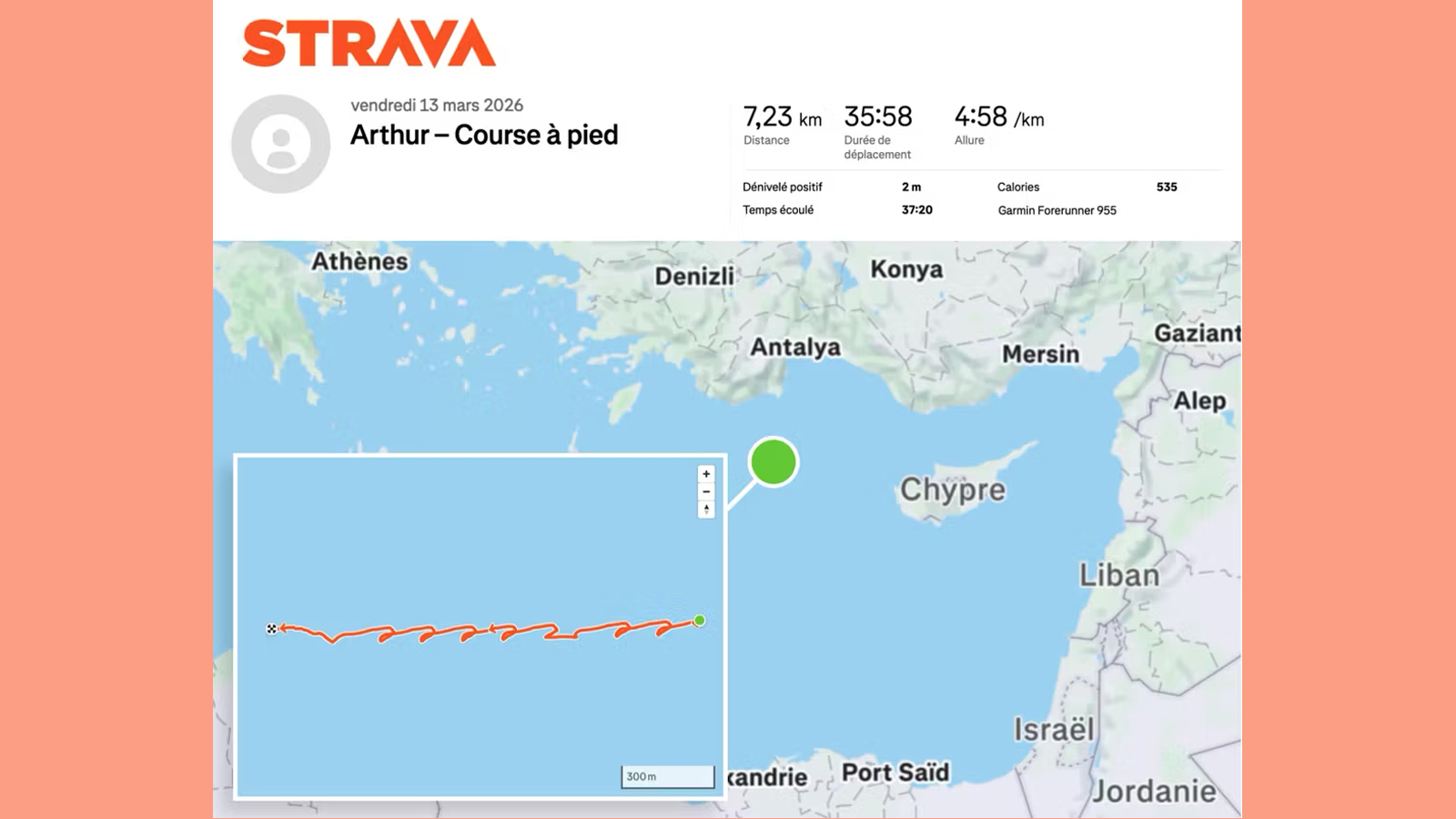
According to Le Monde (via BBC News), the officer – referred to only as Arthur – logged a 35-minute run on March 13 (see image below). Unlike most runners, however, his exercise took place on the upper deck of the aircraft carrier Charles de Gaulle, which was deployed to the Eastern Mediterranean in light of the US and Israel’s ongoing conflict with Iran.
By recording the activity and uploading it to the Strava app, Arthur apparently revealed his location — and by extension, the location of the ship he served on. This posed a significant risk to the safety of the vessel, given location data such as this is publicly viewable in the Strava app (scroll down to find out how to turn it off).
The article continues below
According to Le Monde, the ship was located northwest of Cyprus and about 100 km (62 miles) from the Turkish coast at the time. In a statement to AFP news agency, the French armed forces said the officer’s actions “did not comply with current instructions” and that action would be taken if found to be true.
How to keep your Strava data private
Careless use of fitness and wellness apps has led to similar situations in the past.
As cited by BBC News, French President Emmanual Macron’s location was revealed on several occasions due to Strava runs accidentally shared by his bodyguards. Strava data has also reportedly compromised the whereabouts of both former US President Joe Biden and Russian President Vladimir Putin, while back in 2018 the platform allegedly revealed the location of US military bases.
It might not sound like these kinds of incidents are particularly relevant to you – after all, most people don’t train aboard warships or while protecting high-ranking politicians. However, the privacy implications of this public logging of training may impact your own privacy and security.
For example, stalkers could find out the whereabouts of a potential victim by tracking their frequent exercise spots. Burglars, meanwhile, may be able to determine when you’re out of the house on the run, giving them a good time to break into your home.
There are a few things you can do to protect your location data in the Strava app (on both iOS and Android). First, go to the ‘You’ tab at the bottom right, then go to Settings gear (top right) > Privacy > Activities. Here you can ensure that your activities are visible to ‘Only you’.
Inside Privacy Controls you can also go to Short visibility and select ‘Hide your activity cards completely from others’, then toggle ‘Hide All Cards’. This is where you can also find what used to be called ‘privacy zones’ in ‘hide activity start and end points’. For more information on Strava’s privacy controls, visit its Privacy Center.
Follow TechRadar on Google News and add us as a preferred source to get our expert news, reviews and opinions in your feeds. Be sure to click the Follow button!
And of course you can too follow TechRadar on TikTok for news, reviews, video unboxings, and get regular updates from us on WhatsApp also.


