- Talal asks the parties, the judiciary to follow the self-responsibility of the institutions.
- Says PML-N faced military rule, PTI founder’s “political dictatorship”.
- Minister says the government’s focus on improving lives and ending terrorism.
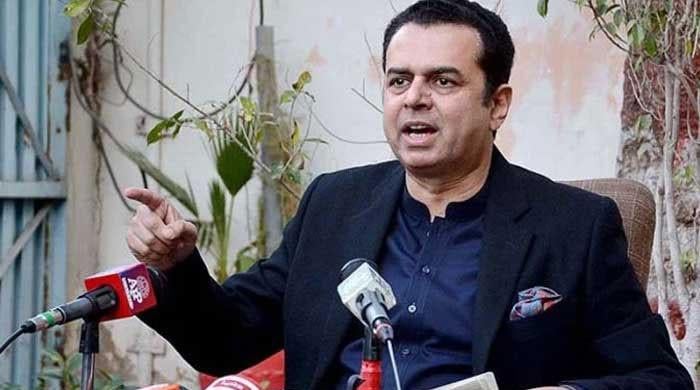
Interior Minister Talal Chaudhry, without mentioning jailed PTI founder Imran Khan, said the policy of those who crossed red lines has come to an end.
Speaking on the Pakinomist News program “Naya Pakistan”, the Prime Minister said that many of Khan’s decisions were actually taken on the advice of former Inter-Services Intelligence (ISI) chief Lt Gen (retd) Faiz Hamid.
The Field General Court Martial (FGCM) sentenced the former spymaster to 14 years of rigorous imprisonment for engaging in political activities, violating the Official Secrets Act, abusing authority and causing undue loss to persons, according to a statement issued by the Inter-Services Public Relations (ISPR) on December 11.
Responding to a question, Talal said the former ISI chief was punished for crossing red lines.
He maintained that the Pakistan Muslim League-Nawaz (PML-N) was facing both military dictatorship and the PTI founder’s “political dictatorship”.
The PTI came to power in August 2018 and was removed through a no-confidence vote in April 2022.
“Our focus is on improving people’s lives and stopping terrorism,” he added.
Taking a dig at the former ruling party, he asked, “Could any political party have sought help from India, promoted its agenda and implemented May 9?”
He further questioned why accountability was not ensured for those who harmed the country, claiming that many of Khan’s decisions were based on Hamid’s advice.
There is a strong chance that whatever happened after the ouster of the Khan-led government was done on Hamid’s advice, he said, adding that the whole world knows about the link between the PTI founder and Hamid.
The “beneficiary” of all this was the PTI, while the loss was borne by the people of Pakistan, he added.
Referring to the military court’s verdict in the high-profile case, the minister said institutions exercise self-responsibility and called on political parties and the judiciary to do the same.
Speaking on Pakinomist News program “Aaj Shahzeb Khanzada Kay Sath” earlier, Senator Faisal Vawda claimed that the court-martialed former ISI chief would testify against the PTI founder, compounding legal problems for the latter.
Vawda, a former PTI leader, said Hamid will also present evidence against the jailed former prime minister.
He insisted that the PTI founder appeared to be “caught in the legal bind” as a result of the May 9 proceedings and warned that the process would intensify.
The events of May 9 refer to the 2023 riots triggered by the arrest of the PTI founder from Islamabad High Court (IHC) premises in a graft case.
During the protests, the miscreants targeted the civilian and military installations, including the Corps Commander’s House in Lahore and the General Headquarters (GHQ) in Rawalpindi.
“The grip of the law will not stop here,” he noted, adding that Hamid’s 14-year sentence “will not be reduced”.
Vawda further claimed that providing details of military installations prior to the May 9 events “was Faiz Hamid’s responsibility”.
“When the matter is clear, the first issue is PTI and its founder,” he said.
Discussing the role of former army chief Gen retired Qamar Javed Bajwa, Vawda said Bajwa had shown “negligence and incompetence” but later tried to remove Hamid after realizing the implications.
However, he said Bajwa had been deemed “exonerated”, meaning “there will be no action against him”.
In the same programme, Defense Minister Khawaja Asif claimed that the May 9 events were a “joint plan” involving the former ISI chief and the PTI founder.
He claimed that the violence was aimed at “overturning the appointment of Field Marshal Asim Munir”.
Asif said the PTI founder “could not have completed the May 9 [riots] alone”, and claimed that Hamid had retained influence even after retirement. He added that further cases could still be filed against him.
The minister claimed that the civilian authority to appoint the army chief had never been challenged before, but insisted that former army chief Bajwa had used pressure and issued threats to block the appointment of Munir.
He further alleged that Bajwa initially pushed for Hamid to become the army chief and later suggested other names to change the process.