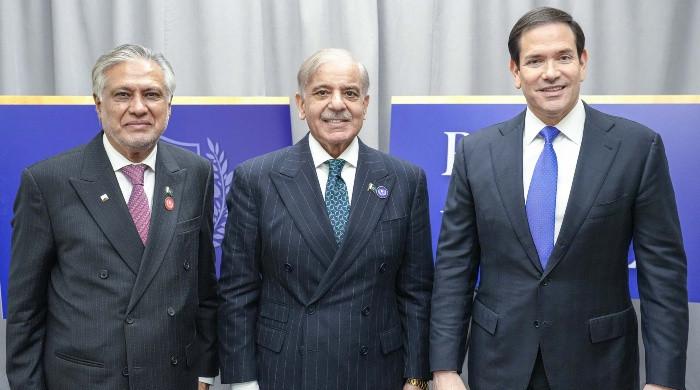
When Prime Minister Shehbaz Sharif met US Secretary of State Marco Rubio in Washington this week, the official language was measured and diplomatic. Yet the themes reportedly discussed—critical minerals, energy and counterterrorism—revealed far more than routine diplomacy.
They pointed to a familiar pattern in Pakistan’s external engagements: moments when global strategic priorities converge with Islamabad’s economic needs, creating an opening that is at once promising and risky. The meeting followed Pakistan’s participation in the inaugural Critical Minerals Ministerial in Washington earlier this month, an event that brings together dozens of nations to discuss the future of resources that now underpin technology, the clean energy transition and the defense industry. For Pakistan, this was an attempt to reposition itself in a rapidly changing global economy increasingly driven by supply chains and strategic commodities.
Critical minerals have become the oil of the 21st century. Copper, lithium, rare earths and related resources are essential for electric vehicles, renewable energy technologies, batteries, advanced electronics and even military systems. Countries around the world are struggling to secure access to these inputs as they seek technological and economic resilience. Pakistan’s decision to attend the ministerial meeting reflected the recognition that its largely untapped mineral reserves may offer a rare opportunity to diversify its economic base. Officials highlighted reserves of copper, gold and rare earths and signaled openness to US investment, along with engagement with other partners, including China.
The message was clear: Pakistan wants to be seen as a credible destination for mineral development rather than a peripheral observer in a new resource race. Still, optimism about minerals should be tempered with caution. Pakistanis know from experience that natural wealth does not automatically translate into public prosperity. One of the key issues implicitly raised by the Washington discussions concerns transparency. The details of extraction remain largely outside of public scrutiny.
Previous resource deals have often been announced with big promises but limited disclosure, leaving citizens unsure of the long-term consequences. In countries where the extractive industry has succeeded in promoting development, transparency around contracts, royalties and environmental impact has been central. Where secrecy prevailed, resource wealth often deepened inequality rather than reducing it. Pakistan’s own history is a cautionary example. The natural gas reserves of Sui in Balochistan were mined for decades and used across the country, powering industries and homes far beyond the province where the resource originates. Yet Balochistan itself remained economically underdeveloped.
The lesson is not that natural resources should remain untouched, but that extraction without inclusive planning creates long-term political and social consequences. As Pakistan now seeks to market its mineral potential to foreign investors, the question of how the benefits are shared will determine whether these projects become symbols of opportunity or sources of renewed excitement. The mineral conversation also intersects with broader economic realities.
Pakistan is entering this new phase amid rising poverty and economic stress. Recent estimates suggest that nearly 28.8% of the population lived below the poverty line in 2024-25, up from about 21.9% six years earlier. Inflation, repeated IMF stabilization programs, floods, slow growth and declining purchasing power have eroded the living standards of most households. Against this background, announcements of billions of dollars in mineral investment can appear disconnected from everyday life unless they are clearly linked to employment, education and long-term development.
Energy was the other big topic discussed with Rubio – and here too, Pakistan is at a crossroads. The country’s energy landscape has changed dramatically over the past decade. Large-scale projects, many built with Chinese aid under the China-Pakistan Economic Corridor, helped reduce the crippling electricity shortages that once defined daily existence. Yet these gains came with financial liabilities that now contribute to high rates and a growing circular debt problem. The result is a system where capacity exists, but affordability has become the primary challenge. Consumers face rising bills as policymakers struggle to balance investor obligations with public pressure.
At the same time, Pakistan has witnessed a remarkable grassroots shift towards solar energy. Households and businesses are increasingly installing rooftop solar panels, driven by economic necessity rather than government planning. This quiet energy revolution reflects both entrepreneurial adaptation and public frustration with conventional electricity prices. Ironically, while citizens have embraced solar energy as a means of survival, regulatory debates and policy changes have discouraged its rapid growth. Concerns about net metering, tariff adjustments and new conditions have fueled the perception that decentralized energy is being constrained rather than supported. The contradiction is striking: While officials discuss energy cooperation abroad, domestic politics are undermining one of the most promising local solutions to the energy crisis.
If energy cooperation with the US is to provide lasting benefits, it should go beyond traditional project financing and focus on structural reforms. Grid modernization, transparent pricing, support for renewable innovation and long-term planning that reduces dependence on imported fuels are essential. Energy policy cannot continue to oscillate between expensive mega-projects and short-term fixes. Pakistan needs a system that rewards efficiency, encourages innovation and protects consumers from perpetual instability. External partnerships can help, but only if domestic governance aligns with these goals.
The third pillar of the Washington discussions, counter-terrorism, reflects an older dynamic in US-Pakistan relations. For more than four decades, security cooperation has shaped the bilateral relationship, from the Afghan jihad in the 1980s to the post-9/11 era. The US State Department statement expressed condolences for the recent attacks in Balochistan and Islamabad and reaffirmed cooperation against terrorism. Such language is well known; indeed, counter-terrorism has often defined how Pakistan is viewed internationally. Yet many Pakistanis have grown weary of a narrative that repeatedly speaks of the country primarily as a security partner rather than an economic or technological player. There is a risk that the new mineral partnership could become entangled in this old security framework.
Going forward, the challenge is to ensure that security cooperation does not overshadow broader goals of economic stability, institutional reform and social progress. Counterterrorism may still be necessary, but it should no longer dominate the entire engagement narrative. Diplomatically, Islamabad appears to be pursuing a balancing strategy. Pakistan has invited both the US and China to its upcoming Minerals Investment Forum in Islamabad, signaling an intention to avoid taking sides in the superpower competition.
This pragmatic approach reflects geopolitical realities. Minerals have become a global arena of competition, and resource-rich countries often find themselves under pressure from rival powers. The best outcome for Pakistan would be to diversify partnerships while maintaining consistent regulatory standards that apply equally to all investors. Such a connection would reduce suspicion and strengthen credibility. But diversification alone is not sufficient. The real test lies in control at home. Transparency must become more than a rhetorical commitment. Contracts should be publicly available; environmental and social impact assessments must be independently audited; local communities should have a voice in decision-making.
Sustainable development means ensuring that resources are not sacrificed for short-term economic relief. Mining projects have long timelines, and the consequences of bad decisions today can last for generations. The desire to attract foreign investment should not lead to agreements that undervalue national assets or ignore environmental responsibilities. Sustainable development also requires thinking beyond extraction. Countries that have successfully exploited natural resources have invested heavily in human capital, using resource revenues to diversify their economies. Pakistan’s history suggests that reliance on a single sector, be it textiles, remittances or security-related aid, leaves the economy vulnerable.
Minerals can become an important component of growth, but only if they help fund a broader transformation rather than becoming another isolated revenue stream. The poverty figures underscore the urgency of getting this right. When nearly a third of the population struggles to meet basic needs, political decisions about resources and energy take on both moral and economic significance. Citizens are unlikely to embrace new mining projects if they perceive them as benefiting distant elites while local conditions remain unchanged. Economic diplomacy abroad must therefore be matched by responsibility and inclusion at home.
The author is the Dean of the Faculty of Liberal Arts in a private university in Karachi. He tweets/posts @NaazirMahmood and can be reached at: [email protected]
Disclaimer: The views expressed in this piece are the author’s own and do not necessarily reflect Pakinomist.tv’s editorial policy.
Originally published in The News