
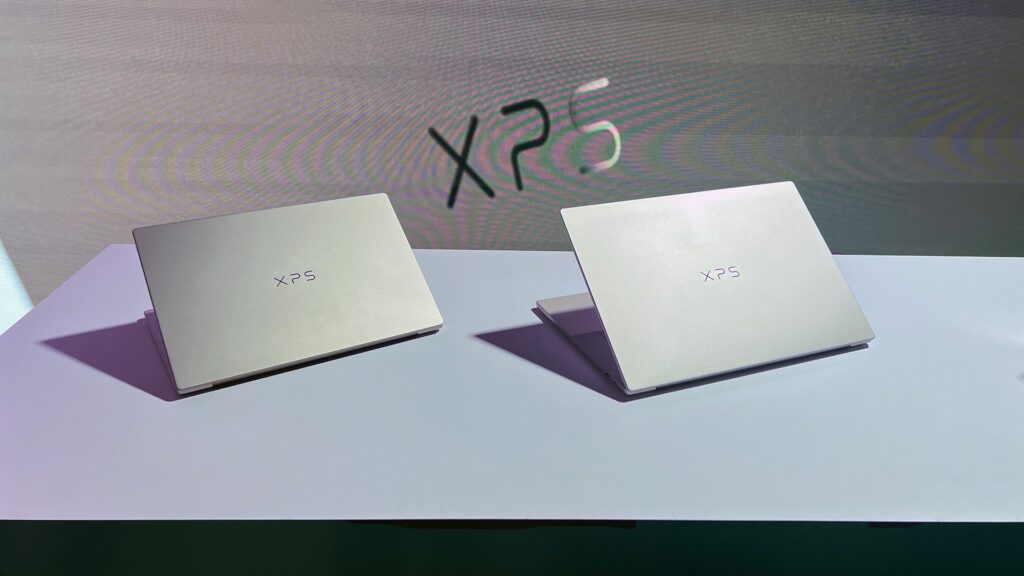
- Dell’s XPS 16 has nearly 27 hours of battery life for web browsing on Wi-Fi
- This is done by independent testing from Notebookcheck.net
- Only two other laptops have ever surpassed that score, and both of those had more battery capacity than the XPS 16
We all want more battery life from our laptops – it’s universally regarded as one of the most important features of a laptop – and Dell’s new XPS 16 has proven to really deliver on this front.
We haven’t tested the XPS 16 ourselves yet (or its smaller sibling, the XPS 14), having only gone hands-on with these laptops so far (back at CES). However, Notebookcheck.net has conducted a full series of tests on the larger model (with the LCD screen, not OLED, and I’ll come back to why this is important), with results that look very promising.
Dell claims up to 31 hours of battery life, and based on Notebookcheck.net’s test of web browsing on Wi-Fi, the XPS 16 achieved 26.6 hours – pretty close to the laptop maker’s boast.
The article continues below
The site noted, “We’re able to record nearly 27 hours of runtime, which is still insanely impressive considering the 70 Wh battery capacity is actually on the small side for a 16-inch form factor.”
As noted by The Verge, which flagged the review, Notebookcheck.net has only had two laptops surpass this score.
One of these laptops was very different in that it had two batteries (totaling up to 149Wh, so hardly a fair comparison to a single 70Wh battery unit), and the other was a Qualcomm-powered notebook with a Snapdragon X Plus chip – a Lenovo ThinkBook that barely outlasted the Dell notebook.
That Arm silicon is known for its battery life, but the ThinkBook in question also had a larger 84Wh battery – it was 20% larger in capacity than the Dell’s, and yet it actually only offered 1% longer life.
Apple’s MacBooks were left choking on Dell’s dust here, as were other Arm laptops for that matter, which is seriously impressive.
Battery life will of course vary greatly depending on the situation, and you won’t necessarily get more than 20 hours of life on the go in the real world – it depends a lot on what you’re doing.
Analysis: CPU, VRR trickery and energy density – a winning combination
As already mentioned, we really need to test the Dell XPS 16 for ourselves, but this is a remarkable performance based on this round of independent testing.
What has Dell done to realize this? First, Intel Panther Lake CPUs are a new high in power efficiency for Team Blue, and that will definitely help a lot. On top of that, a clever trick with LG’s screen in the XPS 16 (and 14) means that the variable refresh rate (VRR) can drop to 1Hz with static content on the screen, saving a considerable amount of power.
Dell’s new XPS 16 with the LCD screen idles on the Windows 11 desktop, drinking just 1.5W based on Notebookcheck.net’s measurements. (The OLED can only go down to 20Hz with VRR, and is not that power efficient, it should be noted – but a 1Hz variant is coming from LG Display next year).
Third, Dell has used new battery technology and achieved a new high energy density (ED) with 900ED cells, which means more power can be packed into a smaller battery. Advances in cooling and general thermals inside the laptop’s chassis also help.
It’s a potent combination of factors, by all accounts, and hopefully we’ll be able to put the new Dell XPS models through our own tests, including battery life, soon enough.
The best laptops for all budgets
Follow TechRadar on Google News and add us as a preferred source to get our expert news, reviews and opinions in your feeds. Be sure to click the Follow button!
And of course you can also follow TechRadar on YouTube and TikTok for news, reviews, video unboxings, and get regular updates from us on WhatsApp also.


