- Draft COP30 agreement omits transition plans for fossil fuels.
- Arab Group says energy industry is off limits, sources say.
- Developing countries require a stronger agreement on financing.
BELEM: The outcome of Brazil’s COP30 climate summit hung in the balance, with the European Union refusing to accept a draft deal it said would fail to advance global efforts to limit greenhouse gas emissions that drive climate change.
The two-week conference, held in the Amazonian city of Belem, was scheduled to end Friday night, but blew past that deadline as talks continued late into the night.
Brazil has cast the summit as a make-or-break moment for global climate cooperation, urging nations to bridge divides on issues including the future of fossil fuels and to send a message that concerted global action is the best way forward.
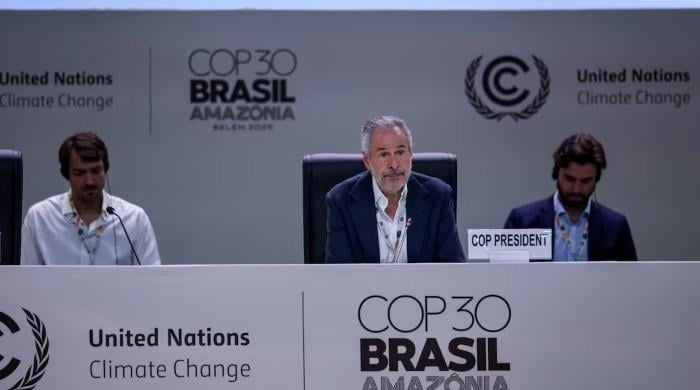
“This cannot be an agenda that divides us,” COP30 President Andre Correa do Lago told delegates in a public plenary before releasing them for further negotiations.
“We must come to an agreement between us.”
Some emerging economies are hitting back at the EU’s stance, demanding that the bloc commit to more funding to help poorer nations cope with climate change.
“We can’t just work with one path. If there’s a path for fossil fuels, there has to be a path for climate finance,” said one developing country negotiator, who spoke on condition of anonymity to discuss the closed-door talks.
The divisions over fossil fuels, faster cuts in CO2 emissions and funding highlighted the difficulty of reaching agreement at the annual conference, a perennial test of global resolve to avert the worst consequences of global warming.
A draft agreement, released by Brazil before dawn on Friday, contained no reference to fossil fuels, dropping a number of options on the subject that were included in an earlier version.
Dozens of countries, including major oil and gas producing nations, had opposed the options.
Earlier at the summit, around 80 governments had demanded COP30 deliver a plan to transition away from fossil fuels. But by Friday evening, many of those nations had indicated behind closed doors that they would accept the deal without it, negotiators said.
Burning fossil fuels emits greenhouse gases, which are by far the biggest contributors to global warming.
Standoff over fossil fuels
The 27-member EU said the text was too weak.
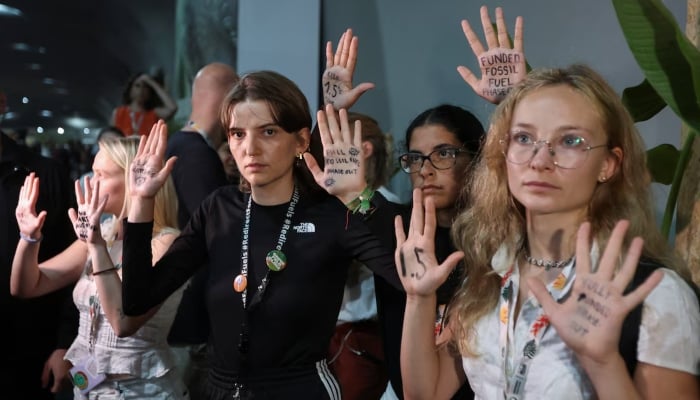
“We will not accept this under any circumstances,” EU climate commissioner Wopke Hoekstra said in a statement on Friday.
The EU indicated it could “move beyond its comfort zone” on funding for developing countries – but only if the text’s section on action to reduce planet-warming emissions was strengthened.
On Friday night, some European negotiators said the bloc was considering the possibility of walking away from the talks rather than accepting the current deal.
A Brazilian dealer said so Reuters it was unlikely that the fossil fuel language would be reinstated and that the summit presidency was pushing for only minor tweaks to the existing draft.
Other options discussed by negotiators included a separate side deal on fossil fuels that countries could voluntarily sign up to but would not be adopted by consensus, as COP agreements must be, negotiators said.
Three sources said the Arab group’s negotiating bloc, whose 22 members include Saudi Arabia and the United Arab Emirates, told a closed-door meeting of negotiators that its energy industries were off limits in discussions.
Saudi Arabia delivered a statement from the Arab group to negotiators warning that targeting its industries would collapse the talks, the sources said.
Saudi Arabia did not respond to a request for comment to the Saudi Arabian government’s communications office.
Multilateralism under pressure
The draft agreement also called for a global effort to triple the funding available to help nations adapt to climate change by 2030, from 2025 levels.
However, it did not specify whether this money would be provided directly by wealthy nations or other sources, including development banks or the private sector.
An agreement text must be approved by consensus among the nearly 200 countries present in order to be adopted.
Correa do Lago said a show of multilateral unity was an important signal to send given this year’s US absence. President Donald Trump has called global warming a hoax.
“The world is watching,” Correa do Lago said.