
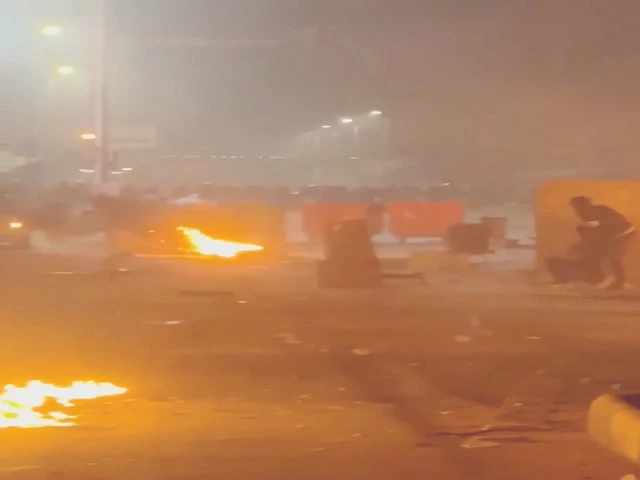
Screenshot from a social media video showing unrest in the city of Mashhad. Photo: Reuters
DUBAI:
The death toll from deadly clashes during ongoing protests in Iran rose to more than 500 people as authorities intensified a crackdown and warned the United States against any intervention, rights groups and media said on Sunday.
Iran has been gripped by its deadliest wave of unrest in years sparked by economic difficulties and fueled by political anger. Iranian authorities have blamed foreign interference for the unrest, particularly the United States and Israel.
According to the US-based Human Rights Activists News Agency (HRANA), at least 490 protesters and 48 members of the security forces have been killed since the demonstrations broke out on 28 December.
Tasnim, a semi-official Iranian news agency, reported that at least 109 security personnel have been killed. Other media reports have claimed that more than 10,600 people have been arrested across the country.
The protests, which were initially fueled by rising prices, have evolved into the biggest challenge to Iran’s establishment since 2022, with outcry now openly directed at the ruling system established after the 1979 Islamic Revolution.
Despite an internet blackout since Thursday, footage circulating on social media and verified by Reuters and AFP showed large crowds marching at night in Tehran, shouting slogans and clapping, while fires and explosions were reported in cities including Mashhad.
Iran’s police chief Ahmad-Reza Radan said the level of confrontation with “rioters” had increased, while state television broadcast footage of dozens of body bags at Tehran’s coroner’s office, claiming the victims were killed in incidents caused by “armed terrorists”.
State media broadcast funerals for security personnel killed in protests in cities including Shiraz, Gachsaran, Yasuj, Isfahan and Kermanshah. The authorities have said that the situation has stabilized in recent days.
According to official accounts, major cities, including Tehran, witnessed “no significant disturbances” from Saturday night to Sunday afternoon.
Internet connectivity, which had been cut for security reasons, was gradually being restored, officials claimed. The public had distanced itself from “terrorists and rioters” and that the country would overcome the current phase with resilience.
Iran blames foreign powers for fueling the violence. Parliament Speaker Mohammad Baqer Qalibaf warned Washington against “miscalculations” and said any US attack on Iran would make Israel and US military bases and ships in the region “legitimate targets”.
In a televised interview, President Masoud Pezeshkian also accused the United States and Israel of orchestrating the unrest, saying they ordered “riots” to sow chaos and disorder in Iran. He called on families to prevent young people from joining “troublemakers and terrorists”.
He said foreign-linked elements were burning mosques, attacking banks and public property and killing innocent people. He added that the government was ready to listen to public concerns and was determined to solve economic problems.
US President Donald Trump said the US was “ready to help” the protest movement and warned Iran it was in “big trouble” if it continued to suppress demonstrations. Israeli sources said Trump and Netanyahu discussed possible US intervention in a phone call.
Iranian opposition figures abroad, including Reza Pahlavi and Maryam Rajavi, urged protesters to continue as rights groups warned that the use of lethal force against protesters appeared to be intensifying amid the communications blackout.


