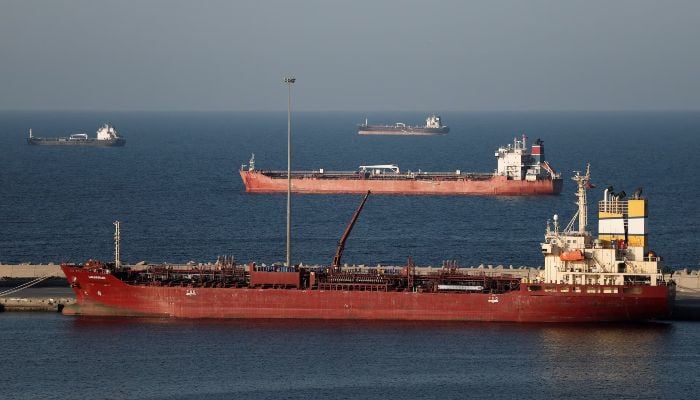
Most people assume that global shipping is controlled by navies, ports or naval power. In reality, the system is governed by something far less visible: insurance.
Any commercial vessel that sails the oceans depends on three things: financing to build the vessel, insurance to cover operational risks, and certification from classification societies confirming that the vessel meets international safety standards. Remove one of these and the ship cannot function. Ports deny access. The canal authorities refuse passage. Landlords cancel contracts. Banks withdraw funding.
In practice, the global maritime system is governed by three silent choke points: ship finance; marine insurance; and classification societies. Together they regulate almost the entire global fleet. Among these, insurance has become the most powerful and least understood lever.
The modern shipping industry relies on a relatively small network of marine insurers and reinsurers that cover most of the world’s ocean-going tonnage.
At the center of this system sits the historic London insurance market, particularly Lloyd’s of London. The institution traces its origins to the late seventeenth century, when merchants and shipowners gathered at Edward Lloyd’s coffee house to insure voyages across dangerous seas. Over time, the informal marketplace evolved into the world’s most influential marine insurance hub, pricing risk for everything from cargo voyages to oil tankers and war zones.
Every container ship, oil tanker, LNG ship and offshore platform must have insurance before it can operate. Global capital is behind these insurance companies. Reinsurance companies, investment funds and institutional investors provide the financial backing that enables insurance companies to underwrite massive maritime risks. This structure means that global finance quietly sits behind the movement of international trade.
The system becomes most visible during war. When geopolitical tensions rise in critical shipping lanes, insurers immediately increase premiums for war risk. Risk itself becomes a commodity that can be priced and sold.
The current crisis in the Strait of Hormuz is a vivid example. Under normal conditions, war risk premiums for ships sailing across the Gulf were almost negligible, typically varying between 0.01% and 0.05% of a vessel’s hull value per By early 2025, as tensions rose, these rates had already risen to between 0.125% and 0.25%. For a tanker worth $100 million, that meant about $75,000 in extra insurance costs per Uncomfortable, but still manageable.
The turning point came in June 2025 after US airstrikes on Iranian nuclear facilities. Within days, premiums rose again, reaching between 0.2 and 0.4% of the vessel’s value, with vessels linked to Israel or its allies quoted as high as 0.7%, translating into an additional $200,000 to $360,000 per voyage for a large crude oil tanker.
With full escalation, many insurers canceled war risk coverage entirely. Those who remained switched to seven-day policies at a cost of around 1% of the hull value – four times the already inflated pre-war rate. Some quotes now vary between 1% and 5% and up to 10% for vessels with specific national affiliations. For the owner of a $130 million tanker, a single Gulf transit can now carry an insurance bill of over $1.3 million.
With the full escalation of the war, the Strait of Hormuz was effectively facing closure during a regional conflict for the first time in decades. At least five tankers were damaged, two crew members were killed and about 150 vessels were stranded nearby as insurers reassessed the risk environment. The shipping economy responded accordingly. Daily charter rates for oil supertankers operating in the region rose to nearly $800,000 a day, nearly four times previous levels.
What makes the current crisis unusual is that even during previous regional conflicts, the Strait of Hormuz was never completely disrupted. Iran did not close the strait during the Iran-Iraq War, the Gulf War, or the US-Iran tensions in 2019. The current conflict has disrupted maritime logistics in a way rarely seen in recent decades.
The economic consequences go far beyond shipping companies. As insurance costs rise, the shock moves through global supply chains, pushing up freight rates, energy prices and ultimately the cost of goods for consumers around the world.
The response from the financial markets has been equally extraordinary. Analysts estimate that total insurance coverage in the Gulf now exceeds $350 billion for some 329 ships currently operating in the region. These figures reveal a deeper truth about global trade: insurance does not just protect shipping; it determines whether the shipment can work at all.
For countries like Pakistan, this reality has direct consequences. Pakistan’s economy depends overwhelmingly on maritime trade, but most of its shipping risks are insured in foreign markets. Any escalation in the Persian Gulf therefore results in higher freight costs, higher insurance premiums and further pressure on foreign exchange reserves. When risk prices are determined thousands of miles away in global insurance markets, countries that rely solely on external coverage have little control over the costs of carrying their own trade.
There is also a deeper economic dimension that rarely enters into public discussion. The insurance companies that underwrite maritime risks do not operate in isolation. Their capital is backed by large reinsurers and institutional investors whose portfolios simultaneously span insurance, energy, logistics and defence. Companies such as BlackRock, Vanguard Group and State Street Corporation are among the largest shareholders across all of these sectors. No coordination is required for interests to be aligned. When geopolitical crises drive insurance premiums higher, the economic gains circulate within the same concentrated pool of global capital that finances the broader war economy. The architecture does the work that no conspiracy needs.
The American response revealed how central insurance has become to modern maritime conflicts. Washington moved to stabilize the market through the United States. The International Development Finance Corporation, which is launching a $20 billion sovereign reinsurance facility to ensure that ships can still obtain coverage while transiting the Gulf. The lead insurer chosen was Chubb Limited, one of the world’s largest property and casualty insurers, a major participant in the Lloyd’s of London market and a company whose shareholder base, like most major insurers, is dominated by BlackRock, Vanguard and State Street. The same institutional capital that profits when premiums rise is now called upon to stabilize the market when they rise too much. The huge circle is actually a small one.
But the need for such an intervention reveals how effectively Iran has exploited the global shipping financial architecture. By pushing premiums for war risk from about 0.25% of the hull’s value to several percent, and in some cases forcing insurers to withdraw coverage altogether, Tehran has managed to disrupt traffic through the strait without imposing a traditional naval blockade. When insurance becomes unavailable or prohibitively expensive, ship owners simply stop sailing. In that sense, Iran has demonstrated that a strategic choke point can be contained not only with missiles and mines, but by weaponizing the insurance market itself.
The ocean may seem open and boundless, but the system that controls it is highly concentrated. A small network of financial institutions prices the risks of global trade, determines the costs of maritime transport and ultimately decides which shipping routes remain economically viable.
Wars can be fought with missiles and fleets. But the economics of these wars are often decided in financial boardrooms. The world believes that shipping is controlled by ships, when really it is controlled by those who insure them.
The author is a former Federal Minister for Maritime Affairs. He tweets/posts @AliHZaidiPTI
Disclaimer: The views expressed in this piece are the author’s own and do not necessarily reflect Pakinomist.tv’s editorial policy.
Originally published in The News